Sauter au contenu principal
actuellecd

Blogue

258 résultats
  • 19
  • 20
  • 21
  • 22
  • 23
  • 24
  • 25
  • 26
  • 27
  • Veuillez procéder dans AllMusic

    «Review», François Couture, AllMusic, 1 juin 2005
    mercredi 1 juin 2005 Presse

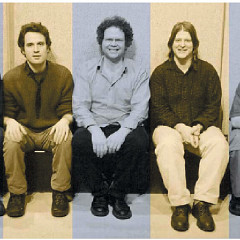
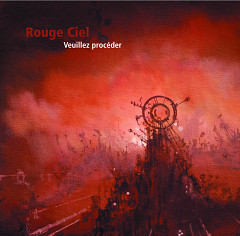
    Released three years and a half after the group’s debut CD, Veuillez procéder (literally: “Please Proceed”) was bound to feature some evolution in its music, but the giant leap it represents was unforeseen. Since their 2001 opus, Guido Del Fabbro, Simon Lapointe, Antonin Provost and Némo Venba have sharpen their edge, loosing the slightly pastoral feel that had previously drawn comparisons to Maneige and Conventum in favor of a rougher-edged, harder-rocking sound that takes them closer to The Muffins or Miriodor. The music still feature a certain level of tension between complex rhythm-driven pieces and studied moments of contemporary chamber music. Del Fabbro’s violin and Venba’s trumpet play key parts in the music’s excitement, but it seems that on this second effort the guitarist and keyboardist take more room — and all for the better. Veuillez procéder features twelve pieces split three-way between short transitional improvisations (the Bond précisionnel series), pieces in the three-to-five-minute range and longer epics. Del Fabbro’s Bois dur presents Rouge Ciel at their most arcane and jumpy, with elements of Univers Zero and a bastardized acoustic take on brutal prog. Nostradamus l’avait prédit and L’Occupation are breathtaking workouts, filled to the rim with clever ideas, dizzying counterpoint and folk overtones. Teuteuta and Pour Hortense offer an interlude of playful, more immediately accessible tunes. The album’s only small caveat is the 11-minute Névréalité postparapsychophysiologique which seems to get lost among its multiple themes. There might have been three or four great song ideas in there instead. Still, the piece will give avant-proggers something to chew on and the remainder of the album is pure creative delight. Rarely is a long-awaited second album this suited to meet expectations.

    Rarely is a long-awaited second album this suited to meet expectations.

    Oralizations dans Blow Up

    «Recensione», Nicola Catalano, Blow Up, no 85, 1 juin 2005
    mercredi 1 juin 2005 Presse

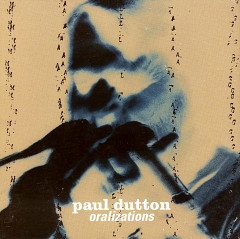
    Già noto dagli anni ‘70 per la sua attività di letterato e poeta sonoro e, in anni più recenti, per le collaborazoni con altri acrobati della voce (i Five Men Singing con Phil Minton, David Moss, Jaap Blonk e Makigami Koichi) e le azioni del collettivo CCMC con John Oswald e Michael Snow, Paul Dutton raccoglie in Oralizations una serie di lavori che coprono circa sei lustri di sperimentazioni. Grammelot estemporanei, canto di gola, proto-rap pirotecnici e primordiali per sole ugola e cavità orale senza trattamenti elettronici e unicamente qualche sovraincisione qua e là, disinibito andirivieni tra fonemi in libertà e poesia verbale (in Wolf Chant il testo è di R Murray Schafer) con grande attenzione alla pura qualità acustica dell’offerta vocale.

    Veuillez procéder dans Blow Up

    «Recensione», Nicola Catalano, Blow Up, no 85, 1 juin 2005
    mercredi 1 juin 2005 Presse

    Ricco e fantasioso anche il secondo album di Rouge Ciel, quartetto capitanato da Guido del Fabbro, classe 1980, canadese a dispetto del nome. I materiali sono quelli tipici del circuito delle musiche eterodosse così popolari nel Canada francofono (la Monsieur Fauteux è sottoetichetta della Ambiances Magnétiques), una variopinta tavolozza di jazz, progressive e art-rock, disinvolta energia popular e colte cogitazioni avant-improvvisative alla stregua dei numi tutelari Henry Cow e Conventum.

    Mingus Erectus dans Blow Up

    «Recensione», Nicola Catalano, Blow Up, no 85, 1 juin 2005
    mercredi 1 juin 2005 Presse

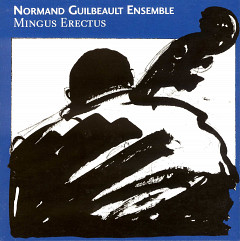
    Non nuovo a tributi nei confronti della vasta e composita opera mingusiana (si veda Hommage à Mingus del ‘96 su Justin Time), il contrabbassista Normand Guilbeault ha in pratica dedicato interamente questi ultimi anni della carriera al repertorio del maestro di Nogales. Accompagnato da altri nomi noti della scena quebecoise, su tutti Jean Derome (già sodale in Bruire, insieme a Martin Tétreault e Michel Coté), il nostro infonde tale grande ardore nella rilettura competente e appassionata di rinomate pagine del catalogo dell’autore di colore (i classici Pithecanthropus Erectus, Moanin’ e Fable of Faubus con titolo e testo riadattati per un attacco frontale al George W. più detestato del mondo…), passando per episodi più oscuri e aggiungendovi un po’ di crusca del proprio sacco (MDMD, per la verità firmata da Derome con perfetta grafia mingusiana). Data la complessità della scrittura originale, operazione non facile ma ottimamente riuscita.

    Estrapade, morceaux_de_machines dans Splendid E-Zine

    «Review», Dave Madden, Splendid E-Zine, 30 mai 2005
    lundi 30 mai 2005 Presse

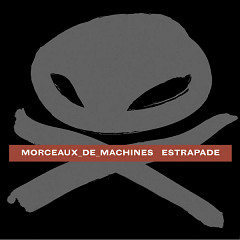
    Other than the self-imposed isolation of a studio, the lack of artistic compromise and proverbial spitting in the face of mainstream success, there’s something that many experimental musicians lack that discourages even the most stalwart fans: a personality. Said individuals often seem academic, overly serious and just plain bland — something that, for better or worse, seeps into their music.

    Fortunately, people like Érick d’Orion (aka Érick d’Orion) and Aimé Dontigny (aka A_dontigny), the duo behind morceaux_de_machines, exist in this world to counter stereotypes of what the so-called avant-garde should do. Their stint under the name Napalm Jazz, both as a radio program on Québec’s CKIA FM and a band of the same name, gives them a different approach to the improvisation/composition realm, one somewhere between Anthony Braxton, Penderecki and Public Enemy. Some listeners dub them the “B-Boys of musique concrète”. Very cool.

    Their set incorporates a fused conglomeration of elements, something that never backs down from a challenge, even if it means bending two poles to meet — a mix that sits comfortably atop a history book while swilling cheap merlot from a paper cup. m_d_m propel Fonçage de pieux with hyperactive scratching, serious cutting that will leave a mark, while Tinkerbell melodies drift in and out over a pulsing, clicking rhythm and processed Rite of Spring-style symphonic punctuation. Everything works itself into a calculated frenzy; d’Orion and Dontigny are careful to keep their mix tight and pristine until they bust into an atmospheric film of sine waves, fragmented and carefully placed breakbeats, nearly exploding again but happy to perch under a cloud of low-frequency feedback. Next up, Onanisme is sure to raise eyebrows in the concert hall and while waking up the professor’s bored children, who’ll exclaim, “This is fun!” It employs an irresistible Neu/Crass quasi-disco beat, founded on a distorted handclap/bass drum pattern and manic, twirling basslines, that weaves and grows, keeping time but having its way with the meter. Guests Diane Labrosse (of Justine and a flock of other acts) and Martin Tétreault (visual artist/turntablist, currently concerned with the sound of the (turntable) motor) add their contributions throughout the disc, notably on Sélavy, where needles meet concrete, machine hum faces envelope filters and Loverboy’s Hot Blooded joins a nuclear aftermath for a picnic in a fallout shelter. Otomo Yoshihide joins m_d_m for Omlegging, bringing his signature “no-record turntable” fidgets, scrapes to trade off with Tétreault and the boys.

    Of course, this genre owes a great deal to the pioneers of the Twentieth Century, from Dadaists to Constructivists to even Classicists. d’Orion and Dontigny are well aware of this foundation, but after they tutor you for your final in Semiotics 502, they’ll drag you along for a night of beers and mischief.

    … somewhere between Anthony Braxton, Penderecki and Public Enemy.
  • 19
  • 20
  • 21
  • 22
  • 23
  • 24
  • 25
  • 26
  • 27