Sauter au contenu principal
actuellecd

Blogue

108 résultats
  • 2
  • 3
  • 4
  • 5
  • 6
  • 7
  • 8
  • 9
  • 10
  • Musiques de chambres dans Klasika ir džiazas

    «Chronique», Klasika ir džiazas, 21 juillet 2015
    mardi 21 juillet 2015 Presse

    Pristatome vertą dėmesio muzikos naujieną — tai kompozitoriaus Jean Derome kūrinių rinkinys „Musiques de chambre“.

    Jean Derome — vienas ryškiausių Monrealio saksofonininkų ir kompozitorių. Jis taip pat ir multiinstrumentininkas — groja altiniu, baritoniniu saksofonais, fleita ir kitais pučiamaisiais instrumentais. Jean Derome yra ne tik viena ryškiausių avangardinio džiazo asmenybių, bet ir talentingas šiuolaikinės akademinės avangardinės, eksperimentinės muzikos kompozitorius. Vadovauja ir garsiems free džiazo kolektyvams. Taigi šis kūrėjas aktyviai reiškiasi džiazo ir akademinės muzikos scenoje. Viename interviu paklaustas, kokio žanro muziką groja, Jean Derome atsakė: „Aš groju muziką. Ne džiazą ar kažkokio kitokio stiliaus muziką. Tiesiog muziką“. Taigi kūrėjas tiksliai neįvardina, kokio konkretaus stiliaus muziką jis komponuoja ir atlieka. Muzikoje susijungia akademinė avangardinė muzika ir free džiazas.

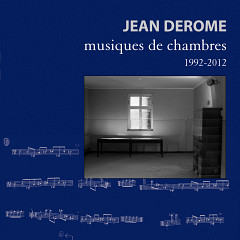
    Nors daugiausiai šis kūrėjas reiškiasi free jazz scenoje, kaip puikus improvizatorius, multiinstrumentininlas ir grupių lyderis, naujausias albumas „Musiques de chambre“ atskleidžia Jean Derome plačias komponavimo galimybes ir talentą. „Musiques de chambre“ įrašyti 1992 — 2012 metais sukurti kameriniai kūriniai. Iš viso rinkinyje skamba 6 kūriniai (25 kompozicijos). Tai — „Cinq etudes pour figures“ (1992) sopraniniam saksofonui, fortepijonui, kontrabosui, mušamiesiems, marimbai, perkusijai ir trimitui. Šį kurinį sudaro 5 trumpų pjesių ciklas. Po „Cinq etudes pour figures“ skamba „Les cheminées“ (1997), parašytas 8 fleitų ansambliui. Kūrinys išsiskiria savo neįprastu skambesiu, atskleidžia fleitų virtuozines ir technines galimybes. Kitokia harmonija ir komponavimo technikomis paremtas „Les jumeaux“ (2000). Šis kūrinys parašytas bosinei fleitai, altiniam saksofonui, klarnetui ir bosiniam klarnetui.

    Po šių 3 kūrinių skamba originaliu skambesiu pasižymintis „Saint Irascible et le papillon“ altiniam saksofonui ir perkusijai. Abu instrumentai išgauna neįprastus melodinius ir ritminius derinius, vartojamos įvairios muzikos išraiškos priemonės. Po saksofono ir perkusijos dueto seka kitas — bosiniam klarnetui parašytas solinis „Oiseau-lyre (flanqué d’une colonnade“ (2005). Albumą užbaigia „Rouge“, parašytas saksofonų kvartetui.

    Kiekviena kompozicija ryškiai skiriasi savo gausia faktūrų įvairove, harmonija, ritmika ir kitais stilistiniais bruožais. Naudojamos įvairios komponavimo technikos, stebina tembrų, garsinių efektų gausa, ritmikos įvairovė. Kūrinių harmonija — moderni, girdima daug disonansinių sąskambių. Ji pagrįsta šiuolaikine muzikos kalba.

    „Musiques de chambre“ — tai puikių, profesionaliai parašytų kūrinių rinkinys. Kiekvienas kūrinys atskleidžia vis kitokią prasmę, yra individualus ir savitas. Šis albumas parodo Jean Derome puikias kompozicijos galimybes ir didelį talentą ne tik free jazz scenoje, bet ir šiuolaikinėje akademinėje muzikoje. Albumą 2015 metais išleido „Ambiances Magnétiques“.

    La règle dans The Squid’s Ear

    «Heard in», Dave Madden, The Squid’s Ear, 15 juillet 2015
    mercredi 15 juillet 2015 Presse

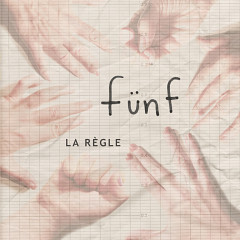
    I recently had a debate about recipes. Someone presented the idea that following a script with exact precision is how we ensure success. I countered that, sure, this can be true, but think about all the people who break the rules and improve upon the process. “Well you have to know the rules before you can break them.” Touché, but what if there are no existing guidelines for a particular design? That’s how Fünf seem to work, as their electroacoustic / concrète fusion is — so to speak — no cake or lamb shank you’ve ever sampled.

    Here are the ingredients:

    • Magali Babin: Performer (amplified objects, tape deck, nebulophone, field recordings)
    • Andrea-Jane Cornell: Performer (amplified objects, field recordings, accordion, loops and voice)
    • Martine H Crispo: Performer (circuit bent toys, iDensity, electronics)
    • Anne-Francoise Jacques: Performer (rotation, objects, amplification)
    • Émilie Mouchous: Performer (analogue synthesizers, electronic fabric)
    • Erin Sexton: Performer (oscillators, electromagnetic fields, microphone)

    Mix these thoroughly until each performer is unrecognizable “between two residential basements on Berri Street, and live on a campus-community radio station from 2011 to 2014,” and don’t include everyone at the same time on each piece. The end result is a seamless production of delicate splendor.

    Beginning with “Chaleur”, the group introduces an alien communication of reversed spinning plates and ghostly feedback and drones; suddenly, an aural door opens up, and the track is grounded in a lo-fi hiss, snippets of tonal “music” and sputtering circuits. “Aimes-tu ma porte?“ features a rhythm bed of camera flash power-on, a cymbal neutered of its attack and the muddled rumbling of Jacques’ “rotating surfaces”. On “The Name’s Name”, telephone busy signals mix with a chuckling German couple and manipulated airy wisps. Synthetic blips, purrs, pings, flicks and growls push alongside high heel footsteps on “Girl in the Vague”; as those begin to relax and fade, a cat in the distance begins to yowl, capping off the piece with a spooky coda.

    The most ambitious work, “Retenue mystique”, settles over a flock of humming ambience that comes and goes, providing a somber backdrop for nervy mechanical squeals, thick swells of vowels (think Ligeti’s Lux Aeterna), sinister rasps, a Dopplering monologue and occasional synthesizer blips. The whole thing together makes your body and mind sway until the booming, electrical charge misfires of the appropriately named “Loud Operetta” break the meditation.

    La règle belongs in the same world with sonic sculptors Jason Kahn, Tim Olive, Norbert Möslang, Toshimaru Nakamura, The Lappetites etc., but, as previously mentioned, there is something curiously unique about the music. Perhaps it is the group’s patience, economy of sound, tidy frequency choices (i.e. keeping the highs paired with lows à la Stravinsky orchestration for a clear listening experience) and insistent, unresolved tension. Regardless of secret spices, the members of Fünf create music that warrants a binge.

    … the members of Fünf create music that warrants a binge.

    Musiques de chambres dans Polyphonia

    «Recenzje», Łukasz Komła, Polyphonia, 1 juillet 2015
    mercredi 1 juillet 2015 Presse

    Jean Derome to jedna z najważniejszych postaci na kanadyjskiej scenie eksperymentalnej. Ten kompozytor oraz muzyk grający na saksofonie i flecie, tworzy już od kilku dekad. Był członkiem wielu eksperymentalnych/jazzowych i rockowych grup. Jest też współzałożycielem oficyny Ambiances Magnétiques. W 1973 roku powołał do życia jedną z pierwszych awangardowo-jazzowych formacji w Quebecu — Nébu. Teraz ukazał się przekrojowy materiał Derome’a z lat 1992 — 2012, gdzie mamy kompozycje rozpisane na różne składy i instrumenty (saksofon sopranowy, trąbka, fortepian, kontrabas, perkusja, marimba, rogi, flet, klarnet etc.). Bogate aranżacje przeplatają się z improwizacją, kameralistyką i minimalizmem, a do tego artysta wprowadza bardzo ciekawe podziały rytmiczne. To wydawnictwo trzeba poznać!

    Havres, À la plage dans Revue & Corrigée

    «Chronique», Pierre Durr, Revue & Corrigée, 1 juillet 2015
    mercredi 1 juillet 2015 Presse

    Encore la scène québécoise… D’un côté […], d’autre part deux artistes sonores, la première impliquée depuis longtemps dans la scène des musiques nouvelles, surtout en tant que productrice radiophonique (elle est responsable de plusieurs créations, souvent enregistrées déjà, d’autres musiciens) et longtemps animatrice à Radio-Canada, la seconde productrice de pièces radiophoniques. […]

    Quoiqu’ayant déjà collaboré à certains enregistrements (de Claude Schryer en particulier) il y a près de vingt ans, ce n’est finalement qu’assez récemment qu’Hélène Prévost s’est engagée dans des créations personnelles plus régulières, comme en témoignent quelques pièces sur diverses compilations (Musicworks 104, par exemple), ou sa participation aux projets Montréal/Victoriaville, matière sonore* et A la plage constitue le premier recueil entièrement sous son nom. Cela pourrait être La plage, matière sonore. Encore que ce ne soit qu’un jeu de mot, la plage étant à prendre ici au sens d’espace enregistré. Il y en a dix. Dix plages donc! Chacune proposant une combinaison propre de sons, issus de bruits, de voix, d’instruments, de nature diverses, offrant chaque fois des climats divers, tourmentés, oniriques ou inquiétants, parfois proche du silence (plage 09)…

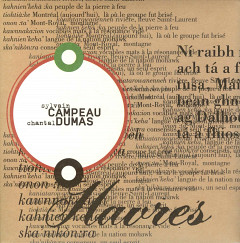
    On finira cette chronique avec l’évocation de Havres, une courte (17.35 min.) collaboration entre un poète (Sylvain Campeau et Chantal Dumas. Cette dernière fut d’ailleurs aussi une des artistes impliquées dans l’aventure de Montréal ou Victoriaville matière sonore, mais a un parcours de créations personnelles plus anciens. Ici, elle propose une bande sonore pour la mise en sons d’un poème, basé sur un quartier péninsulaire de Montréal, la Cité du Havre, en bordure du St Laurent, décliné en français, en Irlandais et dans la langue mohawk des amérindiens du lieu. D’où plusieurs récitants, et une bande-son évocatrice aussi bien d’une certaine quiétude (celle de parc) que de son histoire et de ses diverses communautés.

    * Respectivement Montréal, matière sonore Pogus P21041-2 et Victoriaville, matière sonore VICTO113

    Musiques de chambres dans Voir

    «Critique», Réjean Beaucage, Voir, 26 juin 2015
    vendredi 26 juin 2015 Presse

    Comme on n’est jamais si bien servi que par soi-même, le compositeur et multi-instrumentiste Jean Derome a décrété que l’année 2015-2016 est «l’année Jean Derome», et si vous ne le connaissez pas, vous n’aurez pas trop d’une année pour faire le tour de l’extraordinaire production de ce pionnier de la musique actuelle (à voir ici: jeanderome.com). Le présent disque offre un programme différent des musiques improvisées ou du jazz d’avant-garde auxquels Derome est souvent associé; ici, le compositeur flirte davantage avec la musique contemporaine et présente des pièces écrites pour petits ensembles (solo, duo, quatuor, sextuor, octuor). L’écriture est fluide, le rythme enlevé, et les six pièces reproduites ici montrent bien que ce compositeur mérite d’être célébré à sa juste valeur.

    L’écriture est fluide, le rythme enlevé, et les six pièces reproduites ici montrent bien que ce compositeur mérite d’être célébré à sa juste valeur.

    Kyle Brenders, Quatuor Bozzini dans Soundstreams

    «Creating a new work with Quatuor Bozzini», Kyle Brenders, Soundstreams, 23 juin 2015
    mardi 23 juin 2015 Presse

    Our Artistic Associate Kyle Brenders recently spent a week in Montreal, participating in Quatuor Bozzini’s Composer’s Kitchen. He wrote a blog post for us about his experience, and how he composes.

    Beyond what I do here at Soundstreams, I attempt to have a life as a practicing composer (and performer, but that’s a story for another blog post). I am constantly searching to find a balance between my own artistic practice, and that which I’m working to put on stage at Soundstreams. Some might say that my work as a creative musician is my second job, because I do it after I get home from Soundstreams. But I sometimes feel that Soundstreams is my second job, there to support my habit as a musician! All kidding aside, I recently participated in an emerging composer workshop—a departure from being the workshop designer, which is part of what I do at Soundstreams.

    I created a new work for string quartet as part of the Quatuor Bozzini’s Composer’s Kitchen. The Composer’s Kitchen is an annual musical “laboratory” conceived as an artistic “playground,” where composers workshop their new composition with direct support from the Quartet, as well as two composer mentors. The Composer’s Kitchen happens in three stages:

    1) A workshop in Montreal and performance of the new work;

    2) A few months of private revisions;

    3) Another workshop in London, UK, and concert of the final works.

    The workshop had four participants that were selected through an application process: two composers from Canada and two from the United Kingdom, supported by the amazing UK organization Sound and Music (you can read about the other participants here). The two mentor composers were Christopher Butterfield from Victoria, BC, and Christopher Fox from London, UK.

    This workshop reminded me of how intense the process of creating a new work really is. In my own compositional practice, I know I’ll be performing much of the music that I write. Because of this, I tend to leave a lot of musical information out of the score. Dynamics, articulation, bar-lines, time signatures, instructions for improvisation, and sometimes even the duration of notes, are aspects of the score that I leave out, and figure out either in real-time during the performance, or through the rehearsal process.

    I wasn’t going to be performing this new work, so I needed to create something clear and precise. However, I don’t believe in creating a score, handing it over, and expecting the piece to be performed directly as it appears on the page. I love openness, which requires the performers to make their own decisions. I love facilitating surprises for the performers as they play the music, and also for me as the composer of the work. This can create complications when working with musicians used to scores that have the composer’s instructions clearly written on the page. I knew this would a challenge going into this workshop, but I also knew that the members of Quatuor Bozzini would be game for anything.

    I had a breakthrough on my piece when another workshop composer mentioned that she views the compositional process as “creating an article of clothing”—composers have to put the pieces of thread together for the performers. I am slightly different in my work—I provide the performers with the buttons and thread, but they have to create the shirt. The materials I provide the performers with create specific musical events, but how each event progresses through time will be determined in each performance. This idea is also where my piece got its name: sewn.

    You can see a section of the score below and listen to how it’s all put together. There is a main set of materials that begin the section, and then each player is free to move through their own musical materials. Each player receives only their subsections, separate from the other four players.

    My music has a quirkiness that I encourage. I recently played with Bobby McFerrin at Roy Thomson Hall, and one thing he stressed was that everyone needs a level of quirkiness in their everyday, and suggested 10%. I think I’m there with this piece. The Quartet really explored the material with curiosity and wit. But remember, this is only one performance, and one way through the material. Each time the Quartet performed my piece, they created a new version. My music isn’t about capturing a final, flawless performance, but capturing the moment the musicians are presently in.

    Another amazing aspect of this workshop was collaborating with the other participants. They each created incredible pieces that inspired me to work harder (you can hear one of them here). Seeing another composer’s music being work-shopped is one of the joys of this process. I love watching how people put music together, hearing them describe what they’re doing, and seeing how the performers respond. It’s this joy of creation that made me first want to make music, and continues to drive me every day. Luckily, this workshop has a second stage, where we all come together again. I’ll write again in February after the third stage of the workshop, which will include a performance of the work in Aberdeen, Scotland.

  • 2
  • 3
  • 4
  • 5
  • 6
  • 7
  • 8
  • 9
  • 10