Sauter au contenu principal
actuellecd

Blogue

101 résultats
  • 8
  • 9
  • 10
  • 11
  • 12
  • 13
  • 14
  • 15
  • 16
  • 21st-Century Canadian Snare Drum dans HörBar

    «Kritik», Martin Hufner, HörBar, 12 mars 2026
    vendredi 20 mars 2026 Presse

    Bon sang. Un double CD de musique canadienne contemporaine pour caisse claire. Est-ce acceptable, est-ce supportable? Quoi? On peut, on doit, on devrait. Absolument. Pas d’inquiétude. Même si la caisse claire, jouée par Ryan Scott, est au centre de ce «projet» soutenu par le Conseil des arts de l’Ontario et le Conseil des arts du Canada, d’autres percussions sont également mises à contribution, telles que la grosse caisse, les cymbales, des plaques métalliques et divers types de matériau pré-enregistrés.

    Mais le résultat, c’est un puzzle musical vraiment génial. Même si ça commence effectivement sur le CD 1 avec un son de caisse claire pur, joué selon une technique de batterie tout à fait conventionnelle. Oui, et ça fait d’abord craindre de devoir supporter ce truc super ennuyeux pendant les prochaines heures. Tu parles! Écoute plutôt!

    Mais ces univers que Ryan Scott et les quatorze compositeurs développent, déploient et enveloppent sont, au sens figuré, comme une promenade à travers une exposition d’art contemporain. Chaque composition est autonome, tant sur le plan visuel que sonore, et mérite d’être contemplée en toute tranquillité, ou écoutée et réécoutée. Tantôt très détaillée, tantôt enveloppée d’une brume épique, tantôt d’une clarté cristalline.

    À écouter absolument! Un kaléidoscope de sons et de rythmes, sans aucune complainte ni discours moralisateur; un hymne à la diversité qui fait plaisir.

    À écouter absolument! Un kaléidoscope de sons et de rythmes, sans aucune complainte ni discours moralisateur; un hymne à la diversité qui fait plaisir.
    21st-Century Canadian Snare Drum dans Seismograf

    «Anmeldelser», Simon Heggum, Seismograf, 9 mars 2026
    mardi 10 mars 2026 Presse

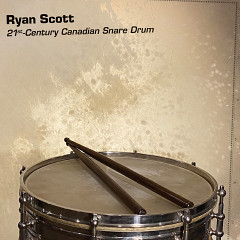
    Lad os være ærlige: Når man tænker kompositionsmusik for soloinstrumenter, tænker man ikke på lilletrommen. Den er måske det mest larmende medlem af slagtøjsfamilien og har i årtier sat lydniveauet i alt fra klassisk til pop. Derfor spidsede jeg ører, da den canadiske percussionist Ryan Scott annoncerede et helt album med værker for lilletromme — skrevet af 14 forskellige komponister. Endda halvanden times musik. Og jo, det lyder som meget for en plade, der primært består af én tromme. Men der er bestemt noget at komme efter.

    Andrew Staniland s åbner, ANTIGRAVITYDRUM, der blander freejazz med inspireret brug af percussiv vibrafon, mens Beka ShappsSkinscape IV sender trommeslagene gennem ringmodulation og omfattende lydbehandling, så vi er tæt på musique concrète. Christina Volpinis only ghost sniger sig ind i horror-territorium med marchtrommeinspirerede stød og spøgelsesagtig brug af lilletrommens diskant, mens Amy Brandon s Time and Effort næsten bliver en demonstration af instrumentets tekniske muligheder.

    14 værker over halvanden time er en stor mundfuld. Lilletrommens begrænsede tonale vokabular gør, at man indimellem falder af, selv efter flere gennemlytninger, og kontrasten mellem trommeslag og stilhed gentages lidt for ofte. Når det er sagt, får Ryan Scott og komponisterne omtrent så meget ud af en glorificeret gardertromme, som man kan. Jeg var både underholdt og tankevækket undervejs. Som eksperiment er idéen stærk — men i længden også så insisterende, at jeg næppe vender tilbage. Alligevel: Man skal ikke undervurdere alsidigheden i en god gammeldags lilletromme.

    … il y a vraiment quelque chose à découvrir ici […] J’ai été à la fois diverti et intrigué…

    21st-Century Canadian Snare Drum dans Bandcamp Daily

    «Review», Peter Margasak, Bandcamp Daily, 6 mars 2026
    mardi 10 mars 2026 Presse

    Percussionist Ryan Scott, a longtime fixture on the Toronto contemporary music scene, commissioned a slew of fellow Canadians to write pieces for him that placed the snare drum at their center. The 14 resulting pieces collected on this double CD respond to his prompt in a dizzying variety of ways—whether drawing in electronics, spoken word samples, or extended techniques, reflecting modern percussion aesthetics or dipping into style-colliding excursions. The visceral Bekah Simms piece Skinscape IV revolves around friction to underline the connection between the musician and an electronically-mediated iteration of their instrument. Scott generates a kaleidoscopic array of sounds produced by scratching a saxophone reed across the surface of snare amid the din of electronically-processed, snare-derived gestures. Brian Current’s Infantry draws out the snare’s role in military culture, transcribing into snare parts the vocal patterns in performed texts that were drawn from historical letters of soldiers, a la Peter Ablinger’s Voice and Piano. On the other hand, Michael Oesterle’s Hush opts for limited means, an all-acoustic dynamo of intricate, shape-shifting pattern variations using only drumsticks on the snare surface and the rims, a raucous reduction that’s among the most transportive works on the album. It’s a lot to take in at once, but the variety and range of the collection—which also includes strong work from Jason Doell, Christina Volpini, and Kati Agócs, among others — is impressive considering the humble core of the music.

    Les 14 morceaux réunis sur ce double CD répondent à sa demande de manière vertigineusement variée, qu’il s’agisse de recourir à l’électronique, à des échantillons de spoken word ou à des techniques étendues, reflétant l’esthétique moderne de la percussion ou s’aventurant dans des excursions où les styles s’entrechoquent.

    21st-Century Canadian Snare Drum dans Aiding & Abetting

    «The drum is the thing», Jon Worley, Aiding & Abetting, 2 mars 2026
    vendredi 6 mars 2026 Presse

    Um, this is fourteen new compositions played by Ryan Scott on a snare drum (with occasional accompaniment). That’s it. This is not a complicated album.

    Gotcha! Scott utilizes a wide variety of techniques and plays parts of the drum in unusual ways. These pieces sound less like percussion overload than adventures in sound, period. In other words, if you think you know snare, you really don’t.

    Having known a number of percussionists over the years (including folks who play in symphonies, etc.), I can attest that every single one of them has dreamed of a project like this. Most have screwed around with their equipment in many (if not all) of the ways Scott does here. But to take those random experiments and use those sounds to play real compositions? That’s kinda mindblowing.

    Oh yes, this is one of those “music critics just like weird shit” albums. Of course. But peel back that layer, and this is also a set of modern compositions that not only push the performative power of the percussionist but also succeed as powerful pieces of music as well. Sometimes when the weird get going, greatness happens. Wild, inventive and a true blast to contemplate.

    … il s’agit également d’un ensemble de compositions modernes qui non seulement poussent les limites performatives du percussionniste, mais qui sont également des morceaux de musique puissants. Parfois, lorsque l’étrange se met en marche, la grandeur se produit. Sauvage, inventif et vraiment génial à contempler.

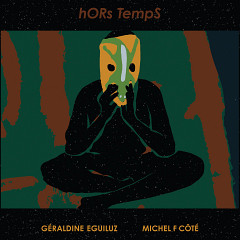
    hORs TempS dans The WholeNote

    «Review», Yoshi Maclear Wall, The WholeNote, no 31:4, 1 mars 2026
    vendredi 6 mars 2026 Presse

    Reversed tape loops, strummed micro gestures and percussive elements sourced from increasingly esoteric places encircle some­thing less akin to a pulse than some greater subtextual unifying logic. The source of these seemingly endless subtle sonic events — be it primary or found — does not grab you as much as the question of their seamless coexistence.

    This is music that journeyed quite a ways to get here; somehow all that you are hearing is born from the early 1990s when Géraldine Eguiluz was in Paris, and recorded some sounds on cassettes. Returning to one’s work after a prolonged span of time can perhaps come with an inherent freshness and Eguiluz warped, molded, deconstructed, recontext­ualized and eroded the sounds on these tapes through collage which is another category of introspective creation. Take Territoires perdus #3 for instance, where from a handful of vocal tracks stem harmonies that feel like they are only attained through this medium, as sustained breathy backgrounds envelop heavily edited streams of gibberish, creating a unique atmosphere of uncanniness and one of the many inscrutably hyper specific feel­ings achieved throughout this project. Adding Michel F Côté ostensibly adds an entire additional process to the creative mix, as he is another universe in himself with all the audial information he is able to generate through countless means. Around track five, the “how” becomes less enthralling than the “what.”

    Prenons l’exemple de Territoires perdus #3, où une poignée de pistes vocales donnent naissance à des harmonies qui semblent ne pouvoir être obtenues que par ce moyen, tandis que des fonds sonores haletants enveloppent des flux d’onomatopées fortement édités, créant une atmosphère unique d’étrangeté et l’un des nombreux sentiments hyper spécifiques et impénétrables obtenus tout au long de ce projet.
  • 8
  • 9
  • 10
  • 11
  • 12
  • 13
  • 14
  • 15
  • 16