Sauter au contenu principal
actuellecd

Blogue

66 résultats
  • 3
  • 4
  • 5
  • 6
  • 7
  • 8
  • 9
  • 10
  • 11
  • Alexandre David: Photogrammes dans PAN M 360

    «Critique», Frédéric Cardin, PAN M 360, 21 janvier 2025
    mardi 28 janvier 2025 Presse

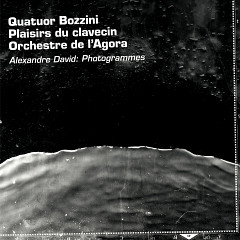
    Le Quatuor Bozzini, Plaisirs du clavecin et l’Orchestre de l’Agora présentent la musique d’Alexandre David, né en 1989. Le Montréalais a étudié, entre autres, en Europe et a bénéficié d’une résidence d’artiste au Hellerau de Dresde. C’est suite à cette résidence que son Quatuor à cordes est né, une œuvre nerveuse qui pulse d’effets microtonaux, de vibrations spectrales et de miroitements coloristiques variés. Plastiquement parlant, l’expression musicale de David est pointraitiste et abstraite, bien campée dans l’école de musique contemporaine avant-gardiste. Cela dit, la personnalité du jeune compositeur est forte et affirmée. Inutile de dire que les Bozzini sont des interprètes exceptionnels qui portent la musique de David à son maximum de potentialité expressive.

    Nanimissuat Île-tonnerre est une pièce écrite pour l’ensemble Plaisirs du clavecin, formé de Caroline Tremblay à la flûte-à-bec, Marie Nadeau-Tremblay au violon, Camille Paquette-Roy au violoncelle et Johanne Couture au clavecin. S’ajoutent pour cette pièce de nature vocale, Virginie Mongeau, soprano, William Duffy, contreténor, Arthur Tanguay-Labrosse, ténor et Clayton Kennedy, baryton. Nanimissuat Île-tonnerre est une incarnation musicale de textes de l’autrice innue Natasha Kanapé-Fontaine. Dans le premier des deux textes mis en musique, Je suis l’île, les techniques vocales étendues intégrées au discours expressionniste et souvent dépouillé du compositeur, créent un plan sonore dans lequel les mots de Kanapé-Fontaine deviennent des onomatopées qui donnent l’impression d’être viscéralement issues d’un terroir très ancien, primordial. Ce qui se comprend, car l’île en question est essentiellement celle de la Tortue, telle qu’on nommait le continent nord-américain chez les premiers peuples.

    Je suis ma grand-mère, deuxième poème de ce diptyque vocal, rappelle plutôt une forme de plainchant historique, coloré par des frémissements de flûte-à-bec et de clavecin, dans un phrasé hachuré, un peu à la manière de Morton Feldman. En ce qui me concerne, Nanimissuat Île-tonnerre est une œuvre de très haute tenue, peut-être un chef-d’œuvre authentique. Exigeant, certes, mais très impressionnant.

    Photogrammes est la pièce-titre de l’album et elle est conçue pour l’Orchestre de l’Agora (en format relativement réduit, quand même, soit une vingtaine de musiciens) et son chef Nicholas Ellis. On y retrouve certains gestes spectraux entendus dans le Quatuor, mais l’abstraction tonale prend un peu de recul ici, du moins occasionnellement.

    Du point de vue de David, Photogrammes est une revisite de souvenirs musicaux prégnants, imprimés émotionnellement dans son esprit. Le résultat est une série de réminiscences musicales classiques (romantiques) ou même pop sur coussin d’accords atonaux et soutenus. Imaginons un rêve éveillé, surréaliste, où des images parcellaires issues du passé apparaissent, se superposent, se fusionnent de façon kaléidoscopique, puis disparaissent.

    Un album marquant, mettant de l’avant une jeune voix majeure de la musique savante d’ici.

    Un album marquant, mettant de l’avant une jeune voix majeure de la musique savante d’ici.
    Jürg Frey: String Quartet No. 4 dans Peter Margasak

    «My 40 Favorite Albums of 2024, part 2», Peter Margasak, Peter Margasak, 7 janvier 2025
    mardi 14 janvier 2025 Presse

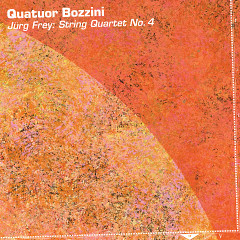
    The connection between Swiss composer Jürg Frey and the Montréal string ensemble Quatuor Bozzini keeps strengthening, as each party gains additional intimacy, introspection, and intuition for the other. There’s always the danger that such familiarity could breed laziness, and while the fourth string quartet by the composer might not feel as radical or daring as its predecessors, the rigor, beauty, and thoughtfulness have not become victims of the strengthening relationship. Bozzini have a way of articulating the composer’s most fragile passages with unerring sensitivity and lyric fragility, imbuing Frey’s darkly luminescent harmonies and sorrowful progressions with a lightness of touch that doesn’t preclude a sumptuous viscosity and grain, sound morphing with seamless ease, colors swirling and swelling.

    The connection between Swiss composer Jürg Frey and the Montréal string ensemble Quatuor Bozzini keeps strengthening, as each party gains additional intimacy, introspection, and intuition for the other.

    Vraiment plus de Snipettes!!! dans Outsideleft

    «Review», Richard John Walker, Outsideleft, 1 décembre 2024
    jeudi 9 janvier 2025 Presse

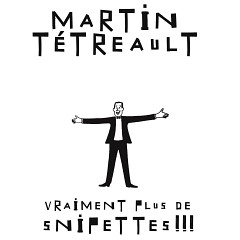
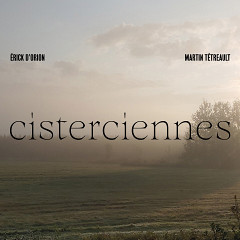
    Vraiment plus de Snipettes!!!, the third in free improviser Martin Tetreault’s’ Snippets’ series, is a reminder of his solo work after many recent collaborations. It uses recordings that date between 1984 to 2023 to create a 78-minute ride — not a smooth ride; more of a ’toboggan ride’. One that may use material from the eras of Snipettes! and Plus de Snipettes!!

    Don’t know him? Want to hear him? Preparation is key. The uninitiated should check him out on You Tube, and perhaps consider the Five Comments which follow below. This may put his found sound, spoken vignettes and turntablism within an understandable context. 24 tracks of Vraiment are manageably short, but conclude with a 27-minute finale that, for many, may be a challenge. I was hooked, anyroad, and not only because of his use of Yoko Ono’s Why deep in the mix.

    It uses French-Canadian sources that are over a half century old, which means that intertextual references may escape non-Francophones. But there are entry points for admirers of all audio bricoleurs. The sleeve notes help us discover the source of the samples, and help us distinguish between sounds from distorted samples and sounds from deconstructing turntables. (This would be clearer in live performances, where he has played standard DJ sets alongside ’deconstruction’ ones.)

    My initial interest was more conventional in that I’ve always used snippets in audio recordings. Snippets to foreshadow or to make abrupt changes. Snippets to cushion or to confound. But Vraiment plus de Snipettes!!! is a considerable body in itself and has an arched air. It is distinct. It isn’t hip-hop (but I likedd it) despite his chopping up and slicing up of vinyl prior to putting the needle on the record. Sprinkling decks with sand, covering parts in plastic, he manages to maintain grooves.

    The album covers (and quotes) in the sleeve notes could be an entrance point to his work or be an added communicative text to accompany the sounds. Much of it comes from a past Canada through MOR, How To, and Relaxation LPs of the 1970s. But the overall effect transcends time and geography. The air is quirky and subversive, holding back on overt calls for change, yet perhaps inspiring more bricoleurs of the world to arise and unite (if not to take over).

    Five Comments:

    1. The Turntablist As A Young Artist
      The germs of these songs may have begun decades ago. Is ‘Vraiment’ a condensing of his early ideas? It may be. Tango enthousiaste has “at 65, what happened to the enthusiasm of a 25-year-old?” I wonder how Tetreault would answer? He is older. He seems enthusiastic. Does he have a secret?
    2. Irreverence is everywhere
      Do I hear brays, roars and grunts? Is that a moose sampled in GusChickMousse? The music is certainly adapted from something by Ti-Gus Et Ti-Mousse. I laughed. I learned. It’s fun to trace these links. He makes horse galloping sounds from damaged records and turntables. Who can’t respect this?
    3. Big Issues are tackled, jokily
      Tétreault uses Tittley et Barker’s L’Art De Dépenser in at least five tracks. It leads to quotes on materialism, the soul, and free will. God knows if we improvise is used in another song (after which we hear what I thought were horse galloping sounds). It makes me want to see him perform.
    4. Scientific advice can contradict common sense
      Edward Teller’s words may be sampled in Bonjour fromwhere. A warning not to talk about space and time separately. Science may contradict common sense. Communication, offers this timely sample: “(M)achines can have experiences, apparently, and transfer them to another.”
    5. There is a Lumpy Gravy aesthetic
      This is apparent in the later tracks, and in one with Zappa in the title.
      It is not unwelcome.

    What lies beyond these snippets? New avenues appear.

    The air is quirky and subversive, holding back on overt calls for change, yet perhaps inspiring more bricoleurs of the world to arise and unite (if not to take over).
  • 3
  • 4
  • 5
  • 6
  • 7
  • 8
  • 9
  • 10
  • 11