Sauter au contenu principal
actuellecd

Blogue

86 résultats
  • 5
  • 6
  • 7
  • 8
  • 9
  • 10
  • 11
  • 12
  • 13
  • Les porteuses d’Ô dans Downtown Music Gallery

    «Review», Bruce Lee Gallanter, Downtown Music Gallery, 11 mai 2018
    vendredi 11 mai 2018 Presse

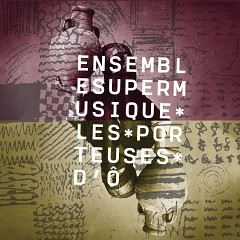
    Ensemble SuperMusique (ESM) is an ongoing (since 1998) large with a dozen discs on the great Quebec-based Ambiances Magnetiques label which began in 1984 and soon the celebrate their 35th anniversary. This version of ESM features 13 members from Quebec and Ontario including prominent names like Jean Derome (alto sax & flutes), Joane Hetu (alto sax & voice), Scott Thomson (trombone), Bernard Falaise (electric guitar), Isaiah Ceccarelli & Danielle Palardy Roger (percussion). Each disc by ESM features different musician/composers leading the ensemble. For this disc we have three long works led by Danielle Palardy Roger and Joane Hetu (both co-leaders of ESM) and guest composer/director Lisa Cay Miller. ESM has long worked with the idea of the balance between composed and freely improvised musics. In the liner notes, we get an explanation of the intention for each of the composers. Ms. Roger’s En arrivant par le nuage de Oort is based on a graphic score which represents a journey through space from the Oort Cloud (past Pluto) to the Sun. Our journey begins quietly and is filled with an eerie sense of mystery. The density slowly get thicker throughout, the sounds vibrating, the intensity escalating as we move through space. Ms. Hetu’s Préoccupant, c’est préoccupant deals with the ever-present interference which goes on in our lives. Ms. Hetu provides some minimal seasoning with some consistently weird/hilarious vocal sounds which fit perfectly with the way this piece unfolds, with unexpected bits of interference. Guest composer Lisa Cay Miller’s Water Carrier deals with drinking water quality in Canada, especially the dilemma of the First Nations bad water quality. The score itself involves a checkerboard which prompts the players to switch from notated to freely improvised sections. The music sounds like directed improv, focused and engaging, with selects bursts of activity between obviously written sections. What makes Ensemble SuperMusique special is that each of their dozen discs finds a way of harnessing the many different ways that composers and players utilize the balance between written and unwritten extremes.

    What makes Ensemble SuperMusique special is that each of their dozen discs finds a way of harnessing the many different ways that composers and players utilize the balance between written and unwritten extremes.

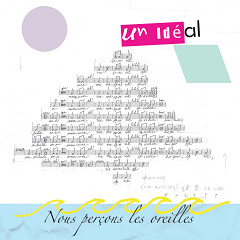
    Un idéal dans Downtown Music Gallery

    «Review», Bruce Lee Gallanter, Downtown Music Gallery, 11 mai 2018
    vendredi 11 mai 2018 Presse

    Featuring Jean Derome on alto sax, flutes, keyboards, melodica, percussion, objects and voice and Jaone Hetu on alto sax, melodica, objects & voice. Besides being a married couple, Ms. Hetu and Mr. Derome, have been long involved in running this, the Ambiances Magnetiques label. The couple also work on each others projects and are both members of Ensemble SuperMusique. Un Ideal is the fourth disc by the couple who record under the name, Nous perçons les oreilles, which means ‘We are the ears’. Right from the gitgo, we hear several drones, from saxes, voices and perhaps a sampler, with certain notes or phrases looped or just repeated. Both Joane and Jean play an assortment of small objects, whistles and percussive things, carefully creating a web of enchanting sounds. One of the things that this duo excel is their charming double vocals, singing and talking in twisted harmonies, embracing the joyous innocence of children’s rhyming games. I hear what sounds like a collection of wind-up toys, squeeze objects like dolls, kissy or breath-like sounds… silly and fun to listen to. Although both members of the couple play alto sax and have been involved in extended techniques, this music is more about creating short bits of odd sounds, going the music a delightful tongue-in-cheek quality. Excepté reminds me of a calliope found at a circus with a handful of kids singing along. This is music to make us smile and forget about the evil clowns in the daily news or blues. Some of this actually had me laughing out loud and that my friend is just what the good doctor ordered.

    This is music to make us smile and forget about the evil clowns in the daily news or blues.

    Les porteuses d’Ô dans The WholeNote

    «Something in the Air: Rethinking the Large Ensemble», Ken Waxman, The WholeNote, no 23:8, 1 mai 2018
    mardi 1 mai 2018 Presse

    Larger than the former group and more obvious in its use of strings, percussion and electronics is Montréal’s Ensemble SuperMusique (Ambiances Magnétiques AM 239 CD actuellecd.com). The tracks on Les porteuses d’Ȏ are also less homogeneous than on other discs. Although these single compositions by ensemble founders, percussionist Danielle Palardy Roger and saxophonist Joane Hétu (plus one from Vancouver’s Lisa Cay Miller) utilize a mixture of notation and improvisation, the results are undeniably divergent. Ostensibly about Canadian drinking water rights, Miller’s Water Carrier is multisectional, with strident tutti interludes. Otherwise, the narrative depends on contrasts between upbeat concert band-like melodies from the horns and Guido Del Fabbro’s delicately formal violin elaboration, with the churning rural landscape characterized by Bernard Falaise’s clanking guitar effects, plus primitivist slashes from Alexandre St-Onge’s electric bass and electronics. Additional strength is given to the track’s political message by repeated scrapes on bare acoustic strings plus Ida Toninato’s gusty baritone saxophone. Describing a journey among the planets, Roger’s En arrivant par le nuage de Oort uses electronic crackles and pops to underscore the extraterrestrial journey. With echoing percussive swats from her kit and that of Isaiah Ceccarelli, rugged reed smears and sprung sul ponticello pressure from Del Fabbro, violist Jean René and cellist Rémy Bélanger de Beauport, plus some snarls and growls from trombonist Scott Thomson, the composition reflects the energy and turbulence of the heliocentric world. And like the predicted end of the universe, the tremolo piece doesn’t climax, it just ends. Based on mumbled vocalese, Hétu’s Préoccupant, c’est préoccupant is more problematic since her gargles, whoops and whines are often incomprehensible. Melodramatic and dissonant string section swipes, guitar flanges, buzzing wave forms and unfocused drum beats contribute to the verbal commotion, rather than framing or defining it.

    Additional strength is given to the track’s political message by repeated scrapes on bare acoustic strings plus Ida Toninato’s gusty baritone saxophone.

    Lézardes et zébrures dans The WholeNote

    «Jazz and Improvised», Stuart Broomer, The WholeNote, no 23:8, 1 mai 2018
    mardi 1 mai 2018 Presse

    Guitarist Bernard Falaise is a significant contributor to Montréal’s musique actuelle movement, a member of the expansive Ensemble SuperMusique as well as the trio Klaxon Gueule and Quartetski, a group that regularly reimagines high modernist composers like Bartók and Stravinsky. Lézardes et zébrures is a solo record, but one without solos, a series of pieces constructed from minimal materials. Each begins with short figures, intervals and arpeggios played on an acoustic guitar in open tunings to emphasize steel string resonance and ringing harmonics; these are then looped, with Falaise adding layers of other instruments, among them electric guitar, glockenspiel and melodica. The opening Au zoo sets both a pattern for the music and an intermittent theme, one that’s reflected in titles like Langue de girafe and Mémoire d’éléphant, and even in the CD title — literally “cracks and welts” but with the bilingual suggestion in this context of lizards and zebras. These notions of other species’ consciousness are matched with alternative substances and spaces — Marcher sur la glace or Stalactites et stalagmites — all of them implicit in sounds that repeat and reconfigure. All of Falaise’s works here are at once immediate, luminous and strangely dreamlike. The oscillating figure of Le compas dans l’œil suggests Steve Reich’s minimalism, while the clicks and suspensions of Distillations reference the turntablist’s art, but it’s all part of Falaise’s bright, immediate, sonic universe, developed at greatest length in the imagination of another materiality in Porcelaine 360°.

    All of Falaise’s works here are at once immediate, luminous and strangely dream-like.

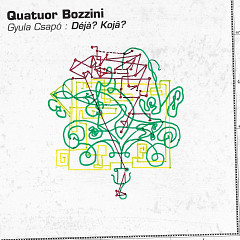
    Gyula Csapó: Déjà? Kojâ? dans The WholeNote

    «Modern and Contemporary», Stuart Broomer, The WholeNote, no 23:8, 1 mai 2018
    mardi 1 mai 2018 Presse

    Founded in 1999, Quatuor Bozzini are distinguished interpreters of contemporary repertoire, including fine recordings of John Cage, James Tenney and Steve Reich. Here they present a particularly challenging work, a three-part, 73-minute piece composed between 2011 and 2016 by Gyula Csapó, a Hungarian composer currently teaching at the University of Saskatchewan. His music suggests the influences (including scale and depth) of Morton Feldman and Arvo Pärt. Csapó’s brief note about this work is dauntingly abstract (“event-fossils,” “fractals”), but the core is in the title, Déjà? Kojâ? part French, part Persian: “Already?” is easy. “Kojâ?” comes with a poem that suggests “Threshold” as the crucial sense, and that this world is a threshold, the beginning of another experience or existence, a step both inevitable yet deferred. The work is monumental, developing thick, often dissonant textures. Its long first section is anchored to a repeating oscillation, brief but slow, between low-register cello and viola and high, reedy violins. Seconda Parte is more varied, adding other sonic devices, including moving the contrast of registers to pizzicato lows and whistling harmonic glissandi from the violins. Terza Parte eventually expands the oscillating figures into a still minimalist, but gradually evolving melodic shape. It’s a demanding work, a dark reverie that suggests anticipation while dramatizing its delay, a sombre meditation shot through with bright highs that are themselves dissonant. At once static and tumultuous, this is depth experience, rewarding all the attention one can give it.

    At once static and tumultuous, this is depth experience, rewarding all the attention one can give it.

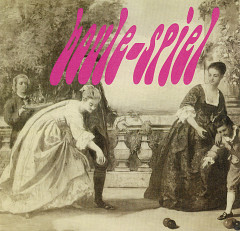
    Boule-spiel dans Free Jazz Blog

    «Review», Stef, Free Jazz Blog, 23 avril 2018
    lundi 23 avril 2018 Presse

    Even if the trio is Magda Mayas on prepared piano, Pierre-Yves Martel on viola da gamba, feedback, objects, and Éric Normand on electric bass, speakers and snare drum, the instruments don’t really matter. The trio’s focus is on improvised sounds, little sounds, little noises, creating sonic universes that shift between the calm and the eery, the contemplative and the outright frightening. It is sound lifted beyond music, as a wonderful texture of things falling, scraping, hitting and plucking or just resonating, marbles rolling over strings? an endless bow on one string? metal gliding over all piano strings? piercing feedback through the speakers? raindrops hitting wood? wind rushing through leaves? animals crying in the distance? rhythmic industrial activity? a far unoiled metal door opening?

    The sonic universe evolves at its own pace, slowly, slowly building, and growing within its own logic, or even lack thereof, within its own organic nature. Every sound has its own space, carefully positioned, cautiously placed, audaciously created, resulting in a exquisite and intense listening experience. There is an incredible beauty in it, defined by its own aesthetic. There are emotions too: shifting, and sometimes superimposed, like sadness and fear and resignation all at the same time, like joy and distress and surprise as one feeling. You can’t put your finger on it. And that makes it so wonderfully enjoyable.

    There is an incredible beauty in it, defined by its own aesthetic.
  • 5
  • 6
  • 7
  • 8
  • 9
  • 10
  • 11
  • 12
  • 13