Sauter au contenu principal
actuellecd

Blogue

108 résultats
  • 8
  • 9
  • 10
  • 11
  • 12
  • 13
  • 14
  • 15
  • 16
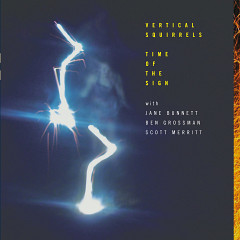
  • Time of the Sign dans Camuz

    «Critique», Maxime Bouchard, Camuz, 29 avril 2015
    mercredi 29 avril 2015 Presse

    … je fus agréablement surpris par le disque Time of the Sign (Ambiances Magnétiques, 2014), troisième opus de la formation ontarienne Vertical Squirrels. Ça sonne comme une sorte de mélange entre le jazz, l’improvisation libre, le post-rock, le jazz-rock et du field recordings. Difficilement classable, ce groupe est formé de Daniel Fischlin, Ajay Heble, Lewis Melville et Ted Warren. S’ajoutent les invités Jane Bunnett, Ben Grossman, Scott Merritt et Larry Cramer.

    Ça sonne comme une sorte de mélange entre le jazz, l’improvisation libre, le post-rock, le jazz-rock et du field recordings.

    Jean Derome dans Le Devoir

    «Jean Derome, homme de la Renaissance», Serge Truffaut, Le Devoir, 25 avril 2015
    samedi 25 avril 2015 Presse

    Le saxophoniste, flûtiste, compositeur et oulipien Jean Derome est un homme de la Renaissance. Rien de moins. Il est ainsi car il civilise le monde depuis des lunes aussi antiques qu’indiennes. Bref, depuis le temps long de l’histoire. C’est d’ailleurs pour cette raison, et beaucoup d’autres, qu’une année Derome débutera en mai prochain et se conclura en juin 2016. Au ras des pâquerettes comme du bitume, sachez, ami lecteur, que le détail de ce marathon gréco-musical sera décliné le 28 avril dans l’enceinte de la Maison de la culture du Plateau-Mont-Royal. C’est dit.

    En attendant l’amorce, à 17 h pour être aussi exact qu’une montre suisse défiscalisée, de ce rendez-vous très singulier, on va, pour notre part comme de notre côté, déposer une requête auprès du Conseil de sécurité des Nations unies. Quand? À l’ouverture des marchés le lundi 27 avril. L’objectif? Que l’année Derome soit métamorphosée, toutes affaires cessantes, en décennie Derome. On a fumé de la moquette à l’acrylique? Pas du tout! Si cela avait été commis, on aurait fait une faute de goût augmentée d’une injure à l’égard, et non à l’endroit, dutapis persan, qui en verlan se mue en «pi-ta sans père». Comme quoi les ayatollahs sont des freudiens qui s’ignorent.

    Si satisfaction n’est pas accordée par le CS de l’ONU, alors on déclenchera illico la troisième guerre mondiale. On exagère? Pas du tout! On l’a déjà écrit, on va le répéter pour mieux le souligner: Jean Derome est un homme de la Renaissance. À l’instar des ancêtres italiens, il est d’une immense culture. Aussi musicale que livresque. On se souvient, par exemple, qu’il y a une vingtaine d’années il avait consacré tout un album à la purée de Vie, mode d’emploi de Georges Perec. On se souvient qu’il a accompagné des danseurs, des cinéastes, des poètes. Bref, tout ce qui fait la beauté de la vie sans recours à un mode d’emploi.

    On a toujours été épaté, subjugué, séduit par l’aisance comme par l’à-propos avec lesquels il fait résonner les chants d’oiseaux tant chéris par Eric Dolphy, avec lesquels il met en relief les rythmes chaloupés si chers à Duke Ellington et à Billy Strayhorn. On a toujours été ce qu’on a confié avoir été par le génie — oui! le génie — avec lequel il décline les oraisons «bluesées» de ce cher Roland Kirk comme par sa manière de commenter les déambulations de Thelonious Monk dans le territoire du chaos sans jamais avoir sombré.

    Jean Derome est un homme de la Renaissance comme un grand homme. Si d’aventure on conjugue ce constat, qui n’est donc pas une opinion, avec une limitation géographique ou nationale, alors on déclenchera la quatrième guerre mondiale. Car étant ce qu’on dit qu’il est, Derome est de facto universel. C’est clair? Eau quai! Ave et surtout pas amen. […]
    … Derome est de facto universel.

    The Squiggle Game dans Voir

    «Critique», Réjean Beaucage, Voir, 21 avril 2015
    mardi 21 avril 2015 Presse

    Batteur et bidouilleur dont la palette stylistique s’étend du rockabilly jusqu’aux explorations «actualistes», Alexander MacSween est aussi compositeur de musiques pour le théâtre, la danse ou le cinéma. Cet éclectisme se reflète sur son premier recueil personnel; le contenu en est extrêmement varié et les 11 pièces évoquent autant d’univers dans lesquels l’auditeur se laisse guider avec un plaisir chaque fois renouvelé. Le guitariste Sam Shalabi s’illustre avec inventivité sur quelques titres, comme la percussionniste Corinne René, qui colore certaines ambiances, et le contrebassiste Nicolas Caloia, discret, mais efficace. MacSween a composé, enregistré et mixé le tout avec brio et le résultat peut être écouté en boucle sans lasser. Il s’agit malheureusement de l’un des derniers disques à paraître sous cette audacieuse étiquette.

    … le contenu en est extrêmement varié et les 11 pièces évoquent autant d’univers dans lesquels l’auditeur se laisse guider avec un plaisir chaque fois renouvelé.

    The Squiggle Game dans Vital

    «Review», Frans de Waard, Vital, no 979, 20 avril 2015
    lundi 20 avril 2015 Presse

    Although Alexander MacSween has been making music for thirty years, this is first release under his own name. He was a drummer for Jerry Jerry & The Sons Of Rhythm Orchestra, The Nils, Tinker, Blinker The Star, Pest 5000 and Bionic, but also ventured into improvisation with Sam Shalabi (as Detention) and he’s part of Martin Tetreault’s Turntable Quartet. Solo he sometimes works as Macheen with a drum machine and effect pedals. He is a man of many talents, which comes to great use when recording his own album. He plays here rhythm programming, sampler, tom toms, keyboards, voice, drums and marimba and along there is input from Corinne René on marimba, wood blocks, drum set, tympani, bowed gong, cymbal, percussion, bowed vibraphone, Nicolas Caloia on contrabass and univox MaxiKorg and Shalabi on guitar and nylon string guitar. They play on several of the pieces but not always and not all the time. This is indeed a highly varied album of some excellent music that easily moves around the circles of free jazz, jazz, improvisation, electronics, abstract sound scapes and these circles sometimes bump into each other, and sometimes stay wide apart. There is a fine choice of sampled voices, scattered around sparsely in these pieces. There are fine crafted rock rhythms, and Shalabi’s guitar spins, bows, moves around like he’s trying to kill the damn thing. Sometimes it seems that MacSween wants to play a more or less conventional rock song with some weirdo elements, and then there’s something like White Bear and Under The Plum Tree, with all its abstract electronics and sound scaping and the latter with a soaring cello. Crocodiles with some fine voice samples has a nice film noir ring to it. This is a highly varied record, which goes from strong song to another song. Anyone with an open mind should seek this out.

    This is a highly varied record, which goes from strong song to another song. Anyone with an open mind should seek this out.

    The Squiggle Game dans The Sound Projector

    «Review», Ed Pinsent, The Sound Projector, 8 avril 2015
    mercredi 8 avril 2015 Presse

    The Squiggle Game (& Records) is a true oddity from the hands and brain of the Canadian percussionist Alexander MacSween. We’ve rarely been privileged to hear such idiosyncratic and unusual approaches to the construction of instrumental music, and the results are quite thrilling with their unexpected byways, forays and sojourns in unfamiliar turfs. As an additional benefit, the instrumentation is odd, sparsely arranged, and performed with an interesting and quite modest restraint. On top of all that there’s MacSween curious vocal interjections and sparing use of the sampler insinuating themselves into the gaps. How did such a quaint item get made?

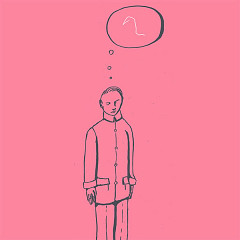
    The answer may lie with MacSween’s own process, or rather the lack of it. Blighted by a creative block when faced with making this record, he tried to trick his brain into lifting itself out of the quagmire. “Do me a drawing,” he proposed to Fabrizio Gilardino who co-runs the label, “and I’ll make an album around your image. Matter of fact, do the titles while you’re at it. And write the credits for the whole thing, using the names of whatever musicians you think I should play with.” “Are you nuts?!” sputtered Fabrizio, nearly choking on his own panini.

    Undeterred, MacSween received a completed package of art and credits. All he had to do now was fill it up with some music. At this point he realised that building a record back-to-front might not have been the best idea. This dawned on him while observing some construction workers at the top of a ladder attempting to build a factory chimney from the top downwards. His next step was to draw inspiration from the work of Donald Winnicott, the English psycho-analyst who had his own method for extracting the creative potential from his patients, especially children. He’d pass them an unfinished drawing and tell them to finish it. He called it The Squiggle Game; it might make sense to think of it as a more interactive version of the Rorschach ink-blot test.

    MacSween achieved creative breakthrough when he finally saw the trap he’d built for himself. Instead of following his own ground rules, he took Gilardino’s work and “elaborated more freely”, thus producing the resulting album. We still have many guest players — Corinne René supplying even more percussion, the contrabass of Nicolas Caloia on two tracks, and the guitar playing of Sam Shalabi who provides much-needed detail and weight to this rather insubstantial set of nontunes. (Shalabi has also worked with The Invisible Hands and Fortner Anderson.) But it’s not clear if this is the original Gilardino dream-team lineup, or what. That’s not even his drawing on the front cover (in fact, it’s by Michal MacSween). Drive yourself bonkers figuring out at what point MacSween’s re-elaboration kicks in. I was reminded for some reason of Alessandro Bosetti’s work by this album, but in fact it contains far fewer vocals than I remember on first spin, and certainly not as many words per square inch as Bosetti crams into his releases. MacSween is also notable for his contribution to an old 2006 project at Mutek Montréal, where he teamed up with Martin Tétreault to produce a conceptual tribute to Ringo Starr.

    We’ve rarely been privileged to hear such idiosyncratic and unusual approaches to the construction of instrumental music, and the results are quite thrilling with their unexpected byways, forays and sojourns in unfamiliar turfs.
  • 8
  • 9
  • 10
  • 11
  • 12
  • 13
  • 14
  • 15
  • 16