Sauter au contenu principal
actuellecd

Blogue

85 résultats
  • 1
  • 2
  • 3
  • 4
  • 5
  • 6
  • 7
  • 8
  • 9
  • The Muted Note dans Musicworks

    «The Evolution of The Muted Note», Jonathan Bunce, Musicworks, no 120, 1 septembre 2014
    lundi 1 septembre 2014 Presse

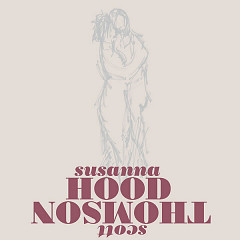
    The Muted Note is a marriage of music, dance, and poetry — specifically, the poetry of the late Canadian writer P. K. Page. Her work was the unexpected catalyst for the first creative collaboration between Scott Thomson and Susanna Hood, both of whom were long-time linchpins of Toronto’s artistic scene before moving to Montreal in 2010. Trombonist Thomson, part of the bedrock of Toronto’s improvised music scene during his time in the city, was a member of numerous ensembles there — the AIMToronto Orchestra (which he remains codirector of), The Lollipop People, Woodshed Orchestra, and his own quintet The Rent; and was additionally a cofounder of AIMToronto (Association of Improvising Musicians Toronto), and founder of the music venue Somewhere There. Dance artist and vocalist Hood was the founder and artistic director of the interdisciplinary project Hum and a veteran of companies such as Toronto Dance Theatre. Despite their overlapping careers and long-time friendship, Hood and Thomson only started working together after their personal lives began to intertwine.

    Their first collaboration was in the context of The Rent, a repertory ensemble formed with saxophonist Kyle Brenders to explore the music of American soprano-sax legend Steve Lacy. Instrumental interpretations of Lacy works featured settings of poetry by numerous poets from around the world, which in turn led Thomson to ask himself, What if…?

    “It dawned on me that Susanna would be a fascinating interpreter of that repertoire, and I got really inspired by that project. While I’d written music in other veins, I’d never really written a song in conventional form,” he explains. “When we moved to Montreal, I thought it would be great to write some songs specifically for Susanna’s voice. So the genesis of The Muted Note is creating material for us to play together, and it has unfolded as several streams of playing the same book of songs in different contexts, in different formations, in different scopes.”

    It was the couple’s wedding in 2010 that led them to Page. They received a gift certificate for a Toronto bookshop, and Thomson picked up The Essential P. K. Page (The Porcupine’s Quill). He’d read Page’s work when he was an English-literature undergrad, but hadn’t connected with it back then. This time was different, he says: “Opening up the book, it was just so clear that there was so much music in there.

    “And there’s a quality in her writing that’s really important in the context of this work — the poetry’s not primarily about her, it’s not about her self-expression, it’s not about her emotional state, it’s not even biographical, except in a residual way. She’s focused on the details and nuances of the world around her.”

    “And,” Hood adds, “coming from a point of view of a state of wonder, which is quite inspiring.”

    “Yes, humility and wonder,” Thomson agrees. “And it was so touching to make this work that reflected such a love for the world around her and its tiny, massive details.”

    Thomson asserts that the poetry remains the “absolute core” of the work it has inspired. “The music and songs serve the poetry. They don’t conceal or limit it in any way, they animate it in different ways. So in that sense, the dance extends and also relates directly to the poetry. The over-arching goal — whether it’s just the two of us playing as a duo, or with an entire stage production — is to create a work that’s not a music show, not a dance show. It’s poetry plus music plus dance, and the three media are serving each other and serving the foundation, which is the poetic texts.”

    The suite of eleven songs composed for the voice-and-trombone duo, which can be heard on the 2013 recording The Muted Note (& Records), shows careful restraint and reverence for the source material, even as Hood sings dramatic Page lines such as “Go out of your mind / Prepare to go mad.”

    Hood and Thomson were encouraged to record the songs in the duo format by their friend and collaborator, drummer—composer Michel F. Coté, who is also a cofounder of & Records. At the time of recording, they were well on their way to becoming deeply entrenched in Montreal’s active free-improvising scene, which was then centred around L’Envers, the loft performance space run by trumpeter Ellwood Epps. In 2013 Thomson assembled a new quintet, The Disguises— comprising alto saxophonist Yves Charuest, bassist Nicola Caloia, drummer Pierre Tanguay, Thomson, and Hood— to play his songs.

    It wasn’t long before they began to imagine The Muted Note as a larger work. Movement soon became the next natural extension.

    “I have a three-to-four-year creative cycle, and right when we moved to Montreal, I’d come to the end of one and sort of spent some time readjusting to the new surroundings and changes in my life, personally and artistically,” Hood recalls. “I was fascinated to see where approaching song from a choreographic point of view would take me.

    “I’d already spent a good ten or twelve years finding intersections between sound, movement, and dance in very interesting hybrid ways, but when I started working with Scott’s group in Toronto, all of a sudden this whole inspiring and humbling new approach became available to me. Right from the start, my approach to the Lacy music was, obviously, singing the lyric, but then figuring out how to improvise on song structure — which was something I hadn’t done so much—and to do that both vocally and physically. Dance and physical expression are my first language — that’s always been my way into singing. So when this new suite came along, right away I was working with that material both physically, through the movement of flesh and bones, and also through vocal connection.”

    As the duo expanded the sonic palette of The Muted Note with The Disguises, Hood also began to expand the range of movement by engaging other dancers, in part to ease the physical demands made on her by dancing while singing. For the large stage-work, which premiered in September 2014, the quintet is joined by dancers Alanna Kraaijeveld, Ellen Furey, and Bernard Martin.

    Yet this evolution of sound and motion all leads back to The Muted Note’s foundation in the poetic work of Patricia Kathleen Page, one of the key Canadian modernist poets of the twentieth century. Page, who died in 2010 at the age of 93, was born in England and moved to Canada at the age of three, living in Red Deer, Calgary, Winnipeg, and Victoria. After marrying the then National Film Board of Canada commissioner W. Arthur Irwin, a former Maclean’s editor and soon-to-be diplomat, she lived in Australia, Brazil, Mexico, and Guatemala. As P. K. Page, she published over thirty books; as visual artist P. K. Irwin, she created works that are now in the permanent collections of the National Gallery of Canada and the Art Gallery of Ontario. Page’s first major prize was a 1954 Governor General’s Award for “The Metal and the Flower,” one of the poems that Thomson has adapted for The Muted Note. The title of the song suite comes from her poem “The Understatement: “and so I use the under-emphasis, / the muted note, the less than purely rounded.”

    “I thought it was a nice encapsulation of exactly what we’re describing,” explains Thomson. “The unmuted note would seem to be the expressive note, the one that sings itself. The muted note is one that looks outward and tries to express itself through things.”

    Is The Muted Note, then, an expression of the openness of spirit that, for some, accompanies middle age? “Well, we got married,” smiles Thomson, “and that’s a transition in life. As a couple, that experience focused our attention on all that’s happened in the world, all that could unfold.”

    Adds Hood: “In terms of looking upward and listening and responding to what’s outside one’s self, I think what’s needed is something in your make-up as a human being, regardless of your age, and maybe that’s what’s crystallized for us now.”

    The suite of eleven songs composed for the voice-and-trombone duo […] shows careful restraint and reverence for the source material…

    Allochtone, Feldspar dans Improv Sphere

    «Guitare à l’honneur (4)», Julien Héraud, Improv Sphere, 1 septembre 2014
    lundi 1 septembre 2014 Presse

    Bien sûr, depuis plusieurs décennies pour l’un et depuis plusieurs années pour l’autre, le Japon et la Suède sont reconnus pour être des terreaux très fertiles au niveau du free jazz et de la noise. Mais un pays dont on parle moins et qui possède également plusieurs scènes intéressantes de musiques innovatrices, c’est le Canada, et plus particulièrement le Québec. On connaît bien le platiniste Martin Tétrault, mais c’est à Rimoulski, autour du bassiste Éric Normand, que gravitent également de nombreux musiciens intéressants.

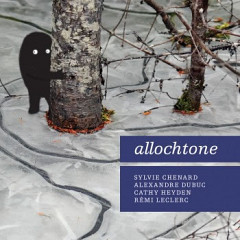
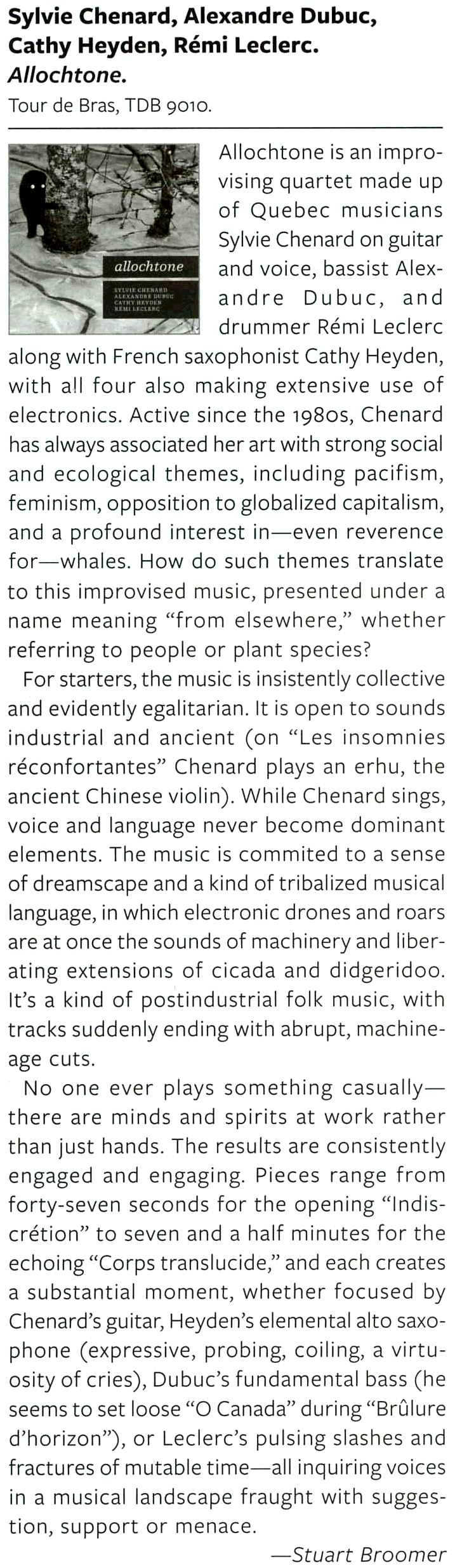
    Ainsi, sur Tour de Bras, label dirigé par Normand justement, on trouvait récemment quelques courts CD très innovants. Le premier est Allochtone, un quartet formé par Sylvie Chenard (guitare, erhu, voix, électronique), Alexandre Dubuc (contrebasse, électronique), Cathy Heyden (saxophone, objets, électronique), et Rémi Leclerc (batterie, percussions, électronique). Ici, ces quatre musiciens proposent une musique singulière et innovante de musique qu’on pourrait peut-être qualifier de post-eai, mais du post-eai teinté de rock et de jazz, de free et de noise. La guitare ici est rarement rock, moins que la basse en tout cas, il n’y a pas d’effets, et Sylvie Chenard n’hésite pas à utiliser des accentuations jazz. C’est plutôt la section rythmique qui est souvent lourde et grasse et apporte une touche de rock et de vivacité à ces neuf courtes pièces; en plus de l’électronique abrasive omniprésente. Quant au saxo, il joue la plupart du temps dans un mode très free-rock à la Zu et compagnie.

    Je décris en gros à quoi ça ressemble, et ça ne paraît peut-être pas très original dis comme ça, mais il faut écouter dans le détail cet album qui fourmille de détails innovants et de superpositions esthétiques inédites. Il faut entendre la voix ténue de Sylvie Chenard accompagnée d’électronique discrète, de contrebasse lyrique, ou de souffles au saxophone; de même que les impros jazz sur fond d’électronique harsh, ainsi que la touche discrète de rock qui est omniprésente sur ce disque.

    Feldspar est un autre excellent disque publié sur le même label et qui se déploie sur un terrain proche du quartet précédent. Ce trio est composé de Matana Roberts au saxophone alto, Sam Shalabi à la guitare, et Nicolas Caloia à la contrebasse. Cette autre formation québécoise est similaire dans la mesure où elle se situe également à la croisée du rock et du jazz, mais de manière encore plus claire je trouve. D’une part, il n’y pas d’électronique, ce qui renforce l’identité des instruments. Et d’autre part, on retrouve le guitariste Sam Shalabi qui est surtout connu pour ses projets rock et electro-rock aux côtés d’une saxophoniste et d’un contrebassiste qui évoluent principalement dans les milieux jazz.

    Shalabi et Caloia sont les deux musiciens les plus ouverts de ce projet, et évoluent indifféremment entre les voies suivies par le groupe, qu’elles soient plus binaires, répétitives et rock, ou plus ternaires, accentuées et swinguantes. Matana Roberts ne quitte pas trop par contre un mode de jeu et un phrasé beaucoup plus jazz, avec les mêmes accents et intonations. Elle est moins ouverte d’une certaine manière, mais elle fait très bien ce qu’elle fait, et c’est aussi bien qu’elle s’y cantonne un maximum je trouve. Son phrasé est rond, dansant, virtuose, intense, bref, elle assure. Quant à Shalabi, parce que je m’intéresse surtout aux guitaristes dans cet article, il pose parfois des nappes avec pas mal de distorsion, il peut aussi improviser un solo plutôt jazz, ou faire des soli moins swing avec plus d’effets qui se rapprochent plus de solo rock, jazz-rock.

    Les compositions sont originales et variées, chaque musicien a sa singularité et apporte sa touche personnelle au son de groupe qui est aussi innovant. Je préfère encore ce trio car il assume pleinement ses influences et en joue avec virtuosité et talent. Du lyrisme et du swing du jazz à l’intensité du rock, en passant par la spontanéité de l’improvisation libre, tout est conservé dans ces sept pièces très prenantes, volontairement idiomatiques mais innovatrices et créatives.

    … il faut écouter dans le détail cet album qui fourmille de détails innovants et de superpositions esthétiques inédites.

    Le Sacre du printemps dans The Squid’s Ear

    «Heard in», Dave Madden, The Squid’s Ear, 25 août 2014
    lundi 25 août 2014 Presse

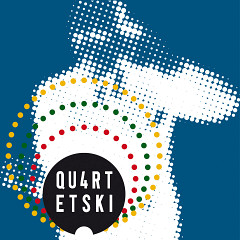
    With 101 years of concerts, riots, discussions, thesis, influence, acceptance, canonization, you would think there isn’t much more that can be said about Stravinsky’s immaculate, ground-breaking Rite of Spring. However, this quintet’s interpretation is forcing us to reopen the tomes. Isaiah Ceccarelli on drums, electric guitarist Bernard Falaise, Phillipe Lauzier on bass clarinet and soprano saxophone, violinist Joshua Zubot and ringleader Pierre-Yves Martel also on viole de gamba and “diverse objects” here deliver a candid version of the work that’s based in straightforward score adherence and detours that range from slight to wild, but always back to the map — and always interesting.

    Apart from a deep muffled drone, the introduction of L’adoration de la terre begins on queue with Lauzier delivering the high C and rhapsodic opening gesture; Falaise gently plucks out pinpoints to cover the brass counterpoint. Just as faint, Zubot joins to complete the intimate trio. Things are going exactly as planned, the performance washes over you, you’re rising to heaven — bam, one minute and forty-seven seconds marks the first frenzied burst of instrumental twisting, guttural breaths and string disfigurement. As if suddenly unpossessed, the band immediately hops back into character before Ceccarelli and Falaise lurch into a bluesy stomp. Zubot goes it alone with a stark, pan-tonal rogueness as prelude to the Augures printaniers (the staccato 8th note part with lots of accents that you can almost shake Devil horn hands to — the portion John Williams ripped off for Jaws). For this movement, the crew restrains the otherwise tension with Ceccarelli opting for jazz brushes and all working muted and mezzo forte. However, it isn’t long before the members burst into a brash groove, complete with Gene Krupa drum bashing. The group moves forward with the lugubrious, snake-charmer Rondes printanières, laying into the swaggering pulse of Stravinski’s vision while adding Lauzier’s steamy Coltrane-esque exploration on top. Rocking out, guitar string and amp mangling, barely audible drones and a raging barn-stomping frenzy follow to close out the first half.

    Le sacrifice tracks the same model of faithfulness and interjection, the latter delivered with woo to convince that the deviations should be there. The act flows from dinner theatre to corner slinking lounge with a great deal of space near the beginning. As the group approaches Glorification de l’élue (the percussion-heavy bombast), the air is frantic with Martel taking a nimble extended solo. The players launch back in and cadence just as Falaise takes flight with something not quite metal, but certainly heavy: dense, warbling, detuned chords that slightly shift pitch, hang, and dissolve like clouds on the verge of thunder. Ceccarelli steps in and the two put a dirge-like punctuation on the Golden Mean of the piece. The ostinato of Action rituelle des ancêstres (again, being a Star Wars child, I associate this with the Jawa sand crawler) starts like a lamb, works into a two-headed lion and burns out. The finale is a curious medley of mechanized grinding and rumbles from what seems to be a turntable also playing a short hazy loop of Stravinski’s original in reverse. Soon everyone wails, the beat grows three heads due to Falaise’s distortion and Ceccarelli’s assault, and cut.

    It is a daunting task filled with ghosts throughout history to tackle Le Sacre as a small chamber ensemble and make it your own, but there is nothing bare-bones about this version. The approach could have gone Three Bears: one is too rigid, the other too wild, free and disrespectful. Quartetski’s augmentation of this landmark work is just right.

    Quartetski’s augmentation of this landmark work is just right.

    12 – 18 août 2014: Prenez note!

    lundi 11 août 2014 Général

    Veuillez prendre note que nous serons fermés du 12 au 18 août 2014. Vos commandes reçues durant cette période seront traitées le mardi 19 août.

  • 1
  • 2
  • 3
  • 4
  • 5
  • 6
  • 7
  • 8
  • 9