Sauter au contenu principal
actuellecd

Blogue

116 résultats
  • 12
  • 13
  • 14
  • 15
  • 16
  • 17
  • 18
  • 19
  • 20
  • Ctenophora dans Exclaim!

    «Reviews — Improv & Avant-Garde», Nick Storring, Exclaim!, 16 février 2012
    jeudi 16 février 2012 Presse

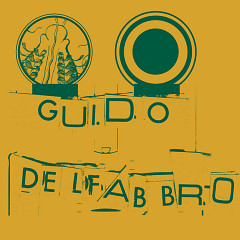
    This release occupies a very rarefied and odd aesthetic, evocatively pitting flurries of remote-sounding electronics against thin sinews of violin. The disc oscillates between a type of ironed-out fiddle music (all ornamentation and melodic contours pressed neatly into fibrous drones) and crackling electrostatic emissions, synthetic hacks and bleats ― a renovated version of sounds from the bygone era of analog abstraction and punch-card operated computing. Said oscillation happens so seamlessly that the listener becomes thoroughly entangled in this neatly woven, rosin-sticky web of hoarse, woody violin lines and arcane-ring-modulated rays and trickles of sound. And while it’s not all just a blast from the past, even so it tends to flicker with the stark futurism of Cluster’s 71, rather than recalling the neon whimsy of the BBC Radiophonic Workshop. Another point of reference, despite Del Fabbro having a more deliberate and active approach, is Ryan Driver and Eric Chenaux’s synth/guitar duets as the Guayaveras (documented on Rat-Drifting). Reminiscences aside, Ctenophora is a unique and strange release that manages to pull together seemingly polarized sonic territory (melody and noise, electronic and acoustic, etc.) in a highly idiosyncratic manner. This is recommended.
    This is recommended

    Éric Normand, Michael Norris dans BMA Magazine

    «Review», Dan Bigna, BMA Magazine, 14 février 2012
    mardi 14 février 2012 Presse

    […] This was a shining example of micro-tonal field performance, but let’s contrast this with the superb Saturday afternoon theatre set from electric guitarist Ryan Kernoa in combination with electric bassist Éric Normand and Canberra musician Michael Norris on electronics. Normand does a lot more than merely strum his instrument in time which one often comes to expect from a bassist. If I can be so bold to make the comparison, Normand does for improvised music what Joy Division bassist Peter Hook did for post-punk in terms of redefining the role of the bass, so that it adopts the role of a lead instrument that allows for harmonic interplay beyond simply laying foundations.

    So it went that Normand attached all sorts of devices to his instrument. He banged and stroked it in equal measures to set a scene that involved controlled feedback, performance theatre in the form of physical contortions in response to the sound, and a highly disciplined approach to noise making. This was enhanced to the nth degree by the mouth watering atonality of guitarist Ryan Kernoa who altogether dispensed with melody to explore bristling electrified string configurations which at times reminded me of Thurston Moore at his finest. When Michael Norris’ flailing tonal pitches on electronics were added to the mix the ensuing sound from the three performers was a welcome exploration of noise that improvised music hasn’t forgotten.

    When Michael Norris’ flailing tonal pitches on electronics were added to the mix the ensuing sound from the three performers was a welcome exploration of noise that improvised music hasn’t forgotten.

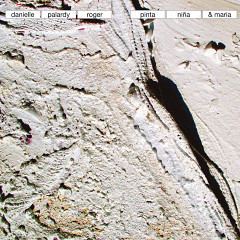
    Pinta, Niña & Maria dans Le son du grisli

    «Critique», Luc Bouquet, Le son du grisli, 9 février 2012
    jeudi 9 février 2012 Presse

    Trois formations pour trois navires en partance vers l’Amérique. C’était en 1492 et un certain Christophe Colomb n’y était pas pour rien. La Pinta est représentée par le GGRIL (Grand groupe régional d’improvisation libre). La navigation est lente. Les riffs de cordes sont saillants. On transpire dans l’entrepont. Les bois crissent. La tension est constante. La Niña bénéficie des brouillages de l’Ensemble SuperMusique. Appeaux et bruissements électroniques ouvrent le bal. Puis, entre craquements et bruitisme, s’immiscent un zeste de rock, de jazz (Take Five cité) ou de musique ancienne. La Santa Maria sombra le 25 décembre 1492. Pour l’heure c’est l’ECM+ (Ensemble contemporain de Montréal+) qui guide la galère. Les mélodies sont au centre du voyage: mélodies suaves et sans brûlure ni brutalité; mélodies douces et rassurantes, n’annonçant en rien le naufrage à venir.

    Liant les trois parties, deux musiciens. Le premier se nomme Juan del Encina (1468-1529). Il est le compositeur de Todos los bienes del mundo et guide de sa musique profane ce long voyage. La seconde n’est autre que Danielle Palardy Roger, compositrice, percussionniste, fondatrice et directrice musicale de l’Ensemble SuperMusique. Son désir d’explorer musique ancienne et actuelle, musique écrite et musique improvisée, consonance et dissonance ne manque ni de charme ni d’atouts ici. On vous souhaite une bonne traversée.

    On vous souhaite une bonne traversée.

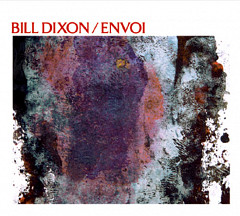
    Envoi dans Le son du grisli

    «Critique», Guillaume Belhomme, Le son du grisli, 7 février 2012
    mardi 7 février 2012 Presse

    Un mois avant de disparaître, Bill Dixon emmenait un nonette à Victoriaville, et donnait son dernier concert. À ses côtés, les musiciens déjà présents sur Tapestries for Small Orchestra: Taylor Ho Bynum, Stephen Haynes, Rob Mazurek, Graham Haynes et Michel Côté, Glynis Loman, Ken Filiano et Warren Smith. En deux temps, Envoi arrange des parallèles et provoque quelques perturbations qui interrogent leur résistance: l’ouvrage de traîne est captivant, que rehausse en plus les incursions qu’y taille la clarinette contrebasse de Côté.

    … l’ouvrage de traîne est captivant, que rehausse en plus les incursions qu’y taille la clarinette contrebasse de Côté.
  • 12
  • 13
  • 14
  • 15
  • 16
  • 17
  • 18
  • 19
  • 20