Sauter au contenu principal
actuellecd
  • This website is also available in English.

Blogue

442 résultats
  • 49
  • 50
  • 51
  • 52
  • 53
  • 54
  • 55
  • 56
  • 57
  • Clic dans Panpot

    «Review», Russ Cooper, Panpot, 11 avril 2008
    vendredi 11 avril 2008 Presse

    This creative review probably should require some kind of editorial warning — but I’m not sure what — or why.

    You wanna know what this record sounds like? Okay, stay with me. George Duke and Bitches Brew are up at the Université de Montréal music building, hanging out, laughing at 4/4 time. Since Bitches Brew is more a concept than an actual person, George can just communicate with it with his mind and by flaring his nostrils. In a series of wiggles, brain and otherwise, George says to Bitches Brew, “Yo, can you do this on your trombone?” Wng wng waaa mwubmub. Bitches Brew doesn’t say anything. Instead, he mentally commandeers a bunch of students to hook up all their pedals to all their instruments and go Wng wng waa mwubwub mwuunngg all at once.

    George is all, like, “What the fizzuck? Okay, can you go this on your flute in 5/16 time? Fwee fwee zizz ziizz twiidly twaaaong. Bitches Brew materializes himself into a large dog from the stench particles in the carpet, grabs a xylophone player and sticks a flute in his nose. Fwee fwee zizz ziizz twiidly twaaaong emanates through the fetid air”.

    Totally weirded out after getting nasally nose-raped by the spirit of a record from 1970, the xylophone player decides to go with it because, you know, that’s jazz. They eat some poutine spiked with mushrooms, grab their big scarves and jackets with elbow patches, and decided to get dark.

    For weeks, their routine consists eating scales and wiping their asses with triplets. When their cheeks were raw beyond a cottony softness, they decide to stop. Crestfallen, each band member sheds a tear of diamonds and places it upon a sunny day.

    George Duke shrugs, gives Bitches Brew a beer, and says, “Not bad. I mean, this record doesn’t sound like somebody’s maiden voyage, but what the fizzuck?

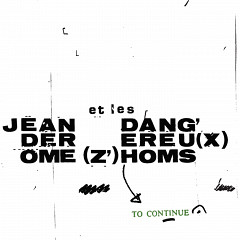
    To Continue dans Vital

    «Review», Dolf Mulder, Vital, no 622, 8 avril 2008
    mardi 8 avril 2008 Presse

    Jean Derome returns with another CD with his Dangereux Zhoms. After a silence of ten years, now the fourth CD by this ensemble sees the light after Carnets de voyage (1994), Navré (1995), and Torticolis (1998). With Tom Walsh (trombone), Guilaume Dostaler (piano), Pierre Cartier (electric bass), Pierre Tanguay (drums) and Derome himself on saxes and flute, we are 65 minutes entertained with new compositions by Derome. A music that is most close to jazz, but that is above all in between everything. With plenty of room for improvisation the music always stays in the neighborhood of the themes that Derome composed. After so many records out Derome does not surprise with something completely new, but satisfies with a very well-crafted new work by a fine ensemble. Impressive I found the solo of Derome in the last 24-minute composition Prières, were he cries his heart out. Honest music.

    Impressive I found the solo of Derome in the last 24-minute composition Prières, were he cries his heart out. Honest music.

    Musique pour objets en voie de disparition dans Vital

    «Review», Dolf Mulder, Vital, no 622, 8 avril 2008
    mardi 8 avril 2008 Presse

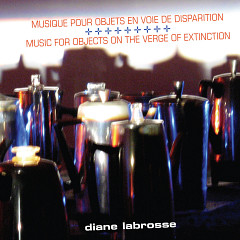
    Two veterans from the Montréal music scene present their newest work. For her new project Diane Labrosse invited the following musicians: Marie-Soleil Bélanger (violin), Jean Derome (flute, fake trumpet), Bernard Falaise (electric guitar), Lori Freedman (clarinet), Jean René (viola), Pierre Tanguay (percussion). Labrosse herself plays accordion. It is a sort of concept album. In 8 compositions she makes use of concrete noises we all know from our daily lives: clocks, telephones, printers, answering machines, etc. Without any manipulation these sounds are integrated in a musical background, by which she tries to evoke a story and atmosphere around these sounds. One could call it a non verbal radioplay, a sonic story that in a way moves along a narrative line. In each composition we hear only one or few musicians. We never hear an ensemble playing. “This disc was entirely assembled without the consent of the musicians playing on it. I thank them for agreeing to record ‘blindfolded’ and let me manipulate them as I pleased” Labrosse explains. So these compositions are probably the result of a lot of editing, etc. This way she has built nice impressionistic, soundscaping pieces. They are carefully structured, with a good feeling for balance and atmosphere.
    This way she has built nice impressionistic, soundscaping pieces.
  • 49
  • 50
  • 51
  • 52
  • 53
  • 54
  • 55
  • 56
  • 57