Sauter au contenu principal
actuellecd

Blogue

383 résultats
  • 56
  • 57
  • 58
  • 59
  • 60
  • 61
  • 62
  • 63
  • 64
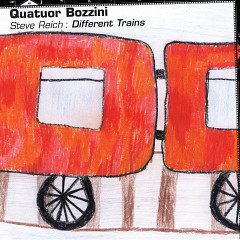
  • Steve Reich: Different Trains dans Wayside Music

    «Quatuor Bozzini: Different Trains», Wayside Music, 1 janvier 2007
    lundi 1 janvier 2007 Presse

    Excellent 27’-long disc with the last Steve Reich work that I’ve heard that I would consider a masterpiece. “A major opus in Reich’s body of work, Different Trains pioneered in 1988 a new form of composition developed from his earlier tape pieces It’s Gonna Rain (1965) and Come Out (1966). The idea for the piece came from Reich’s childhood. His parents separated when he was one year old. His mother moved to Los Angeles, while his father stayed in New York. Since they had arranged divided custody, he often traveled back and forth between those two cities, with his governess, in the years 1939-42. He composed the piece keeping in mind that, as a Jew, he would have found himself in a different situation had he been living in Europe at the time. The work consists of a prerecorded tape assembled from the voices of various people reminiscing about the Holocaust, sounds of American and European trains from the 30s and 40s, and three different string quartets. In addition to the tape is a fourth string quartet part for a live quartet. Quatuor Bozzini decided to offer a new reading of the work, including its very own recording of the three taped string quartets, a first ever since the premiere 1988 recording of the work, by the Kronos Quartet. Quatuor Bozzini embarked on this new reading after being advised to do so by Steve Reich himself. Quatuor Bozzini’s Different Trains turns a new page in the history of contemporary music. It provides a new landmark.”

    Le Quatuor Bozzini écrit une nouvelle page de l’histoire de la musique contemporaine avec Different Trains. Il nous donne un nouveau point de repère.

    GO [Guitar Obsession] dans Blow Up

    «Altrisuoni», Dionisio Capuano, Blow Up, no 104, 1 janvier 2007
    lundi 1 janvier 2007 Presse

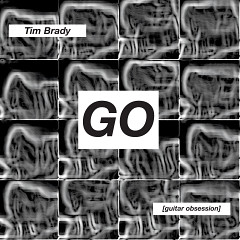
    Il curriculum di Brady è nutrito e degno d’interesse. E forse in un contesto storico-biografico acquista senso Go, album compilativo, raccolta di exempla delle tecniche per chitarra e di approcci stilistico-tecnologici. L’unità poetica se ne va a gambe all’aria e il tutto appare adatto ad un corso di musicologia più che ad una fruizione appagante. Brady, certo, è un chitarrista extra-colto completo e fantasioso, senza preclusioni di genere (ora jazz, ora rock, ora heavy, ora minimal), peraltro propenso ad architetture sonore ben strutturate più che ad impeti impro. Ma, siano i simil contrappunti per strumento e loops o tracce preregistrate (Go, un tema confidenziale), siano le operazioni di decostruzione che portano il timbro dello strumento dal metal al blues (Yellow, Add Green), sia il duetto stocastico con il programma MAX/MSP che modifica in tempo reale gli input percussivi della cassa di una chitarra (Unplugged), si resta, nello spazio-tempo di questo cd, ad un livello di eccellenza interpretativa che purtroppo non vince la stucchevolezza didascalica. Può interessare parecchio ma emoziona assai poco.

    3 dans Blow Up

    «Altrisuoni», Dionisio Capuano, Blow Up, no 104, 1 janvier 2007
    lundi 1 janvier 2007 Presse

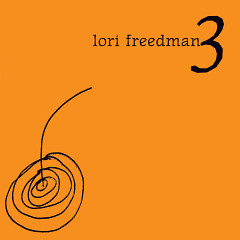
    Con un senso della misura quasi sospetto, ma efficace, la clarinettista Lori Freedman ritaglia segmenti da tre serate di sessions nel corso delle quali ha interagito con musicisti dell’area “creativa” canadese-internazionale. Ognuno dei sets, in forma di trio, possiede una propria natura, in ragione delle peculiari line-ups. Con i giradischi di Tétreault e la chitarra di Lussier viene imbastito un dialogo aspro ma controllato, quasi no-jazz (the tribe of triclops), con l’appendice di una bella soluzione slacker-impro: locked groove, slide e note lunghe d’ancia (spaghetti brûlé). L’elemento del gioco e dell’assurdo predomina nel ménage assieme a Derome (sax e piccoli oggetti) e Rainer Wiens (chitarra preparata): atmosfere da circo sulfureo (babalou) che tracimano nell’allucinazione quasi informale (poussière de lune). Il contrabbasso di Nicolas Caloia costruisce architetture jazz contaminate (tigresse, six degrees) e, insieme alle percussioni di Danielle Palardy Roger, partecipa a destrutturazioni quasi elettroacustiche (the light of night) tra le quali s’insinua il clarinetto. Momenti scelti ed estrapolati con estrema attenzione che poi l’accorto Michel F Côté, in post-produzione, sporca di bave sonore e tessiture anomale.

    3

    Concentrés et amalgames dans Blow Up

    «Altrisuoni», Dionisio Capuano, Blow Up, no 104, 1 janvier 2007
    lundi 1 janvier 2007 Presse

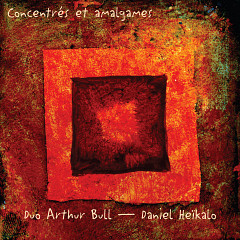
    L’armamentario di chitarre e percussioni (quest’ultime adoperate da Daniel Heïkalo) è funzionale ad esaltare i vari moods che ispirano l’articolata fantasia improvvisativa del duo. C’è, invero, un tono ubiquitario di percussività e si ha l’impressione di assistere ad una olistica tessitura di trame irregolari, — ora con la consistenza del filo metallico ora quasi seriche (Moment intense de répit coloré ed Elegy, che chiude restituendoci l’aria). Ma tutte le undici tracce rivendicano la loro unicità. Dialogo ispanico-cubista (La solution de l’énigme), confronto plastico corde-percussioni (Cobra Skin Necktie), brillante secchezza con attenzione alle risonanze armoniche (Lonnie Johnson), percussività e sfregamenti teatrali da momenti clou del teatro giapponese (Tunc) o da gamelan balinese (Picottements métalliques), disarticolazioni blues (Décoction bluesée). Piacciono la frenesia scabra tenuta al guinzaglio e l’apparenza d’estemporaneità che si ricompone in immagine dall’avviluppante irregolare geometria. Il suono dell’incontro tra Robert Johnson e Georges Braque.

    Il suono dell’incontro tra Robert Johnson e Georges Braque.

    Engagement & Confrontation dans All About Jazz New York

    «Review», Andrey Henkin, All About Jazz New York, 1 janvier 2007
    lundi 1 janvier 2007 Presse

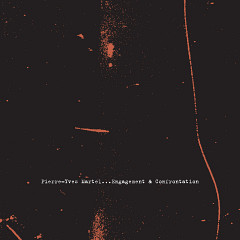
    Everybody knows the hoary old joke about natives on an island with endless drumming, terrified of it stopping and the bass solo beginning. Those natives would certainly scratch their heads over these two solo bass albums. The genre most likely started with Barre Phillips in 1968. Though the work of François Rabbath and Bertram Turetzky were precursors, it was PhillipsJournal Violone on Opus One that set the template for dozens of modern instances: improvising at length with a panoply of extended techniques that vehemently changes the role of the instrument. These two albums are encouraging continuations of the groundwork set by Phillips. Linson and Martel are both engaging young players, the former an American who has most recently (temporarily?) taken Barry Guy’s place in Evan Parker’s Electro-Acoustic Ensemble and the latter a Canadian experimental musician who, in addition to playing double bass, is also supposed to be an accomplished violist de gamba. True to the breadth of the solo bass genre, Cut and Continuum and Engagement & Confrontation, despite having similarly opaque titles, are very different. […] Martel on the other hand offers 18 pieces‚ (the longest under five minutes, the shortest under 40 seconds) on prepared bass in acoustic real-time. […] Martel’s approach is a mix of arco and pizzicato and comes across as surprisingly melodic, even beautiful at times. The remarkably close recording allows for careful examination of texture and there is a flow within each piece and on the album as a whole. A listener’s patience is never tested as Martel introduces different tempos from track to track and can sound the range from computer terminal to thumb piano. For fans of solo bass (Hello? Are you out there?) the choice between these two albums, if there has to be one, is whether your preference is towards more of a soundscape (Linson) or experimental noise (Martel). A long attention span is required for both, either for Linson’s length and measured development or Martel’s sheer density. The times when the instrument played sounds like a traditional bass are few but creep in slyly. Of the two, the sounds generated by Martel are the more fascinating if only for being created in a completely organic fashion. If you really want to make the natives run, obtain both these fine albums and play them simultaneously.
    Martel’s approach is a mix of arco and pizzicato and comes across as surprisingly melodic, even beautiful at times.
  • 56
  • 57
  • 58
  • 59
  • 60
  • 61
  • 62
  • 63
  • 64