Sauter au contenu principal
actuellecd

Blogue

383 résultats
  • 28
  • 29
  • 30
  • 31
  • 32
  • 33
  • 34
  • 35
  • 36
  • Karusell Musik dans AllMusic

    «Review», Dave Lynch, AllMusic, 1 juin 2007
    vendredi 1 juin 2007 Presse

    In his many years of music-making the world over, perhaps nowhere has Swedish composer, keyboardist, and accordionist Lars Hollmer consistently found as many kindred spirits as in Quebec. Thankfully, Montréal musique actuelle godfather Jean Derome has continued a transatlantic conversation with Hollmer in the years since Derome joined the Swede’s Looping Home Orchestra back in the early ‘90s, as documented on the Victo label’s Door Floor Something Window live CD from 1993. Hollmer and Derome have certainly kept busy with separate endeavors during the years hence, but they are back together again on 2007’s Karusell Musik, and a huge bunch of Derome’s Quebec friends are along for the ride this time, recording in a Montréal studio during the fall of 2006 following a pair of festival appearances in la belle province during 2004 and 2005. Top billing on the CD cover goes to the wild, unruly, and fun-loving Fanfare Pourpour big band, whose ranks swelled to 20 musicians (including Hollmer and Derome), pumping away on instruments including accordions, clarinets, saxophones, violins, flutes, guitars, mandolin, banjo, melodica, piccolo, trumpet, euphonium, sousaphone, bass, drums, and percussion. Derome, whose baritone sax is particularly impressive, orchestrated new versions of Hollmer chestnuts dating all the way back to the first tune on his first solo album, the sprightly waltz Avlägsen Strandvals from 1981’s XII Sibiriska Cyklar. This song, featuring a vocal turn from Hollmer that pushes well past merely enthusiastic, is one of 17 concise little numbers — usually in the range of two to three minutes long and nearly entirely instrumentals — performed with high energy and infectiously good spirits by the gargantuan yet nimble aggregation. The opening tune, Ännu Ingen Pelle, first heard on 1985’s Tonöga in a version with Hollmer overdubbing all the instruments, leaps out of the gate with nearly outrageous exuberance; it’s the sound of a berserk brass band running amok as the composer rushes through the melody on his squeezebox, shouting encouragement as the bandmembers clustered around him ratchet up the intensity still further before the song slams to an abrupt finish.There are plenty of appealing tunes on Karusell Musik that would seem ideal for revving up the crowd at an Oktoberfest beer garden, driven by emphatic backbeats or Hollmer’s signature syncopated rhythms (Ante Flöttar Ja Te Sjöss, also from XII Sibiriska Cyklar; Skiss Mellan Brest Och Segosero, again from Tonöga), along with interludes that take a more avant-gardist stance but are refreshingly without the high-mindedness that sometimes afflicts “serious” musical experimentalists. In fact, there is a piece simply called Experiment, with herky-jerky stops and starts as the Fanfare members shout and generally carry on in a crazy counterpoint to Lars, who, way up front in the mix with a deep bass-baritone vocal, speak-sings in cracked English that “This might be the most difficult I ever made.” He wonders “if there is any reason at all…to even try to do it,” except of course that “this gives me always fun.” Appropriately, Experiment is followed by a brief free-form improvised intro to the two Cirkus pieces from Hollmer’s Swedish Grammy-winning Andetag, here given utterly madcap big-top readings. And, as in its previous incarnations on the LHO’s Vendeltid in 1988 and the aforementioned Door Floor Something Window, Karusell Musik winds faster and faster until it threatens to tumble off the rails, with its dissonant two-chord intro and bridge hinting at the sometimes dark RIO world that included not only Samla Mammas Manna but Univers Zero and Art Zoyd in its roster of bands back in the day. This tune cried out for a full-on large-ensemble arrangement, and the version here is arguably definitive. The same might be said for the ever-popular Boeves Psalm and the album-closing Simfågeldans, songs that ideally capture Hollmer’s singular ability to mix the innocent with the bittersweet. Ever since Boeves Psalm first appeared on XII Sibiriska Cyklar in a version with all instruments overdubbed by Hollmer in his Chickenhouse studio, it has remained one of his most well-known and best-loved numbers. Those who have heard and admired Boeves Psalm played solo or by a small group need to hear it performed by a 20-piece ensemble with diverse instrumentation and variegated textures and timbres, and Karusell Musik provides just such a chance. This is, after all, a piece that Guy Klucevsek described as “one of the most beautiful melodies ever written” and “Blue” Gene Tyranny has compared to Mozart. Here, as the charming theme progresses, it receives the expected embellishments from strings and flute, horns, and then the bass instruments and percussion with just the beautiful and dramatic buildup you would hope for, and the Fanfare Pourpour prove themselves up to the challenge in their expert balancing of neo-classical nuance and power. Simfågeldans touches the emotions in a similar fashion to Boeves Psalm, but with a livelier and more upbeat approach — and as rendered on Karusell Musik seems a perfect meld between Scandinavian folk melodicism and the exuberant polyphony of New Orleans classic jazz. As they jam out past two minutes after the closing theme, reaching and then retreating from crescendos like a single ebbing and flowing organism, Lars Hollmer and the Fanfare Pourpour pull the listener into a world of joyous celebration, and one wishes the vibe could continue long past the moment when the music has wound down into silence.

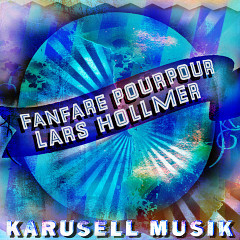
    Lars Hollmer and the Fanfare Pourpour pull the listener into a world of joyous celebration, and one wishes the vibe could continue long past the moment when the music has wound down into silence.
    Tombak dans SOCAN — Paroles & Musique

    «Lancements», Gabriel Bélanger, SOCAN — Paroles & Musique, no 14:2, 1 juin 2007
    vendredi 1 juin 2007 Presse

    Le percussionniste Ziya Tabassian offre au public un premier album solo. Connu pour sa participation à différents ensembles, il est actif autant dans le milieu de la musique ancienne que contemporaine. Il présente ici des pièces pour tombak (connu également sous le nom de zarb), principal instrument percussif de la musique persane. Cet opus est le fruit de ses réflexions musicales les plus récentes et retrace les rythmiques de la musique ancienne persane tout en y apportant une touche contemporaine.

    Dix situations précaires dans SOCAN — Paroles & Musique

    «Lancements», Gilles Boisclair, SOCAN — Paroles & Musique, no 14:2, 1 juin 2007
    vendredi 1 juin 2007 Presse

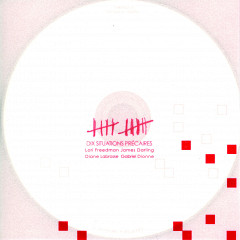
    L’album Dix situations précaires présente un quartet à l’instrumentation peu courante, James Darling, violoncelle, Gabriel Dionne, percussions, Lori Freedman, clarinettes et Diane Labrosse, échantillonnages, et leur musique de chambre contemporaine improvisée, où les instruments s’entrecroisent avec légèreté, complicité et même douceur. Le jeu de chacun est nuancé, comme par exemple l’approche toute en retenue de Diane Labrosse. Les musiciens jouent des phrases courtes, d’où se dégage une impression de pointillisme sonore.

    Snipettes! dans SOCAN — Paroles & Musique

    «Lancements», Gilles Boisclair, SOCAN — Paroles & Musique, no 14:2, 1 juin 2007
    vendredi 1 juin 2007 Presse

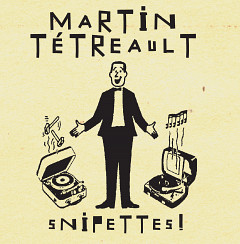
    Snipettes! est la 150e parution sous Ambiances Magnétiques, un tour de force pour un label de musiques actuelles. Tétreault s’y est amusé en 1e partie à marier la musique populaire instrumentale, en utilisant un 33 tours de la musique d’Eddie Osborne (orgue et bongos) avec la musique contemporaine (une sélection de vinyles de musiques sérieuses). Le résultat est intriguant et drôle. En 2e partie, Morceaux choisis 1984-1986 est une compilation de titres expérimentaux composés pendant cette période.

    GO [Guitar Obsession], Concentrés et amalgames, 3, Sextant dans Signal to Noise

    «CDs», Kurt Gottschalk, Signal to Noise, no 46, 1 juin 2007
    vendredi 1 juin 2007 Presse

    Montréal’s Ambiances Magnétiques has released some 169 records since 1984 with a pretty remarkable batting record. The original members of the collective (including Jean Derome, René Lussier, Martin Tétreault and Danielle Palardy Roger) have for the most part continued to do challenging work, while younger musicians have been brought into the fold.

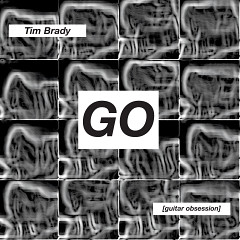
    Tim Brady is a talented guitarist with a rockish sensibility and plenty of jazz chops. He loves his instrument the way Jasper Johns loves paint: thick and apparent. His 2002 release Twenty Quarter-Inch Jacks was, in that sense, wholly satisfying. As is, in a certain way, his new offering, GO. It’s diverse, it’s raw, it’s pretty, it’s precise. Four compositions of his own and four by others, all strong but as a whole uneven. The disc feels as if Brady is trying to show off many approaches and styles he can pull off. And pull them off he does, so well that it sounds as if it could be a compilation album.

    Likewise pianist Gianni Lenoci’s wandering sextet record Sextant. At center, the group is a traditional enough line-up of keyboards, guitar, bass, drum and two saxophones, although the keyboards and guitars are sometimes electronically augmented. Two tracks not penned by Lenoci are Eric Dolphy’s Miss Ann and Morton Feldman’s Intermission VI. Lenoci’s pieces seem to follow the two worlds, skipping between minimalist and jazzy pieces, generally strong tracks, but ultimately seeming to be more a display of diversity than creating a unified feeling.

    The same charge could be leveled against clarinetist Lori Freedman’s new CD, culled from three nights of live performances with different trios. The difference here is that the record is exceptional regardless of her motives. A set with guitarist Lussier and turntablist Tétreault is a fascinating, warm rumble. A matchup with saxophonist Derome and guitarist/percussionist Rainer Wiens is strangely moody with touches of spaghetti western. And with percussionist Roger and bassist Nicolas Caloia she explores quiet, extended-improv techniques and jazzier explorations. Despite the different sources, the album holds together surprisingly well.

    A different sort of project is presented on the guitar duet by Arthur Bull and Daniel Heïkalo. It’s the sort of bashing-of-minds improv one would expect to find, at this point, in clubs and cafés around the world — busy, sometimes riotously so, and introspective, as if some personal space is being invaded simply by listening. Whereas the other discs ask to be listened to, Bull and Heïkalo seem forever to be changing the subject because a listener walked in.

    The Feeling of Jazz dans Downtown Music Gallery

    «Review», BLG, Downtown Music Gallery, 1 juin 2007
    vendredi 1 juin 2007 Presse

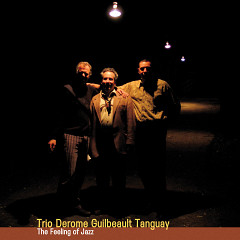
    Jean Derome is one the most gifted, diverse and distinctive saxists that Canada has produced. Jean has about two dozen superb discs out on the Ambiances Magnétiques label, which cover a wealth of influences and genres: jazz, progressive, rock, folk and a good amount of humor. He has a great trio called Évidence that only cover Thelonious Monk with an electric bassist. Their set at Guelph this year was super. Trio Derome Guilbeault Tanguay is Jean’s other jazz trio with two other longtime cohorts, contrabassist Normand Guilbeault and drummer, Pierre Tanguay, both masters in their own right. This is their second disc and this is mainly jazz standards. They cover the likes of Ellington, Sonny Clark, Cole Porter, Jerome Kern, Fats Waller as well as more contemporary tunes by Misha Mengelberg and Lee Konitz. Check out their inspired version of Duke’s Jump for Joy. Here done on baritone sax, wow, it does swing hard! There is something truly joyous about this trio, they sound like they love this music, these tunes and are having a wonderful timing doing it! Jean’s tone on alto sax is just so soulful and warm that I find it quite touching, stirring and directly from his heart to us. Oh yeah! I really dig their version of Sonny Clark’s Sonny’s Crib, with Jean squeezing off those quick boppin’ lines effortlessly and both Normand and Pierre trading lines with joyful delight. Even Jean’s sly singing on Five O’ Clock Whistle has an infectious quality to it. Jean Derome plays one incredible solo after another, while the rhythm team plays inventively throughout, also tossing off a number of superb solos as well. I never knew there were lyrics to Fats Waller’s Jitterbug Waltz, thanks Jean for clueing us in and also for that fabulous flute solo. A complete joyride from beginning to the very end, especially if you dig many of these old songs.

    A complete joyride from beginning to the very end, especially if you dig many of these old songs.
  • 28
  • 29
  • 30
  • 31
  • 32
  • 33
  • 34
  • 35
  • 36