Sauter au contenu principal
actuellecd
  • This website is also available in English.

Blogue

383 résultats
  • 27
  • 28
  • 29
  • 30
  • 31
  • 32
  • 33
  • 34
  • 35
  • Ensemble SuperMusique (ESM), Joane Hétu dans Downtown Music Gallery

    «24th Annual Festival International de Musique Actuelle de Victoriaville», Bruce Lee Gallanter, Downtown Music Gallery, 1 juin 2007
    vendredi 1 juin 2007 Presse

    […] The final day began with a wonderful set by Joane Hétu’s Ensemble SuperMusique called Filature. Joane Hétu runs the great label from Montréal, Ambiances Magnétiques. Her longtime partner is Jean Derome and both of them play alto sax, do vocals and compose at length. Both Joane and Jean consistently release excellent, diverse discs on Ambiances Magnétiques and I always look forward to any project that either works on. Just about every year, someone from this label (like Diane Labrosse, Normand Guilbeault, Danielle Palardy Roger or Pierre Tanguay) does something special up at Victo. Filature is Joane Hétus most ambitious project yet and it will take a while to absorb its many layers of ideas. It featured ten musicians, five women and five men with Pierre Hébert doing video projections. Joane refers to it as sound/theatre and that sounds right. Joane was once a weaver before concentrating on becoming a musician and the theme of weaving is the central thread throughout this work. The first part is called The Warp and featured the five men on alto sax or flute, violin, trumpet, contrabass and drums. The music was an exquisite blend of lovely harmonies, short drones, acappella vocal sections and haunting music. The video images were of a single tree branch with some occasional growth. The second part, The Weft featured the five women musicians on violin, cello, flutes, sampler, percussion & alto sax. Most of the women contributed charming vocal sounds along with their contemplative, cinematic music, sometimes sparse but always enchanting. The third and final part was called The Pattern and it featured all ten musicians. It began with just a few repeating notes and evolved through different grooves and sections. I love the way the vocals and instruments shared stunning harmonies with each other. Joane has a gift for breaking up the melody and having different members share their lines so that whole band sounds like one refined tapestry of sound. It reminded of the superb magic-music that Fred Frith’s Keep the Dog used to play and yes, Jean Derome was an integral part of that band many years ago. The images of twine, knots, rope, faces and hands connected with the music just right. It was a marvelous set and I can’t wait for it to be released on disc! […]

    Joane has a gift for breaking up the melody and having different members share their lines so that whole band sounds like one refined tapestry of sound.

    Jean Derome, Fanfare Pourpour, Lars Hollmer dans AllMusic

    «Biography», Dave Lynch, AllMusic, 1 juin 2007
    vendredi 1 juin 2007 Presse

    Quebec’s circusy big band Fanfare Pourpour have their roots in a number of musical and artistic groupings dating back to the mid-’70s through the early ‘80s, including L’Enfant Fort, a Saturday-afternoon Montréal street band; the Pouet Pouet Band, which incorporated theatrical and cabaret elements into their mix; and Montréal Transport Limité, an underground cabaret and progressive pop group. The musicians all went their separate ways until the summer of 1995, when their love of playing and performing brought them together as the Fanfare Pourpour. Their street band attitude gives the Fanfare Pourpour a ramshackle charm, and their open and friendly embrace has seemingly welcomed to the fold any friend or family member who can toot on a horn or whack a caisse claire, as long as the proper spirit is maintained. Since the band’s “formal” founding in 1995, however, the Fanfare have grown into a tight and formidable outfit, with no diminution of the raucous spirit that has always been central to their, well, raison d’être.The band’s first album, released in 1999 on their Monsieur Fauteux m’entendez-vous? label, was entitled Tout le monde — the CD featured an 11-piece core ensemble, notably featuring Montréal singer/accordionist Lou Babin, supplemented by a handful of high-profile guest musicians from Quebec’s jazz and musique actuelle scenes on selected tracks, including saxophonist Jean Derome and guitarist René Lussier. On follow-up CD Le Bal from 2004, the group’s ranks had swelled to 15 with an additional six guest musicians scattered here and there; by now Derome had taken on musical direction responsibilities and penned five of the album’s 16 tracks. On these two releases the ensemble members proved highly capable on practically any and every musical instrument imaginable, including accordion, clarinet, saxophones, violin, flute, guitar, banjo, trumpet, euphonium, sousaphone, harmonica, darbouka, bass, drums, and percussion, playing exuberant music that blended brass band and New Orleans classic jazz traditions with elements of Québécois folk and avant-garde musics.In 2004 Swedish composer, accordionist, and keyboardist Lars Hollmer (Samla Mammas Manna, Accordion Tribe) was invited to Quebec to appear with the Fanfare Pourpour at the Festival International de Musique Incroyable, and this successful encounter was followed up with additional rehearsals and a second festival appearance at the Festival International de Musique Actuelle de Victoriaville in 2005. The following year Hollmer was back in Quebec with the Fanfare yet again, this time to record the album Karusell Musik in a Montréal studio. By now it would appear that the distinction between full-fledged Fanfare bandmembers and invited guests had been erased, and the 19-piece ensemble supporting Hollmer included such notable Montréal and Quebec artists as Babin; other longstanding Fanfare members such as violinist Guido Del Fabbro and trumpeter Némo Venba (also members of avant-proggers Rouge Ciel), guitarists Luc Proulx and Roy Hübler, saxophonists Claude Vendette and Stéphane Ménard, clarinetist Pierre Emmanuel Poizat, and euphonium player Christine Lajeunesse; musical director/orchestrator/multi-instrumentalist Derome, bassist Normand Guilbeault, and percussionist Pierre Tanguay from the swinging Trio DGT and numerous other jazz/musique actuelle projects; sousaphonist Jean Sabourin from the impossibly tight brass band L’Orkestre des Pas Perdus; and violinist Marie-Soleil Bélanger, former member of the long-lived and ever-challenging Miriodor. So when it came to negotiating Hollmer’s sometimes tricky rhythms, emphatic backbeats, and multi-layered arrangements with the proper balance of roughness and precision, it would prove hard to top the Fanfare Pourpour. Karusell Musik was released in March 2007, with a CD launch concert by Hollmer and the band held that month at Montréal’s Lion d’Or.

    Lieux-dits dans Musica Jazz

    «CD e DVD», Libero Farnè, Musica Jazz, no 63:6, 1 juin 2007
    vendredi 1 juin 2007 Presse

    Il batterista, cresciuto in California e residente a Montréal dal 2003, è alla testa di un singolare quintetto (due sax-clarinetti-flauti, chitarra elettrica e contrabbasso) in un lavoro ispirato ai numerosi viaggi effettuati nei Pirenei e nelle Alpi francesi. La pulizia del suono e le movenze circospette tratteggiano un’improvvisazione cameristica, meditativa, che può far balenare l’immagine di un’atmosfera lacustre, immersa in una luce perlacea, tranquilla ma insidiosa: tant’è vero che verso la fine del Cd le acque si increspano leggermente, per poi appiattirsi definitivamente nel brano conclusivo.

    Dix situations précaires dans Opus

    «Listening Post», Ken Waxman, Opus, no 30:2, 1 juin 2007
    vendredi 1 juin 2007 Presse

    Utilizing the skills accessible from legitimate musical training, extended instrumental techniques and the supplementary textures available from an electronic sampler, these “10 risky situations” balance on the edge between free improvisation and contemporary classical music. Involved are two instructors at the Conservatoire de Musique de Rimouski (Quebec): James Darling, who is also the cellist of Quatuor St-Germain; and Gabriel Dionne, the Conservatoire’s percussion head. They’re matched with two Montréalers: clarinetist Lori Freedman, known for her free improvisation collaborations as well as notated New music efforts; and Diane Labrosse, here manipulating the sampler, though she usually composes multi-media, theatre and dance pieces. Overall, Labrosse’s instrument’s electronic pitch warbles and whooshing flutters plus the sinewy vibraphone resonation or ratcheting drum top pitter-patter from Dionne create background landscapes. In the foreground are the contrapuntal interactions of — or double counterpoint between — Darling and Freedman. One or the other advances a motif — say low-pitched legato bowing from the cellist, or squeaking, altissimo smears from clarinetist — and with the response, aggregate themes and variations are developed — then electronics and percussion fill in any spaces. Two pieces Parler tout seul and Marcher sur des œufs depart from this strategy with memorable results, as each extends virtuosity past the 10-minute mark. A darkly tinged nocturne, the former contrasts repetitive, low-pitched exhalation from the clarinetist with resonating tubular bell shimmers, until a conclusive cello vibrato provides the connective thread to make logical as well as musical sense of the tune. Initially as fragile as its title posits, the later piece unfolds on top of vibrating electronic crackle and drones plus pitter-pattering vibe and cymbal resonation, as both Freedman and Darling emphasize rigid instrumental timbres. Eventually, abrasive sul tasto string sweeps and high-pitched reed yelps sound unmodified, negating the delicacy of “egg walking”. Listeners who welcome aural challenges are rewarded with the sounds of distinctive four-way interplay.

    Listeners who welcome aural challenges are rewarded with the sounds of distinctive four-way interplay.

    Nouvelle musique d’hiver dans Revue & Corrigée

    «Disques», Pierre Durr, Revue & Corrigée, no 72, 1 juin 2007
    vendredi 1 juin 2007 Presse

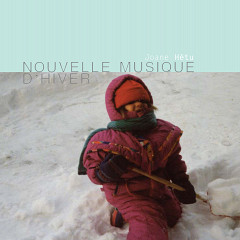
    Sept ans après un premier quadriptyque, Joane Hétu signe ici quatre autres tableaux évoquant la saison froide au Québec. Quatre nouvelles facettes (en en attendant d’autres?) d’une saison que chacun peut percevoir à sa façon, selon son humeur.Mais l’image sonore de l’hiver que nous livre ici la compositrice/instrumentiste, soutenue par l’Ensemble SuperMusique (un octet) ne se veut pas simplement personnelle. Il y a en quelque sorte une approche exhaustive, dans la mesure où le travail de création (les textes, évidemment, mais aussi les sons produits par les instruments acoustiques) s’inspire aussi de divers auteurs de fictions ou d’essais. Le premier tableau évoque les premières neiges et les temps de fêtes (un peu comme le peintre Rémy Clark qui évoque un Québec en hiver joyeux et coloré) durant lesquels les Montréalais vont faire de la luge sur le Mont Royal ou patiner au lac des Castors, évocation réalisée furtivement au travers de divers bruitages, quelques accords de jazz quelque peu transis, des déferlements de notes de piano, des piaillements d’appeaux, des babillages d’enfants… Le deuxième volet, Être dans le vent, offre une touche plus naturelle avec les notes plus graves et monocordes du piano, le souffle éolien des anches, quelques crépitements sonores, comme sortis de la cheminée, les hurlements des loups. L’hiver, c’est aussi l’hibernation. Il n’y a pas que la chaleur de l’âtre qui protège des vents froids, mais aussi la rencontre des corps…La Marmotte, ennui et plaisir, et toujours ces hurlements de loups. Le quatrième volet est plus angoissant: grincements divers, ambiances glauques, paysages de neige fondue, voix distantes des derniers râles rappellent que l’hiver est aussi une saison où l’on meurt. Nouvelle musique d’hiver ou l’hiver et ses beautés, ses petites et grandes misères. Peut-être pas à écouter en hiver même, mais à suivre en été et à méditer?

    Nouvelle musique d’hiver ou l’hiver et ses beautés, ses petites et grandes misères.

    Décor sonore dans Revue & Corrigée

    «Disques», Pierre Durr, Revue & Corrigée, no 72, 1 juin 2007
    vendredi 1 juin 2007 Presse

    Puce à l’oreille, son premier enregistrement pour Ambiances Magnétiques, présentait, dans le cadre de divers duos, une violoncelliste usant de textures et de sonorités variées. Un peu comme un catalogue de possibilités, séduisant certes, mais auquel il manquait peut-être un fil conducteur. Avec Décor sonore, il y a une unité conceptuelle dévoilant un projet très personnel auquel Mélanie Auclair associe d’autres intervenants (laptop, bruitage, piano, guitare, clarinette basse, récitant). Avec délicatesse, ces musiciens tracent un paysage mouvant et chalereux, vivifiant, dans lequel l’auditeur ne peut que se fondre avec exaltation, un paysage sonore parcouru de souffles et de marées, de frémissements berçant ses oreilles. C’est finalement davantage qu’un simple décor.

    Avec délicatesse, ces musiciens tracent un paysage mouvant et chalereux, vivifiant
  • 27
  • 28
  • 29
  • 30
  • 31
  • 32
  • 33
  • 34
  • 35