Sauter au contenu principal
actuellecd

Blogue

383 résultats
  • 22
  • 23
  • 24
  • 25
  • 26
  • 27
  • 28
  • 29
  • 30
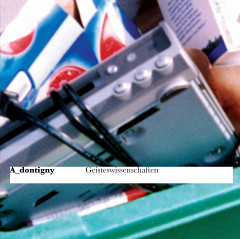
  • Geisteswissen­schaften dans Vital

    «Review», Frans de Waard, Vital, no 585, 17 juillet 2007
    mardi 17 juillet 2007 Presse

    The A in A_dontigny stands for Aimé, and he is a free noise composer from Canada. His name may ring a bell or two for his involvement in Napalm Jazz (not reviewed in Vital Weekly), morceaux_de_machines (see Vital Weekly 338 and 454), or his duet CD with Diane Labrosse (see Vital Weekly 384). Quite a busy man, but he never made a solo recording and Geisteswissenschaften is his first solo excursion. He gets help from various people on guitar, cello and bass, but by and large it’s a solo work indeed. What exactly A_dontigny plays himself then? That is perhaps a bit harder to answer, but perhaps it’s safe to say that it’s a multitude of precorded sources — meaning vinyl, CDs, mini discs, computer files of existing material that he treats through further computer processing, electronic effects and such like. He may add highly fucked up rhythm machines and/or samplers of any kind, but the end result is quite a fascinating journey through the world of today: we zap around, on TV, on the net, and we get a true bombardment of sound and images — here only sound. A world that would drive a lot of people crazy, or in fact it perhaps already did. Much better it would be to sit down and enjoy A_dontigny’s release. Turn off the TV, switch of computers and let yourself sink back in this crazy world that is madness enough for those who really want to listen. A_dontigny crosses the world with crazy sounds, and an interesting mixture of techniques to approach the world: musique concrète like, noise based and improvised in playing. It all can be done. If the previous releases by morceaux_de_machines were something you liked, then this new release by one half will appeal to you too: it’s by no means half as good; it easily matches the duo.

    A_dontigny crosses the world with crazy sounds, and an interesting mixture of techniques to approach the world: musique concrète like, noise based and improvised in playing. It all can be done.

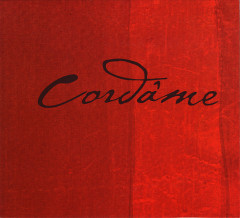
    Cordâme, L’autre dans Vital

    «Review», Dolf Mulder, Vital, no 585, 17 juillet 2007
    mardi 17 juillet 2007 Presse

    The young Malasartes Musique label, is an initiative by Damian Nisenson, a composer and saxophonist from Argentina who settled down in Canada some years ago. The second release was a CD by a trio of Jean Félix Mailloux, called Aurores boréales. Mailloux now returns again in trio format with Cordâme. Himself playing doublebass, the trio is completed by Marie Neige Lavigne on violin and Julie-Odile Gauthier-Morin on cello. Pierre Tanguay helps out on percussion, plus Guillaume Bourque on clarinet on Au bord du Nil and Anit Ghosh on viola on Eider. All compositions and arrangements are again from Mailloux. In many tracks there are influences of folk music to be traced, especially from the middle east as title as Au bord du Nil and Valse hébraique suggest. Some of the compositions lack a own face and are a bit stereotype, others however are very good. The musicians give a dedicated and warm interpretation of the pieces. Similar in mood and atmosphere is the music on L’autre. At work is now a quartet of Jean-Marc Hébert (electric guitar), accompanied by Christophe Papadimitriou (bass), Pierre Tanguay (drums, percussion) and Marie-Soleil Bélanger (violin, ehru). All compositions come from Hébert, who studied guitar and composition in Toronto. With his group Skalène he already released three CDs. Also he participated in a project with Indian musicians. Like in the compositions of Mailloux we hear influences from other parts of the world, but, again like by Mailloux, the music breaths an unmistakably francophone atmosphere. This is due to their lyric and sensual approach Melancholy comes from the ehru, a chinese violin, played by Bélanger. We first heard this instrument on the duet cd of Bélanger and Normand Guilbeault, reviewed earlier for Vital Weekly. The playing of Hébert is sober but effective, and reminds sometimes of Antoine Bethiaume. Both Mailloux and Hébert make no drastic maneuveurs as composers. They are not into avant garde, rather they are engaged in an intelligent play with of all kind of influences in a music that always remains very accessible and enjoyable without becoming ‘easy’.

    Both Mailloux and Hébert […] are engaged in an intelligent play with of all kind of influences in a music that always remains very accessible and enjoyable without becoming “easy”.

    9 août 2007: Freedman et la danseuse Sasso, à Toronto

    mardi 17 juillet 2007 En concert

    C’est en réponse à l’interprétation de la Passacaille de Biber donnée par la violoniste baroque Linda Melsted que Lori Freedman portera à son tour l’esprit de Biber. Elle transportera cette oeuvre dans l’univers de ses improvisations contemporaines en compagnie de la danseuse/performeuse Julia Sasso. L’événement «Biber RePass» a lieu dans le cadre de la série Toronto Music Garden 2007 du Harbourfront Centre, le 9 août 2007 à Toronto.

    21 juillet – 4 août 2007: Denzler en France et au Portugal

    vendredi 13 juillet 2007 En concert

    Le Trio Sowari (Burkhard Beins, Bertrand Denzler et Phil Durrant) présentera un concert le 21 juillet 2007 dans le cadre du 22e Festival NPAI, à Parthenay (France). Bertrand Denzler sera ensuite avec l’ensemble Hubbub (Frédéric Blondy, Jean-Luc Guionnet, Jean-Sébastien Mariage, Edward Perraud), le 4 août, pour un concert programmé dans le cadre du festival Jazz em Agosto, à Lisbonne (Portugal). Vous pouvez écouter des extraits en ligne de son disque Asymétries où il joue en duo avec le clarinettiste Hans Koch. Un disque riche en textures sonores et que la presse a louangé (tous les détails sur la page du disque).

  • 22
  • 23
  • 24
  • 25
  • 26
  • 27
  • 28
  • 29
  • 30