Sauter au contenu principal
actuellecd

Blogue

276 résultats
  • 38
  • 39
  • 40
  • 41
  • 42
  • 43
  • 44
  • 45
  • 46
  • Mingus Erectus dans Jazz Word

    «Review», Ken Waxman, Jazz Word, 6 février 2006
    lundi 6 février 2006 Presse

    Taking on the œuvre of Charles Mingus is a major challenge for any band, especially one led by a bass player. Not only, as in all jazz repertoire efforts, does the group have to avoid slavish imitation, but Mingus’ work also has to be presented with the sort of cocksure aggression that characterized the man himself.

    Many musicians have tried to defy these odds, though few have been very successful. There are the various versions of the Mingus Big Band – Sue Mingus, Prop. – that with a bit too much fealty to the bassist’s widow, manage to perpetuate the bassist’s memory with unexpected versions of some of his better and lesser-known work.

    Then there’s this left field entry. Organized by Montréal bassist Normand Guilbeault, it features a cross-section of that city’s musique actuelle players in a rare foray into unhyphenated jazz. Perhaps that’s why there’s freshness to these tunes – some of Mingus’ Greatest Hits – that have been played by many over the past four or five decades, and very frequently in the 26 years since the bass man’s death.

    Musique actuelle is defined by its practitioners as music of today. Performed, it can have as many references to ProgRock, electronica, movie themes, contemporary, so-called serious music and traditional chansons as jazz and improv. Jean Derome, who plays alto and baritone saxophones and flute here, is involved in many of those mutant forms, yet turns in a surprisingly nuanced and jazzy take on Mingus. At times you could swear the solos are coming from altoist Jackie McLean or baritonist Pepper Adams, some of the legendary bassist’s favored sidemen. MDMD, the one non-Mingus composition here, is Derome’s as well, and cleverly slips in among Chazz’s work without a ripple. Drummer Claude Lavergne and trumpeter and flugelhornist Ivanhoe Jolicoeur have also been mainstays of musique actuelle over the years as has clarinetist Mathieu Bélanger, who brings outstanding atypical textures to this CD, with his standard and alto clarinet excursions on passages usually confined to saxophone reeds.

    Of course the compositions’ overriding visualization comes from leader Guilbeault, who has involved himself in this repertoire for about 15 years, and recorded an earlier Mingus tribute a decade ago. Montréal-born, he’s one of the few musique actuelleers with a straight jazz background having played with such local heroes as guitarist Nelson Symonds and drummer Bernard Primeau. He has also worked with Québécois singers, on major projects conceived of by Derome, guitarist René Lussier and percussionist Michel F Côté, his own Parkerouac, wedding poetry and jazz and Riel, a musical about a 19th Century government-executed French-Canadian firebrand.

    From inception, the eight tracks of Mingus Erectus balance on the Guilbeault’s rhythmic smarts. But his underpinning is flexible enough to allow Bélanger, Jolicoeur and especially Derome a 21st Century latitude with the tunes. Thus pieces may include multiphonic shout choruses plus sudden shifts of tempo and pitch without every losing the foot-tapping beat. Bélanger’s horn often sounds Québécois street band slurs and glissandi as much as traditional blue notes. Mixing his note-bending with brassy plunger work, Jolicoeur alternately brings to mind Ted Curson and Roy Eldridge, two trumpeters from different generations who recorded with Mingus. This is especially apparent on Conversations, where contrapuntal lines from the horns evolve from call-and-response to individual statements, including the trumpeter’s cascading triplets. All the while Guilbeault keeps up the ostinato, sometimes double-strummed.

    On a shrill, almost piccolo-sounding flute, Derome’s cunning enlivens Tijuana Gift Shop, as harmonic convergence with the snorting trumpet lines and near-Dixieland clarinet glisses brings even more of a Latin tinge to the tune. Using a harsh vibrato and a hard reed, Peggy’s Blue Skylight becomes a baritone saxophone feature for Derome, with his stomping vibrato matching the powerful polyphonic bass work and contralto, contrapuntal coloring from the clarinetist.

    Another highpoint appears with a recasting of 1959’s Fables of Faubus as 2005’s Fable of (George Dubya) Faubus. Retaining the circus-like mockery of the original –, a barb launched at Arkansas’ then segregationist governor – the Ensemble widens the sarcasm to lambaste the American president’s excursion into Iraq. It’s a technique Mingus often followed himself, taking on Richard Nixon, Nelson Rockefeller and other politicians later in his life.

    However, it’s a bit surreal to hear “No more stupid wars” and “Boo George Bush with your evil plan” shouted out in a heavy a Québécois accent. But the instrumental work is at the same high level as the initial recording of the piece and its subsequent recording with Curson and Eric Dolphy. Bélanger’s mellow, chalumeau tone keeps the tune moving forward, as the others provide a wavering countermelody. Derome double-tongues his alto saxophone reed and Jolicoeur growls timbres from deep inside his horn. One of the few Mingus tributes that approaches the passion and commitment of the honoree, Mingus Erectus inculcates a desire to hear Guilbeault and company in other contexts.

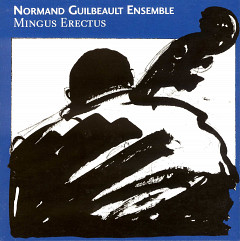
    One of the few Mingus tributes that approaches the passion and commitment of the honoree, Mingus Erectus inculcates a desire to hear Guilbeault and company in other contexts.
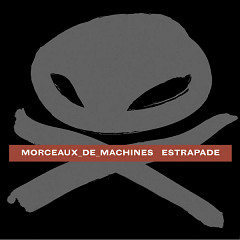
    Estrapade dans Critiques de disques

    «Critique», Vincent Bergeron, Critiques de disques, 4 février 2006
    samedi 4 février 2006 Presse

    J’aime les musiciens ne se sentant pas obligés de se justifier avec un thèse de doctorat. Je préfère ceux ne pensant pas que l’art de la musique se limite à une série de connaissances acquises et de techniques maîtrisées. Je crois que l’accumulation des nuances, rendue à un certain point, tue l’excitation plutôt que de la justifier sans cesse davantage. Je suis convaincu que l’utilisation du «je» le plus personnel voire primitif extrait des sentiments impossibles à exprimer autrement.

    Les morceaux_de_machines pratiquent bien cette approche autodidacte n’ayant nul besoin de longues descriptions techniques pour attirer l’attention. Parce que le résultat parle par lui-même. Maintenant, le duo formé de Érick d’Orion et A_dontigny peut se vanter dans sa promotion d’avoir terminé parmi les finalistes dans la catégorie «disque de l’année – musique actuelle, électroacoustique» aux prix Opus 2005 du Conseil québécois de la musique. L’album Trilogie d’ondes de Gilles Gobeil (empreintes DIGITALes) a finalement remporté ce prix.

    Mais, pour ma part, je retiendrais surtout leur performance live très énergique. Certainement, sur disque, ce n’est pas tout à fait la même expérience, mais morceaux_de_machines conserve toute sa brutalité sans bornes, tout spécialement sur Fonçage de pieux et Trépanation, deux modèles à suivre, des épiques de bruit punitives qu’on peut qualifier à la limite de hip-hop et de techno, mais seulement à cause de l’utilisation de boucles sonores. La réalisation surprend, car elle s’adapte à l’équipement audio le plus ordinaire sans jamais flancher. Par expérience personnelle, ce n’est pas toujours évident de contrôler ce genre de sons en super aiguë et en super basse. La diversité des fréquences est remarquable, trop rare dans le petit monde du noise où les sons les plus limités sont trop souvent mis à l’honneur pour une douteuse question d’authenticité. Le noise de morceaux_de_machines est violent, très saturé et très souvent pas tellement nuancé, mais aussi beau et en quelque part composé même, jamais primitif pour être primitif. Des bruits naturels provenant de navires, d’animaux et de courants d’eau semblent avoir été greffés aux nombreux sons artificiels, mais sans qu’on puisse les identifier.

    Diane Labrosse, Martin Tétreault et Otomo Yoshihide ne manquent pas de participer à quelques pièces, mais c’est l’approche jamais trop chargée et jamais trop vide du duo québécois qui prend le dessus à chaque occasion. Les collaborateurs viennent ajouter leur petite touche personnelle, souvent enfouie.

    Personnellement, la deuxième moitié de cet album m’a un peu moins intéressé. Omlegging et Tromocrates sont également épiques comme pratiquement tout le matériel de ce long album de 75 minutes — passant plutôt rapidement dans notre tête étonnamment. Cependant, ils font dans le surplace comme des moteurs de véhicules inadaptés au climat québécois, inondés par la fonte des neiges comme en ce début de février 2006 (pas très beau merci).

    La pièce titre possède une certaine qualité lyrique (Estrapade), mais encore là il ne faut s’attendre à rien d’autre qu’à la pire des horreurs. Par contre, Sélavy fait preuve, tout comme Fonçage de pieux et Trépanation d’une métamorphose constante s’avérant suffisamment installée on ne sait où au juste, mais quelque part. Et c’est bien la sensation d’être présent dans un environnement tangible qui rend Estrapade bien meilleur que ce qu’on attend d’un album noise. 7.5/10

    Le noise de morceaux_de_machines est violent, très saturé… mais aussi beau

    The Feeling of Jazz dans Voir

    «Critique», Réjean Beaucage, Voir, 2 février 2006
    jeudi 2 février 2006 Presse

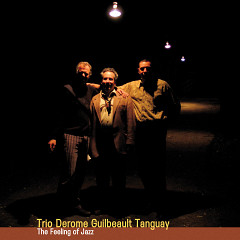
    Voici trois musiciens rompus aux techniques de l’improvisation la plus expérimentale et dont la palette stylistique est reconnue pour son éclectisme. Quand ces trois-là se décident à revisiter le grand livre du jazz américain, c’est une véritable partie de plaisir. Le son du saxophoniste (et flûtiste) Jean Derome s’embellit à chaque nouvel enregistrement et le baryton de Jump For Joy, par exemple, est tout simplement magnifique. Et puis il chante aussi, et d’une voix de crooner que l’on découvre avec joie. Le batteur Pierre Tanguay se fait discret tout en se rendant indispensable, comme le contrebassiste Normand Guilbeault, qui place aussi quelques solos bien sentis. Ellington, Porter ou Waller sont très bien servis.

    Quand ces trois-là se décident à revisiter le grand livre du jazz américain, c’est une véritable partie de plaisir.

    Three Cities in the Life of Dr Norman Bethune dans Voir

    «Critique», Réjean Beaucage, Voir, 2 février 2006
    jeudi 2 février 2006 Presse

    Tim Brady n’est pas du genre guitar hero; ce ne sont pas des solos de guitare qu’il propose ici, mais un opéra, et pas moins électrique pour autant. Il y a bien tout de même un solo, celui de Michael Donovan, baryton. Sa voix évoque le souvenir de Norman Bethune, médecin canadien célèbre pour son travail sur la tuberculose ici, à Montréal, puis combattant pour la démocratie lors de la guerre civile espagnole et finalement chef médical de l’armée communiste chinoise! L’ensemble Bradyworks enrobe le monologue d’une musique puissante qui peut faire songer par moments au Steve Reich récent.

    Bradyworks enrobe le monologue d’une musique puissante qui peut faire songer par moments au Steve Reich récent.

    Veuillez procéder dans ImproJazz

    «Critique», Marc Sarrazy, ImproJazz, no 122, 1 février 2006
    mercredi 1 février 2006 Presse

    C’est entendu, procédons. Par ordre, si possible.

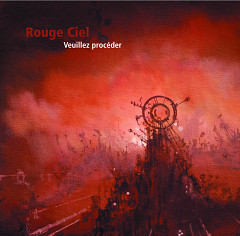
    C’est québécois, ce pourrait être au programme du festival de Victoriaville, ce pourrait être paru chez Victo ou chez Ambiances Magnétiques, c’est produit par Joane HétuGuido Del Fabbro y joue toute sorte de cordes, violines ou mandolines, Simon Lapointe du piano (préparé ou non) et des claviers, Antonin Provost des guitares branchées et débranchées, Némo Venba de la batterie, des percussions, trompette et bugle. A l’image d’un de leurs titres, Névréalité postparapsychophysiologique, les sons, les univers s’encastrent pour former un tout protéiforme, entre post-folk et musiques improvisées, avant-rock et après-garde… On songe à Frith, à Hodgkinson, à Derome, à toute cette clique, et clac! le Bond précisionnel 1 nous renvoie à Derek Bailey, L’Occupation à une version light d’Art Zoyd, les repères un à un valsent puis s’effacent… et c’est tant mieux. Inutile de se raccrocher aux certitudes, laissons-nous porter, yeux bandés, oreilles offertes.

    les univers s’encastrent pour former un tout protéiforme, entre post-folk et musiques improvisées, avant-rock et après-garde…

    Pee Wee et moi dans La Scena Musicale

    «Off the Record», Paul Serralheiro, La Scena Musicale, no 11:5, 1 février 2006
    mercredi 1 février 2006 Presse

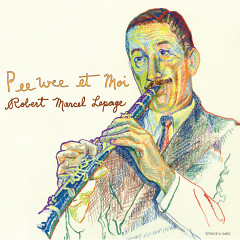
    The wit and poetry of the late great clarinetist Pee Wee Russell are given a post-modern treatment by Montréal clarinetist Lepage and a host of other practitioners of the instrument. A total of seven clarinetists show up for this gig, along with a stellar rhythm section of René Lussier on guitar, Normand Guilbeault on bass and Pierre Tanguay on drums. It’s not surprising that it takes this much ebony to pay homage to Russell’s legacy. Lepage and company lead off with Pee Wee’s Blues, a Russell original, then explore various readings, variations in the blues form on the Russell style, winding up after the multi-referential romp with another Russell piece, Muskogee Blues. Through the journey, essentially consisting of studies in style, there are many delightful moments. Lussier’s twangy resonator-acoustic guitar blends right in, with its quirky evocations of cartoonish humour. In the spirit of play is a heartfelt tribute, making this a must for Pee Wee Russell fans and lovers of the clarinet in general.

    In the spirit of play is a heartfelt tribute, making this a must for Pee Wee Russell fans and lovers of the clarinet in general.
  • 38
  • 39
  • 40
  • 41
  • 42
  • 43
  • 44
  • 45
  • 46