Sauter au contenu principal
actuellecd

Blogue

276 résultats
  • 28
  • 29
  • 30
  • 31
  • 32
  • 33
  • 34
  • 35
  • 36
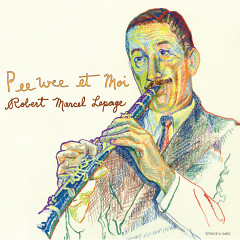
  • Pee Wee et moi dans Hour

    «Spins», Mike Chamberlain, Hour, 13 avril 2006
    jeudi 13 avril 2006 Presse

    Clarinettist Robert Marcel Lepage would probably agree that every jazz clarinettist must at some point come to terms with the heritage of the iconoclastic Pee Wee Russell, whose highly individual style within traditional swing settings not only explored the timbral possibilities of the instrument, but also raised questions of the relationship between the soloist and the musical context. Where Russell found himself in the company of conventional musicians, Lepage’s mates here are guitarist René Lussier, bassist Normand Guilbeault and drummer Pierre Tanguay, all of whom can be described as at least a bit to the left of the conventional path. Each of the compositions explores one aspect of Russell’s phrasing. The tour is a delight and a revelation: Pee Wee really did rock!

    Each of the compositions explores one aspect of Russell’s phrasing. The tour is a delight and a revelation: Pee Wee really did rock!

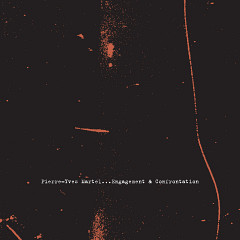
    Engagement & Confrontation dans Unijazz

    «Recenze», Karel Kouba, Unijazz, 10 avril 2006
    lundi 10 avril 2006 Presse

    “I can’t understand why people are frightened of new ideas. I’m frightened of the old ones.” This quote by John Cage introduces the solo recording of young Canadian bassist Pierre-Yves Martel, who, by altering the upright bass using pieces of paper, wood and metal, ties in to a tradition initiated by Cage’s prepared piano. Another inspiration of Martel’s creation is the philosopher of free improvisation and non-idiomatic playing, guitarist Derek Bailey. Martel is a classically trained musician, who does not use his skill for show. Rather, in the spirit of his two musical fathers, he is trying to unearth the inner expressive possibilities of his instrument. In his hands, the double bass leaves the boundaries of conventional context with which it is often associated. With preparation, unconventional use of the bow and extended techniques, Martel creates unexpected shadows, creeks, thuds and murmurs bordering with silence; the resulting sounds are often percussive in character, and at times reminiscent of wind instruments. The multi-layered structure of these improvised compositions holds firmly together, does not slide into purposeless and as a whole the album does not bore. This can be credited first of all to Martel’s experience with jazz and classical idioms, which play a role of contrast in his playing, as well as the chosen form of short compositions. With the essence of surprise, Martel’s world of sound represents an unheard-of side of music. (translated by Petr Cancura)

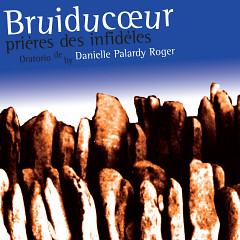
    Bruiducœur, prières des infidèles dans Exclaim!

    «Experimental & Avant-Garde: Year in Review 2005», Nilan Perera, Exclaim!, 10 avril 2006
    lundi 10 avril 2006 Presse

    Choral music rarely gets let out of the box these days. One gets the odd recording of vocal work that has some interesting directions, but rarely does one get such a tour de force as is presented on this disc. Roger, who is no stranger to text-based work, has created a tale of a man at the end of his life, frightened and half-crazed, attended by a female witness describing his state and the choir and soloists as the society that surround him. The piece itself is composed for 13-piece choir, two soloists, two narrators and two percussionists. A number of things provided me with ways into this work. The repetitive nature of the text brought Steve Reich and Meredith Monk into the picture and the music is somewhat reminiscent of Berio or Ligeti, but more to the point; a lot of it reminded me of what a Diamanda Galas solo might sound like if it was arranged for multiple voices. There are interludes where the soloists improvise like a pack of rabid dogs, as well as beautifully stark ensemble sections that rise and fall like grey cloud. The two percussionists provide segues and accompaniments that provide a near perfect counterpoint to the voices. Bruiducoeur is a strong and challenging work.

    Bruiducoeur is a strong and challenging work.

    19 – 26 mai 2006: Musiciens DAME au Festival de Jonquière

    mardi 4 avril 2006 En concert

    Plusieurs musiciens DAME seront en concert lors du prochain Festival des musiques de création du Saguenay—Lac-Saint-Jean à Jonquière (Québec). Danielle Palardy Roger et Fred Frith seront en concert le vendredi 19 mai 2006 à la salle Pierrette-Gaudreault. Le trio François Bourassa, Jean Derome et Pierre Tanguay sera en concert le samedi 20 mai, également à la salle Pierrette-Gaudreault. Finalement, L’Hexacorde et le trio {nbio:lauzier_ph} {nbio:perkin_mi} {nbio:kuster_ro} seront en concert le vendredi 26 mai au Café-théâtre Côté-Cour.

    Isaiah Ceccarelli dans La Scena Musicale

    «Regards sur la relève, tambour battants: Isaiah Ceccarelli», Charles Collard, La Scena Musicale, no 11:7, 1 avril 2006
    samedi 1 avril 2006 Presse

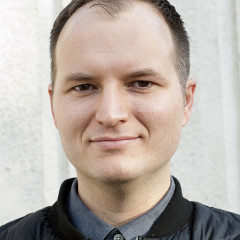
    Depuis son arrivée à Montréal en 2003, le batteur Isaiah Ceccarelli ne semble pas en manque de travail. Bien qu’on s’attendait à rencontrer un musicien pressé entre deux répétitions, on a découvert un jeune homme au verbe posé et d’une bienveillance manifeste. Né en Colombie-Britannique de parents d’origine russe et italienne, ce musicien de talent déclare d’emblée n’avoir aucun lien de parenté avec le batteur français André Ceccarelli. C’est à neuf ans, en 1987, qu’il est piqué par la musique, au moment où sa famille s’installe en Californie. Tenté d’abord par la trompette, il se rend compte que les tambours seront sa voie. Il suivra une formation bien classique (jouant comme timbalier d’orchestre), mais le jazz correspond davantage à ses envies, intérêt qui le mènera à étudier avec Ed Shaughnessy. Après quatre années de cours privés avec son mentor, il aura acquis les bases techniques pour entamer une carrière professionnelle. Pourtant, en 1997, il s’inscrit à la Berklee School of Music, occasion de rêve pour connaître des musiciens de toutes les provenances, dont le guitariste français Antoine Polin, avec qui il enregistre deux albums. Cette rencontre le mènera vers l’Ancien Continent, puis à un autre stage d’études au Conservatoire national de Paris, auprès du grand batteur Daniel Humair et du bassiste Ricardo Del Fra. Il multiplie les expériences, question de ne pas se cantonner dans un style trop défini. De retour en Amérique, à New York cette fois-ci, il enregistre un album en quartette avec le saxo Joshua Rifkin, ex-confrère de Berklee, mais ne s’attend pas à ce que la Grosse Pomme lui accorde une consécration. Peu avant ce passage, Isaiah débarque à Montréal et se sent immédiatement interpellé par la richesse de notre scène locale, qui lui permet d’avoir les coudées franches et de former un groupe pour jouer ses compositions. Côté influences, il nomme volontiers Tony Williams, Paul Motian et Ed Blackwell, mais dans un tout autre genre, il mentionne le percussionniste Lè Quan-Ninh, dont l’art le touche peut-être encore plus. Quant à son jeu, on y entend une invention généreuse qui trahit ses sources d’inspiration américaine et européenne, deux pôles qui se complètent en offrant le meilleur de ces deux mondes. En sideman, il compte plusieurs disques à son actif (dont la parution récente Désir — Effendi Ballades), mais son premier enregistrement en leader devrait paraître l’automne prochain (un quintette avec Jean Derome et Frank Lozano, chez Ambiances Magnétiques). Musicien polyvalent s’il en est, Isaiah Ceccarelli est un beau fleuron pour la scène montréalaise et sa présence se fait sentir sur plusieurs fronts à la fois.

    Musicien polyvalent s’il en est, Isaiah Ceccarelli est un beau fleuron pour la scène montréalaise et sa présence se fait sentir sur plusieurs fronts à la fois.
  • 28
  • 29
  • 30
  • 31
  • 32
  • 33
  • 34
  • 35
  • 36