Sauter au contenu principal
actuellecd

Blogue

258 résultats
  • 34
  • 35
  • 36
  • 37
  • 38
  • 39
  • 40
  • 41
  • 42
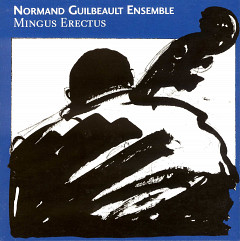
  • Mingus Erectus dans La Scena Musicale

    «Off the Record», Paul Serralheiro, La Scena Musicale, no 10:5, 1 février 2005
    mardi 1 février 2005 Presse

    As Andrew Homy mentions in his liner blurb, it is because the members of this Montréal band make this music their own that they are able to play Mingus’ works convincingly. With a slightly different line-up than a usual Mingus ouffit, the present quintet, under the savvy leadership of one of Montréal’s prime bassists, retains much of the boisterous energy and lyricism that typifies the creations of the Master. Furthermore, this excellently captured live performance bears much of the forcefulness and immediacy, which characterize the Mingus style. Qn the whole, the up-tempo tunes are more successful, wherein the soloists shine over a driving rhythm section. Ivanhoe Jolicoeur, whose appropriately hard bop trumpet playing is full of spark and ideas, turns in some sizzling work; Jean Derome (saxes and flute) and Mathieu Bélanger (clarinets) are no slouches either, each of them deftly navigating through all seven idiosyncratic vehicles heard here. That said, they come up short on Peggy’s Blue Skylight, where their reading of the tune seems a little too pedantic and the energy level flags along the way. In contrast, they attack Pithecanthropos Erectus with soulful abandon, and likewise for that mouthful of a tune entitled All the Things You Could be by Now if Sigmund Freud’s Wife Was Your Mother. Elsewhere, the mid-tempo Fables of Faubus, partly an update on politico-idiocy which zeroes in on George Dubya and his war on Iraq, is only slightly better, but MDMD, a tune penned by Derome in the style of a Mingus dirge and showcasing Guilbeault’s playing to great effect, is both convincing and relevant. Once again, this band is really more engaging in the faster tunes, like the closer Moanin’, best known for its funky signature baritone sax riff.

    … it is because the members of this Montréal band make this music their own that they are able to play Mingus’ works convincingly.

    Sur une balançoire dans The WholeNote

    «Review», Phil Ehrensaft, The WholeNote, no 10:5, 1 février 2005
    mardi 1 février 2005 Presse

    French bassist Joëlle Léandre is a very important performer of contemporary music, both composed and improvised, on both sides of the Atlantic. She has performed with the likes of Anthony Braxton, Marilyn Crispell, Georges Lewis, Evan Parker, Steve Lacy, and John Zorn, is a member of Pierre Boulez’s Ensemble intercontemporain, and an accomplished composer in her own right. Like Léandre, the Italian pianist Gianni Lenoci is at home both in jazz and composed music. His mentors in jazz were Mal Waldron and Paul Bley, and he shares Léandre’s passion for the music of John Cage and Morton Feldman.

    Lenoci teaches at Italy’s Nino Rota Conservatory. He invited Léandre to give a clinic there, and also proposed a free improvisation recording session, and approached the Belgian radio presenter John Rottiers to handle the production end.

    Sur une balançoire translates as “on a teeter-totter,” and it’s an apt term for the interaction between these two master musicians. There are fourteen beautifully crafted improvisations ranging from one-and-a-half to just under five minutes in length. The pace varies from intense to stately. Each performer employs the entire stretched range of contemporary techniques that are available for their instruments. They are so well attuned to each other that it’s hard to believe that they are not long-term collaborators.

    As of late, Montréal’s Ambiances Magnétiques label has been quite successful in the export market. Albums like Balançoire are the reason.

    As of late, Montréal’s Ambiances Magnétiques label has been quite successful in the export market. Albums like Balançoire are the reason.

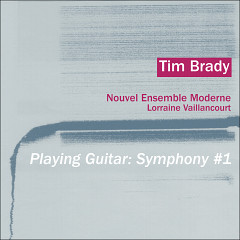
    Playing Guitar: Symphony #1 dans Splendid E-Zine

    «Review», Mike Meginnis, Splendid E-Zine, 28 janvier 2005
    vendredi 28 janvier 2005 Presse

    While Playing Guitar: Symphony #1 was not conceived as such, and thus lacks much of the cohesiveness you would expect, it is indeed, arguably, a symphony. There are some rough spots, but the overall picture is one of virtuosic performance, risky and thrillingly academic composition, and promising insights into fresh compositional possibilities. Brady’s guitar is intended as the centerpiece and the ensemble’s modifications toward this end are the gimmick, but I found the guitar to be probably the least interesting individual element. As a booster of the other instruments, it does an excellent job. When it’s expected to stand alone, it often fails to grab attention as required. This may be a question of my familiarity with the electric guitar versus the relative unfamiliarity of what I think was Brady’s intended audience — of my power to be underwhelmed by a theoretically overwhelming instrument, versus their palpable fear of it. Really, though, it doesn’t matter; the matter scarcely hinders this excellent music, as long as you don’t think about that particular aspect too hard. (Hint: leave the liner notes in the case where they belong.)

    Playing Guitar…’s first movement opens with a wash of guitar noise, displaying the power of the ensemble’s secret weapon and one of Brady’s innovations: a sampler, with elements as simple as single electric guitar tones and as complex as legions of electric guitars making thunderous noise, mapped to its keyboard. This is a powerful muscle, but it’s used sparely, as an accent and underpinning and resonance more than driving force. The tone is set. Like the most intense results of the minimalist movement meeting with traditional compositional ideas, the structures are highly repetitive from second to second, but differ wildly from minute to minute. It feels like the crystalline form of jazz: all the seemingly coincidental brilliance and immediacy of a Coltrane performance without half of the tom-foolery.

    The second movement speaks more to the minimalist movement at its more radical stages: a horn drones sadly in the foreground while all manner of ambient strangeness flutters and rumbles behind it. The seeming aimlessness of these moments is counterbalanced perfectly by the intensity with which they are performed — by the tension every second of horn exudes. The ensemble keeps you so tense, you’ll hardly notice that the sound is building, building, building, until suddenly the whole construct is shimmering. Brady’s guitar is shepherding the elements together and the strings are hard to keep up with. For one perfect second, the whole mess comes together — and then, even more suddenly than the moment arrived, it is gone. Only the sampler’s ambient drones and whines remain.

    The third movement is an ill-advised sampler solo. It has little form and hardly any reason, accomplishing nothing the other movements won’t do better, but it’s fun to listen to. Thankfully, the fourth movement displays the sort of intensity we expect in the climax of a great, cerebral action film, but with none of the ham-fisted emotional manipulation. It begins as a particularly combustive traditional composition and transforms into the most thrilling moments you’ll hear in the entire symphony, unraveling melodically even as it doubles, triples, quadruples in size. It is spectacular.

    This leads to another more traditionally minimalist movement, which takes the elements left over from the previous one and stretches them far past the point of comfort. Again, that remarkable tension. Some of the instruments in the ensemble have been subtly modified with electronic amplification so as to work better with Brady’s guitar, and you’ll hear the most obvious benefit here.

    After a wank-fest guitar solo, we come to the closing movement. Nothing about this one stands out in particular, as it is, appropriately, the synthesis of all the best ideas from the previous movements. By now, comparisons to Godspeed You! Black Emperor are inevitable, but even with his minimalist leadings, Brady doesn’t fuck around nearly as much on his way to the official explosion of sound and musical fury. In a perfect world, the record would stop here.

    Unfortunately, an additional composition is included as a supplement to the symphony, though it doesn’t come close to matching its luster. “Frame 1 — Resonance” is painfully sophomoric, making heavy-handed use of a hesitant piano layered with electric guitar. The gimmick is that the electric guitar is supposed to behave as a sort of amp for the piano, matching it note for note. This is treated as a profound realization requiring a lot of space and, indeed, nearly thirteen minutes to absorb. When the guitar stops matching the piano and instead attempts desperate new tricks to accent it, the entire exercise becomes pointless and unfathomable, with the already incoherent piano material falling apart almost completely. Even if this was an improvised piece, it wasn’t a success.

    Otherwise, though, Playing Guitar… is your opportunity to hear seventeen professionals playing the hell out of a few brilliant pieces and a couple of wanky ones. To not buy it, if you have the money on hand now or any time in the near future, is to deprive yourself of a valuable and singular experience.

    … virtuosic performance, risky and thrillingly academic composition, and promising insights into fresh compositional possibilities.

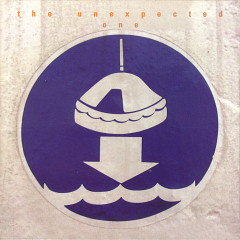
    The Unexpected One dans emoRAGEi

    «De zéro à disque», NP, emoRAGEi, no 23, 27 janvier 2005
    jeudi 27 janvier 2005 Presse

    La musique improvisée, d’après moi, demande au musicien d’aller où il n’est jamais allé avec son instrument. De l’explorer de toutes les façons imaginables et avec le plus d’ingéniosité possible. La musique improvisée prend ensuite une autre dimension lorsqu’elle est multipliée par le nombre de musiciens s’y rencontrant: c’est alors l’influence, la relance et l’esprit de groupe qui entrent en jeu, tout en continuant l’exploration intense de l’instrument de chacun. L’étiquette Ambiances Magnétiques, véritable référence de la musique improvisée, dite «actuelle», présente cette fois la rencontre de quatre improvisateurs canadiens.

    Deux sont de Vancouver, deux de Montréal. Les guitaristes Bernard Falaise et Ron Samworth unissent leurs expériences à celles de Pierre Tanguay et Dylan Van Der Schyff, résultant en un album assez doux — dans le contexte, mais tout de même parsemé de surprises et de montées d’intensité plus ou moins bordéliques. Les deux guitaristes touchent aussi à de l’électronique, ce qui amène des sonorités inattendues, comme ces coups de mitraillette durant Corned oliphant. La longue Pink crimson, qui frise les 18 minutes, offre aussi un bel éventail des sonorités utilisées par les quatre musiciens. Un album agréable par la douceur et la subtilité de ses parcours rocailleux, mais évidemment assez inaccessible par son absence de mélodies et de rythmique soutenue à quiconque dest pas habitué au genre.

    … agréable par la douceur et la subtilité de ses parcours rocailleux…
  • 34
  • 35
  • 36
  • 37
  • 38
  • 39
  • 40
  • 41
  • 42