Sauter au contenu principal
actuellecd

Blogue

258 résultats
  • 22
  • 23
  • 24
  • 25
  • 26
  • 27
  • 28
  • 29
  • 30
  • 27 août 2005: Grande tournée pour Queen Mab

    mercredi 4 mai 2005 En concert

    Le groupe Queen Mab, constitué des musiciennes Marilyn Lerner (piano), Lori Freedman (clarinettes) et Ig Henneman (alto), se lance cet été dans une grande tournée intitulée Thin Air. Queen Mab sera en concert le 11 mai 2005 au Hothouse de Chicago, le 13 mai 2005 au Creative Music Guild de Portland, le 14 mai 2005 à la 1412 Gallery de Seattle, le 19 mai 2005 au Festival des musiques de création de Jonquière (Québec), le 21 mai 2005 au Distillery Jazz Festival de Toronto, le 24 mai 2005 au 5e Victoriaville Toronto Overdrive, le 20 juin 2005 au Calgary Jazz Festival, le 21 juin 2005 au Cool Winnipeg Jazz Festival, le 26 juin 2005 au Vancouver International Jazz Festival, le 29 juin 2005 au Toronto Downtown Jazz Festival, le 1er juillet 2005 au Ottawa Jazz Festival, le 4 juillet 2005 au Festival International Jazz de Montréal, le 20 juilllet 2005 au Atlantic Jazz Festival de Halifax et le 21 juillet 2005 au St. John’s Jazz Festival. Le trio s’envolera par ensuite le 27 août 2005 pour le Zomer Jazz Fietstour de Groningen (Hollande).

    Un disque gratuit d’Avatar!

    lundi 2 mai 2005 Général

    Avec tout achat d’une parution OHM / Avatar, obtenez gratuitement un exemplaire de la compilation 11h, regoupant onze des meilleures Excavations sonores (jusqu’à épuisement des stocks).

    Orbiting With Screwdrivers dans Touching Extremes

    «Review», Massimo Ricci, Touching Extremes, 1 mai 2005
    dimanche 1 mai 2005 Presse

    Mecha Fixes Clocks is Michel F Côté, whose multitask approach to music making has always yielded good results, his albums under the Bruire moniker an excellent specimen of lively imagination enhanced by the freshness of his systematic change of perspective. Orbiting with screwdrivers carries a combination of mystery and extraneousness from any given canon, its flavour determined by a painstaking work on every nuance of the many instruments used; its creator alone is credited with “electronics, percussions, keyboards, accordions, computer and home mades”, but he’s flanked by a who’s who of Canadian independent musicians which includes — among the many — Diane Labrosse, Martin Tétreault, Jean Derome, Tom Walsh. Most of this music sounds like a presage; no recurrent themes, no moral obligations for macrocephalous orchestrations or pompous contrapuntal developments. Every sound seems to exist just for the short section it belongs to, a barely perceptible continuity broken by piano or guitar drops and deeply resounding bass coming from nowhere amidst complex relationships of underground electronics and weak string lamentations; the finest example can be heard in the cinematic Nano rotary for nothing, which somehow incarnates the whole aesthetic of this project. Côté does not want his vision to become too popular, remaining hidden behind this series of fantasies that one could compare to a black-and-white dream where all the components move in a sad choreography despite the absence of a defined meter or — heaven forbid — a “rhythm”. It happens that many of these pastels are in synchrony with the muted qualities of our most reflective self; yet they disappear after a while, leaving no trace of their evanescent significance — just the vagueness of a frail beauty.

    the vagueness of a frail beauty.

    The Unexpected One dans Coda Magazine

    «Reviews», Mike Chamberlain, Coda Magazine, no 321, 1 mai 2005
    dimanche 1 mai 2005 Presse

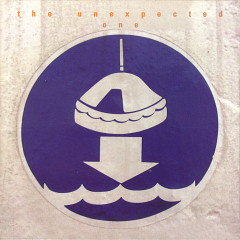
    One might think that two guitarists playing with two drummers might find a myriad of ways to mess things up by getting in each other’s way. But that doesn’t happen here. When Montréalers Bernard Falaise and Pierre Tanguay get together with Vancouverites Samworth and Van der Schyff, they make music that exists at a deep level of understanding and sympathy.There is no duplication of effort, no stepping on toes.

    For those not familiar with the musicians here, it should be noted that drummers Tanguay and Van der Schyff are not mere timekeepers to guitar histrionics by Falaise and Samworth. Most of the time, the musicians are playing with textures and levels of dynamic intensity, exploring the varieties of sound that can be produced by wood and wire, metal and skin. The music can be contemplative and moody, or jarring and provocative.

    As listeners, we hope that musicians will surprise us. The great joy in playing comes when the musicians surprise one another. That I suspect, is what happened at this session.

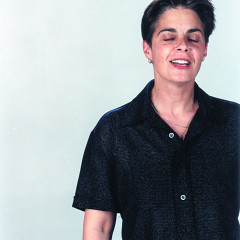
    The great joy in playing comes when the musicians surprise one another. That I suspect, is what happened at this session.
    Le bal dans Muzik etc

    «Critique», Muzik etc, no 17:3, 1 mai 2005
    dimanche 1 mai 2005 Presse

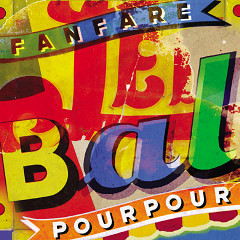
    Fanfare Pourpour est un orchestre urbain montréalais. Ils sont quinze, âgés de 21 à 68 ans et le groupe se compose de musiciens, comédiens, graphistes, animateurs de radio et d’un informatien. Ils font une musique originale dans laquelle s’harmonisent joie, désordre et poésie. Leur dernier album intitulé Le Bal nous livre des valses porte-bonheur, de la chanson française, du jazz et quelques pièces aux épices Cajun. Du 14 au 25 juillet prochains, ils feront une grande tournée de la province du Québec. www.fanfarepourpour.com

    Ils font une musique originale dans laquelle s’harmonisent joie, désordre et poésie.

    Mingus Erectus dans Jazzman

    «Critique», Franck Bergerot, Jazzman, no 113, 1 mai 2005
    dimanche 1 mai 2005 Presse

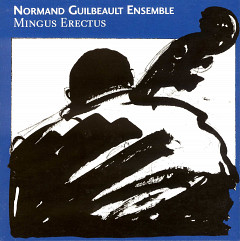
    POURQUOI PAS? Le Canadien Normand Guilbeault fréquente le répertoire de Mingus depuis quinze ans. Une familiarité illustrée par ces captations en club. Elles restituent peut-être plus fidèlement que le Mingus Big Band la fièvre des interprétations mingusiennes, leurs dérapages rythmiques et harmoniques, collectives et solitaires, à la limite de la perte de contrôle, mais aussi la densité obtenue en petite formation. Le répertoire va du classique Pithecanthropus Erectus au plus rare Conversation en passant par Fables of Faubus (dont les interjections, hurlées sur l’exposé, s’adressent désormais à George Bush) et un original fort mingusien. On n’ouvrira pas la polémique du néoclassicisme et du répertoire mais ce disque méritera d’être versé au dossier (même si l’entreprise se justifie davantage sur scène que sur disque). 2

    Elles restituent peut-être plus fidèlement que le Mingus Big Band la fièvre des interprétations mingusiennes, leurs dérapages rythmiques et harmoniques, collectives et solitaires, à la limite de la perte de contrôle, mais aussi la densité obtenue en petite formation.
  • 22
  • 23
  • 24
  • 25
  • 26
  • 27
  • 28
  • 29
  • 30