Sauter au contenu principal
actuellecd

Blogue

304 résultats
  • 16
  • 17
  • 18
  • 19
  • 20
  • 21
  • 22
  • 23
  • 24
  • Arcand en constante mutation

    jeudi 26 août 2004 Nouveautés

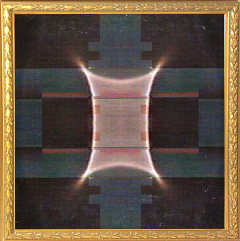
    Comme ses boucles de son et de lumière, Pierre-André Arcand est un artiste en perpétuelle évolution. Véritable transfuge de la poésie sonore, il développe depuis plusieurs années installations et permutations sonores et visuelles. Mécanique digitale? Électronique acoustique? Pour {nbio:arcand_pi}, tout se développe par mutation! Son nouvel opus hybride, Atlas Epileptic, présente un volet d’œuvres audio et un second de travaux audiovisuels. Pierre-André Arcand profite de sa participation à l’événement multimédia Désert, le 25 septembre 2004 à l’Incinérateur des Carrières (Montréal), pour lancer officiellement son nouvel album.

    Première symphonie pour Brady

    mercredi 25 août 2004 Nouveautés

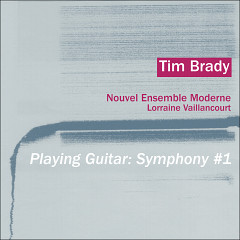
    Pour sa troisième parution discographique sur l’étiquette Ambiances Magnétiques (sa 15e en carrière!), le compositeur et guitariste Tim Brady livre au public sa première symphonie pour guitare électrique solo, échantillonneur, électroniques en direct et ensemble de musique de chambre. De plus, cet ensemble est nul autre que le prestigieux Nouvel Ensemble Moderne, sous la direction de [vaillancourt_lo]. Grâce à une captation 24-bit multipiste, un monacal travail de studio et les talents d’instrumentiste de {nbio:brady_ti}, Playing Guitar: Symphony #1 n’est rien de moins qu’une œuvre majeure du répertoire contemporain occidental. Le lancement du nouveau disque a lieu le 15 septembre 2004 lors du concert d’ouverture de la saison 2004-2005 du Nouvel Ensemble Moderne, à la Salle Claude-Champagne (Montréal).

    Puce à l’oreille dans Splendid E-Zine

    «Review», Justin Kownacki, Splendid E-Zine, 23 août 2004
    lundi 23 août 2004 Presse

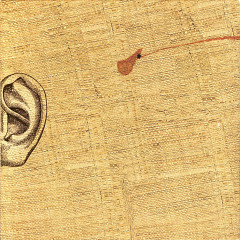
    Albums like Puce à l’oreille divide the audience into three groups: those who get it, those who don’t get it and think it’s ludicrous, and those who don’t get it but are willing to believe that someone out there probably does. I like to think I’m in camp three, though there are times when I start to look toward the second camp and suspect that they may have a point. Then I realize that I’ve learned more about myself and my own tastes while listening to Puce à l’oreille than I did about the album itself.

    The disc is the product of an afterthought: Mélanie Auclair, a singer and cellist, wanted to explore music with several artists who had influenced her over the years. What began as an informal jam session evolved into the tracks we hear on the album. However, this is no Phish concert; this is minimalist, modal jazz, world music, ambient acoustics and verbal noises that don’t pass for lyrics in the Western world. As such, I’m reluctant to dismiss the album out of hand because it’s clearly not targeted at my own personal demographic — and especially as I enjoyed a good deal of it. Auclair is a wonderful cellist with an incredible experimental streak and the musicians she has surrounded herself with are all highly skilled, if unconventional. The raw string duets between Mélanie and Eric Auclair on Puce à l’oreille 4, and her pairing with saxophonist Charles Papasoff on Puce à l’oreille 5, engage me because these are instruments I can relate to, albeit played in nouvelle (to me) ways. But as the album veers into the occasional vocals, which are really a barrage of guttural noises somewhere between sex and death, and which at one point resemble vomiting parakeets, I’ll admit that I can’t help but glance back at camp two and wonder if they’re the ones who are missing something, or if I am.

    Auclair is a wonderful cellist with an incredible experimental streak…

    4 septembre 2004: Le Band de poètes enregistre en spectacle

    vendredi 20 août 2004 En concert

    Les 2, 3 et 4 septembre 2004, le bistrot culturel Le Va-et-Vient (Montréal) est l’hôte de l’enregistrement du premier album du Band de poètes, un groupe formé de Geneviève Letarte, José Acquelin, D. Kimm, Guy Marchamps, Bernard Falaise et Normand Guilbeault. Quatres poètes et deux musiciens qui s’échangent répliques orales et sonores dans un spectacle «délicieusement délinquant».

    Sur une balançoire dans Vital

    «Review», Dolf Mulder, Vital, no 435, 18 août 2004
    mercredi 18 août 2004 Presse

    Joëlle Léandre is a very well known improvisor from France, a momument of european improvised music. Her discography is enormous, her collaborations are numerous. She needs no further introduction. Gianni Lenoci on the other hand is a rising star from Italy. He teaches Jazz and Contemporary Music at the Nino Rota Conservatory in Monopoli. He is known for his work as a member the Eugenio Colombo Quartet, a famous quartet in Italy. With computer music composer Franco Degrassi he made an album for the british ASC Records. As a performer of contemporary music he feels affinity with the music of Morton Feldman, John Cage, a.o. This he has in common with Joëlle Léandre who considers John Cage to be one of her most important teachers. How did the meeting between the two come by? Lenoci invited Léandre for a clinic at his conservatory, but also for a recording session because Lenoci had the feeling that “this was the right moment to organize a recording session with Joëlle Léandre.” Alas liner notes do not explain what established this “right moment”. Anyway, to be more exact, on may 31, 2003 they spend a day in a studio in Bari, and recorded 14 improvisations that are all named Balançoire (1 up to 14). Listening to the music the expression ‘civilised improvisation’ came to my mind. The playing is a little clean and controlled, no wild outbrakes or cry from the heart. Léandre and Lenoci stay very kind to each other. But the music is intense and spontaneous on the other hand. Without question we hear two very capable improvisors with great vocabulary and a successfull first meeting. The last track, Balançoire 14, is the most funny track, were Lenoci touches on all kinds of idioms, and you can feel the joy they must have had. Maybe a good starting point for a next meeting.

    … you can feel the joy they must have had.
  • 16
  • 17
  • 18
  • 19
  • 20
  • 21
  • 22
  • 23
  • 24