Sauter au contenu principal
actuellecd
  • This website is also available in English.

Blogue

255 résultats
  • 29
  • 30
  • 31
  • 32
  • 33
  • 34
  • 35
  • 36
  • 37
  • Otomo Yoshihide, Martin Tétreault dans The Wire

    «Invisible Architecture #1», Jerome Maunsell, The Wire, no 219, 1 avril 2002
    lundi 1 avril 2002 Presse

    Converging on Brussels from the UK, Japan and Canada, three turntablist masters join forces on this extraordinarily assured and coherent 27 minute live improvisation, recorded in July 2000. The most immediately strange thing about it is how rarely you hear the sound of vinyl and needles. Indeed, much of it is closer in spirit to contemporary electronica and laptop improvisation. Some harsh reminders of where these noises are sourced do crop up in the form of intermittent scratching and varispeed textures, but these few are so rigorously controlled that they come as quite a jolt. The array of loops and sounds on offer here makes you want to chuck out your computer and invest in a battered old Dansette — or, as Philip Jeck once famously did, 180 of them.

    Judging from their differing approaches to deck manipulation, presumably Jeck supplies the many queasy loops that form the bedrock to Invisible Architecture: a whole series of shifting textures and grainy landscapes.The signature moves of Martin Tétreault and Otomo Yoshihide, meanwhile, are ever-evolving. In recent years, they have both gone beyond using turntables as a hands-on, primitive form of sampler for jagged musical quotation, and have fashioned a purer approach. Delving into the guts of their instruments, using everything from prepared records to the whir and hum of the belt drive, they have unearthed a whole heap of fresh sonic material. While virtuoso HipHop DJs take sonic collage, jumpcuts and dexterity to new heights, Jeck, Yoshihide and Tétreault are forming a divergent, original aesthetic.

    Filmic, speckled Ambient washes open the piece, redolent of hazy childhood afternoons and cinefilms a la Boards Of Canada. Analogue oscillations pierce through, along with something like the squeaking of boats rubbing against a quay. With an organic, swelling pace, we then charge through percussive thumps and match fizes, insectile swarms, roughly chugging trains, delayed vocal snippets, bouts of machine noise, rusty guitar licks, squealing drones, pastoral flutes, belching feedback and the occasional spasm of sped-up vinyl. Gregorian chants over a whole blast of varispeed noise form a climax, before things end on an uneasy note with interrupted orchestral stabs punctuating an increasingly disturbing silence.
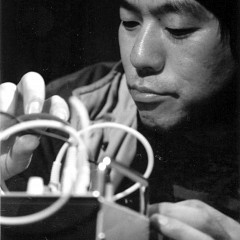
    … three turntablist masters join forces on this extraordinarily assured and coherent 27 minute live improvisation…

    Parasites dans Incursion Music Review

    «Review», Tobias C van Veen, Incursion Music Review, no 049, 31 mars 2002
    dimanche 31 mars 2002 Presse

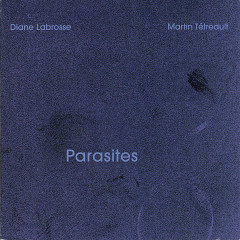
    Beginning with crackled sound, almost abrasive and entirely disruptive, Labrosse and Tétreault shake the listener into thinking that one is listening to a new work by the electroacoustic duo Interface. But things take an entirely different turn within seconds, and interspersing the sound-cackle-crackles with silence leads the listener to humming and resonating melancholic spaces that can only be properly described as underwater caverns. In these caverns are Cave People; and they are composing music. It is a peaceful time, and by the time track 5, sponger, rolls around — these are very short tracks, all about two minutes or so in length, except for track 11, a coal eye, which is 10 minutes — I am fully immersed in the sketches of sound which paint a visual aura to the impressively wide range of experimentation found from track to track. For example, track 6, insomnia of a bed-bug, disrupts underwater-land and introduces radio static-hum which, in a playful mood, dances with the clicks of a clock. That the elements are cavorting with each other should come as no surprise, for like Interface, Tétreault and Labrosse are a live improv duo; but unlike Interface, they manage to maintain my interest by moving through different phases of sound as well as conceptual environments, easily handling slight noise and static, tones, hums, and clicks. Labrosse, according to the liner notes, works solely with “abstract elements.” I am not sure what the entails in terms of gear, the hazy blue picture of the duo leaves the details indiscernible. Tétreault works directly with turntables: no records, just manipulating the sounds to be found in the decks themselves. Given this palette, both Tétreault and Labrosse manage to construct a dramatic and engaging topology of sound which, for the most part, is in the experimental ambient genre, and in moves of inspired stage magic, know exactly when to end a sound that has lost its ability to engage the listener. A succinct and playful album of experimental madness which, despite — and perhaps because of — its overwhelming undertones of intelligence, does not force the listener into obscurity.

    A succinct and playful album of experimental madness which… does not force the listener into obscurity.

    La spirale de l’escargot dans Vital

    «Review», Dolf Mulder, Vital, 28 mars 2002
    jeudi 28 mars 2002 Presse

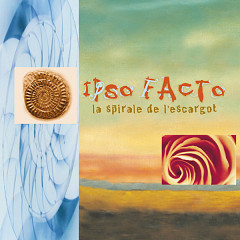
    Debut by Ipso Facto on the small Monsieur Fauteux label, a label related to Ambiances Magnétiques. Ipso Facto is a quartet: David Bussières (guitars), Chantal Bergeron (violin), Simon Dolan (Bass) and Francis Roberge (percussion). Their music is best characterised as modern chamber music. It is not rock, it is not jazz, but a bit of both. Influences of world music are nearby: klezmer, latin rythms, etc. Melody is important here. The music is very accesible and ‘classic’. The idiom of Ipso Facto is well-known. No revolution takes place here. But all compositions (by guitarist David Bussières) have an original touch and there is a great variety. For the historical perspective, their music picks up where Conventum (early 80s) stopped. Although the compositions here are more ‘simple’ in nature then was the case with Convemtum (Lussier, Duchesne, a.o.). The enthusiastic and inspired playing of Chantal Bergeron (violin) and the other musicians make this is one a very enjoyable one.

    … all compositions have an original touch and there is a great variety.

    Océan à vendre / For Sale, Océan pour la suite dans Vital

    «Review», Dolf Mulder, Vital, 28 mars 2002
    jeudi 28 mars 2002 Presse

    Sylvie Chenard (Valleyfield, 1957) is a multi-talented artist: composer, performer (electric guitar), writer. She fights many battles. Her work reflects her engagement with feminism, pacifism, and many social and ecological (whale) themes. Les projets de la Baleine for example reflects her interest in the strugge for surviving of the whale. For this cd she collected compositions recorded between 1994 and 1996. With these two new cds all attention goes to the environment of the whale, that is the ocean. The oceans are for sale. Culture is for sale. The cult of consumerism is for sale. There is nothing left to buy. Océan à vendre is a cooperation with composer, performer and multi-instrumentalist Jon Asencio. He is a veteran of the Montréal music scene. He played punk, reggae, pop, jazz, experimental and electronic music. For this cd with Sylvie Chenard we have an example of his electronic and experimental music. Asencio is playing bass, voice and sampler. Chenard plays electric guitar, electronics and voice. As a guitarist she is inspired by Frisell, Ribot, Chadbourne and Frith. No conventional guitarplaying here. She developed a style that is non-agressive, but on the other hand she does not want to comfort lazy ears. No pompous political songs, but radical experimentation. She seems to prefer to work in duo combinations. As the cd Hybride (1999) and Manifeste pour contrer la violence faite aux femmes (2000) have also duos. Océan pour la suite has Chenard duelling with Tetreault (tourne-disques), Poulin (sax) and St-Onge (bouche électronique). The duets with Martin Tétreault I like most. But that’s because I’m a admirer of Tétreault. Other pieces made no strong impression on me. But I can recommend her music to those who are in for radical improvisations.

    No pompous political songs, but radical experimentation.

    Chant des adieux, chant de la solitude, Zucchini, Rouge ciel, Interférence sardines dans Vital

    «Review», Dolf Mulder, Vital, 28 mars 2002
    jeudi 28 mars 2002 Presse

    Three new cd’s on Ambiances Magnétiques and new sublabel Monsieur Fauteux…. Most of the time releases on this label have the newest output from well known artists like Derome, Lussier, Duchesne and others. Although this are often releases of considerable quality, I’m happy that this time we have three new cds from groups of the ‘next generation’.

    What new talents do we have here? In general the most striking difference with the first generation is that these bands are more rock-orientated. This is also the the case for Papa Boa (1999). Especially with Interférence Sardines and Rouge Ciel we enter a new chapter in the kind of art-rock that Henry Cow developed in the 70s. This kind of rock music flourished in the first half of the 80s with bands like Univers Zero, Samla, Debile Menthol, and many others. But creativity came to end and boring music like that of Art Zoyd was what was left. Since then I have been waiting for new bands to pick up were many ended in the 80s. But listening to Interférence Sardines it became clear to me that we have a new creative outburst here. Let me present the bands in more detail. Interférence Sardines is a quintet: Andrée Bilodeau (violin, alto, voice), Sébastien Doré (electric bass, clap, voice), Marc Gagnon (violin, electric violin, voice), Fréderic Lebrasseur (drums, percussion, piano, voice) and Philippe Venne (guitar, piano, voice). Assisted by four guests. Most pieces are composed by Philippe Venne. Their second cd Zucchini is a very nice piece of work. Their music can be compared in a way with that of Debile Menthol, a famous swiss group from the 80s. Complex art-rock mixing rock, jazz and contemporary in a nice blend of composition and improvisation. The music is full of surprises. The playing is very tight and convincing.

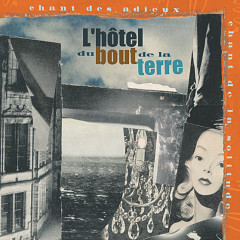
    Rouge Ciel is a quartet: Guido del Fabbro (violin, mandoline, pick ups), Simon Lapointe (piano, claviers, melodica), Antonin Provost (acustic and electric guitar) and Nemo Venda (trumpet, drums, percussion). They debute here with a fresh mix of rock and improvisation. They do not reach the creative level of Interférence Sardines, but it still is very good music. Both bands I can recommend to anyone who like — I don’t know a better name — art-rock bands like Curlew, 5uu’s, etc. L’hotel du Bout de la Terre is the more conventional one of these three bands. No new territories here. This group was started in 1995 by Lou Babin (accordeon, voice ), Marie-Hélène Montpetit (voice), Pierre St-Jak (piano), and Norman Guilbeault. On this cd they are assisted by guests like Claude Fradette (guitar) and Pierre Tanguay (drums, perc. ). They present a collection of 12 songs composed by St. Jak and Montpetit. Melancholic and impressionistic songs. Texts written and sung by Montpetit. Although this may be a relatively new group someone like pianist Pierre St-Jak is a veteran of the Montréal jazz scene. Personally I never liked his piano playing very much which can also be heard on this one.

    … listening to Interférence Sardines it became clear to me that we have a new creative outburst here.

    Qu’ouïs-je? dans Rubberneck

    «Review», Chris Blackford, Rubberneck, 28 mars 2002
    jeudi 28 mars 2002 Presse

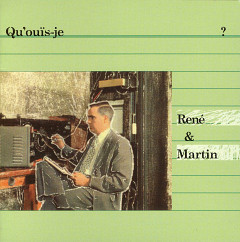
    Qu’ouïs-je? sees Lussier and Tétreault ditching the guitars and turntables of their previous releases and turning instead to daxophone (Lussier) and synthesizer, pick-up and drum machine (Tétreault). Tétreault’s preoccupation with the raw scratching of the cartridge thus gets free rein, unhindered by the exigency of having to actually play records, and Lussier adds screeching bowed textures and bass drones. As you can guess, this isn’t a CD to have playing in the background of your next dinner party, but it is remarkably compelling: the sounds may be unforgivingly harsh, but they’re assembled with an ear for space and dynamics, and the improvisatory wit and concision of the duo’s previous release (Dur noyau dur, on the same label) isn’t lacking here.

    … it is remarkably compelling…
  • 29
  • 30
  • 31
  • 32
  • 33
  • 34
  • 35
  • 36
  • 37