Sauter au contenu principal
actuellecd

Blogue

255 résultats
  • 16
  • 17
  • 18
  • 19
  • 20
  • 21
  • 22
  • 23
  • 24
  • Quatuor Bozzini dans La Presse

    «Le Bozzini: à réentendre — ailleurs», Claude Gingras, La Presse, 2 juillet 2002
    mardi 2 juillet 2002 Presse
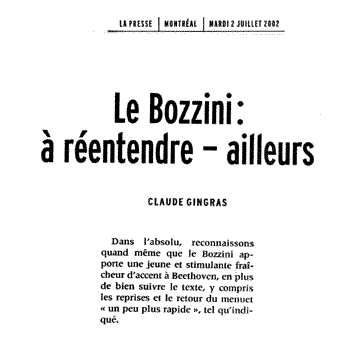
    … le Bozzini apporte une jeune et stimulante fraîcheur d’accent à Beethoven, en plus de bien suivre le texte, y compris les reprises et le retour du menuet ‘un peu plus rapide’, tel qu’indiqué.

    Chemin de fer dans Desiderata

    «Earpeace: Audio Review», B Wildered, Desiderata, no 11, 1 juillet 2002
    lundi 1 juillet 2002 Presse

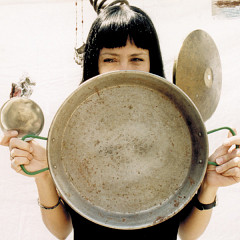
    This CD consists of a series of compositions created by handling various found metallic objects and recording the results, then “extracting” the results thru the “anvil or forge” of the studio. The results are akin, yet different from, the work of Seth Nihil, in that you are brought into an interior environment. As if your ear were pressed up against the objects and hearing their resonance as they are stroked, struck, used as sound and electrical conductors in various ways. Which makes for a very intimate audio setting, not immediately accessible as “music”… It is more of an artificial ambience, a created introjected universe.

    Now the question becomes is this of value to you as a listener, to spend your time listening either intently or distractedly to these scrapings, buzzings, etc. I would have to presuppose that you have listened to a lot of recordings, and have become bored with various regurgitations of pop muzak formuli, & have embarked on a search for new ways to appreciate the possible worlds of organized sounds. If so, there are very few more original and thoughtfully-considered works than this one. The 6th track, L’entonnoir, stood out in its building of heavy motive-type sounds which resolved into a small rolling trickle. The collaboration Jogging dans la maison hantée appears to represent a step in the microsound electronic motif i have become somewhat familiar with, in its electronic chirps & extended heavily-reverbed metallic sounds, and its more extreme dynamics. “Pluie de homards” concludes this cd with a caustic, cutting series of sounds, effectively building to a tangled jungle of a resolution.

    … there are very few more original and thoughtfully-considered works than this one.

    Chansons d’un jour dans Collected Sounds

    «Review», Anna Maria Stjarnell, Collected Sounds, 1 juillet 2002
    lundi 1 juillet 2002 Presse

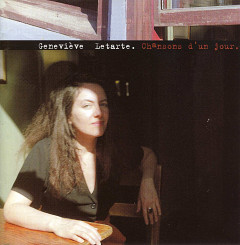
    The Montréal based writer and singer Geneviève Letarte’s album is relaxed in mood and has some intriguing songs. The slowburning opener Contemplation is a great song with a slightly arabic feel to it. Just as good is the sensual La prairie de ton lit (The prairie of your bed). Le Journal sets an ironic account of someone being bored by the lack of violent news in the paper to a restrained backing. Liberté states: “There is no freedom / there is only space and time” and concludes enigmatically “Live in the world of your soul.” These words are set to jazzy tune that recalls “The Walking”-era Jane Siberry. Chansons d’un jour is an inspiring and complex album.

    Chansons d’un jour is an inspiring and complex album.

    Les contes de l’amère loi, Les Poules dans Collected Sounds

    «Review», Anna Maria Stjarnell, Collected Sounds, 1 juillet 2002
    lundi 1 juillet 2002 Presse

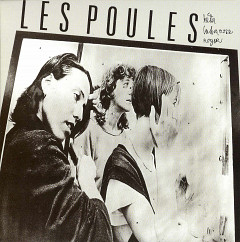
    In 1986 three women issued this record. Now we have a reissue of Joane Hétu, Diane Labrosse and Danielle Palardy Roger’s work. The music is synthetic sounding and has gloriously imaginative lyrics. En criant su l’perron has a discordant saxophone that reminds me of Lora Logic’s playing in X-Ray Spex. The synths sounds truly offbeat as well. Human Pinball is playful yet sinister with some hellishly cackling vocals loitering in the background. This cd puts the fun back into experimentation, which means its reissue is cause for celebration.

    This cd puts the fun back into experimentation…

    Polaroïde, André Duchesne dans ImproJazz

    «Critique», Luc Bouquet, ImproJazz, no 87, 1 juillet 2002
    lundi 1 juillet 2002 Presse

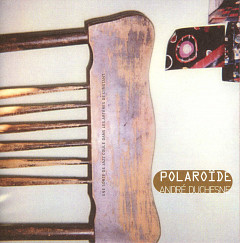
    Pour André Duchesne, le salut passe d’abord par l’improvisation. «Une sorte de jazz coule dans les artères de l’instant» nous informe la pochette… On souscrit totalement à la formule. Cette sorte de jazz nous est familière puisque naviguant très près des terres du clan Maneri; mêmes espaces vierges à apprivoiser, même charge émotionnelle, même discrète apesanteur. Nulle copie ici, mais, sans filet, entremêlée, ébouriffée, circulaire, une musique assumant pleinement son moelleux et ne trichant aucunement avec son identité. Un bel éloge du nylon en quelque sorte.

    … sans filet, entremêlée, ébouriffée, circulaire, une musique assumant pleinement son moelleux et ne trichant aucunement avec son identité.

    Martin Tétreault dans The Wire

    «Turntable Hell», Anne Hilde Neset, The Wire, no 221, 1 juillet 2002
    lundi 1 juillet 2002 Presse

    “We are the Cartridge Family!” exclaimed an enthusiastic Martin Tétreault to a hall filled to the rafters with vinyl devotees. In the wake of Christian Marclay and Invisibl Skratch Piklz, it has become commoaly accepted that turntables are instruments for generating music as well as the hi-fi connoisseur’s playback machine of choice. Yet tonight’s concert, organised by the Contemporary Music Network, was the first experimental turntable meeting to hit London on a large scale. Curated and conducted by Québécois sound/installation artist Tétreault, Turntable Hell assembled eight musicians into a turntable orchestra: vinyl wrecker Paul Hood, Improv drummer and LMC stalwart Steve Noble, muiti-instrumentalist and general non-conformist Lepke B, composer, installation artist and Sheer Frost Orchestra ringleader Marina Rosenfeld, triphonic turntable inventor Janek Schaefer, Sydney based electronic artist Martin Ng, and, last but not least, Otomo Yoshihide, noise maestro and turntable thrasher par excellence.

    Expecting to see a series of solo sets with the possibility of a jam at the end, it was surprising to be confronted with a stage full of turntable tinkerers hunched over their tools. The first half was taken up with a single, loosely held together abstract piece. Starting as a drone of vinylderived whirrs and hums, it eventually peaked into a scratch frenzy before relapsing into near silence. The second half featured a series of shorter pieces, each directed by a single performer who would cue in the other musicians according to the piece’s requirements, thus enforcing more of a group dynamic. Tetréault’s Pass The Loop was like a game of Chinese whispers: as the loops passed through different performer’s hands, they developed into a cacophonous murmur of spinning vinyl. Rosenfeld’s bouncy and frenetic Evil Twin was the soundtrack for Tom & Jerry in hell. Traces of original music from the source vinyl occasionally bubbled to the surface, like repressed children out to create mayhem before the sound controller’s strict regiment brought them back down to a melancholy purr.

    In contrast to laptops or electronic boxes, where the source of their multylayered output is difflcult to identify, the simple, unadorned turntable renders the sound source transparent for the audience, especially when cameras are positioned above each turntable as they were tonight. Multimedia artist Ben Drew controlled these real-time visuals, fading between close-ups of performers’ actions and more abstract imagery. The constant broadcast of the musicians’ hand movements made for a literal experience, shifting the emphasis from the poetic to the mechanics of the performance. An orchestra consisting only of one (relatively unusual) type of instrument tends to underline its novelty value rather than the music it produces. Much like the Pure release The End Of Vinyl (Mego), which consists of runout grooves of various vinyl records, the production method and sound source threaten to become more important than the music itself.

    By the end of the show, the stage looked like a radio theatre studio filled with engineers rustling around feverishly for the appropriate noise: bneathing into microphones, cartndges drumming on the turning plate, bowing vinyl. Even so, the music stayed on the polite side. After an evening of scratching, it was left to Otomo to ease the audience’s itch with a surge of raw noise. Breaking ranks with the politely seated performers and audience, he plunged the night into chaos. Holding the turntable against his waist like a guitar, he shook the turntable arm like a whammy bar in a desperate hunt for crushing feedback, before smashing down his instrument and slapping his handshell suitcase or top of it as he left the stage. It was a refreshing gesture at the end of a night dominated by too much well tempered turntable, with too little roon for the individual, energetic, Tourette-like outbursts that make improv such a spontaneous and exhilarating music.

    Curated and conducted by Québécois sound/installation artist Tétreault, Turntable Hell assembled eight musicians into a turntable orchestra
  • 16
  • 17
  • 18
  • 19
  • 20
  • 21
  • 22
  • 23
  • 24