Sauter au contenu principal
actuellecd
  • This website is also available in English.

Blogue

132 résultats
  • 12
  • 13
  • 14
  • 15
  • 16
  • 17
  • 18
  • 19
  • 20
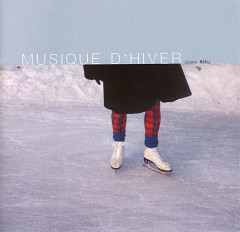
  • Musique d’hiver dans Club-culture

    «Critique», Francine Charrette, Club-culture, 1 mars 2001
    jeudi 1 mars 2001 Presse

    Voilà certainement un album pour les initiés. Joane Hétu nous présente une œuvre poétique sur le thème de l’hiver. Une poésie musicale hivernale sans parole, un tableau pittoresque pigmenté de sonorités acoustiques et métaphoriques. Une musique actuelle explorative. Une pièce en quatre mouvements qui rend hommage aux vents du nordet, les bourrasques de neige, la luminosité étincelante de l’hiver, la lune cristalline de février, les grands froids, l’ennui et la folie de mars, pour laisser transparaître l’effervescence émotionnelle de l’hiver.

    Elle s’est entourée de Jean Derome au saxophone alto, flûtes, ambiances sonores, voix; Guillaume Dostaler au piano; Diane Labrosse à l’accordéon et voix; Pierre Tanguay à la batterie, guimbarde, pieds et voix.

    Ce n’est certainement pas une musique aux harmoniques traditionnelles et aux constructions mélodiques auxquelles nous sommes quotidiennement conviées. L’univers sonore et musical de Joane Hétu provoque, suggère des ambiances, des couleurs et des sentiments. Dissonances, explosions, sons, amalgame complexe. Voilà ce que vous propose Musique d’hiver.

    Bonne écoute!

    Dissonances, explosions, sons, amalgame complexe.

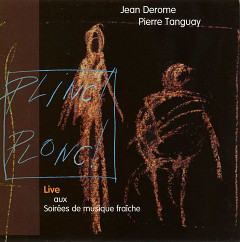
    Plinc! Plonc! dans Club-culture

    «Critique», Francine Charrette, Club-culture, 1 mars 2001
    jeudi 1 mars 2001 Presse

    Si on en juge par les titres, l’ambiance musicale effervescente de ce duo en dit long! Ils sont deux, deux troubadours des sons, ils étirent, improvisent explorent et s’explosent dans tous les sens. Une douce folie les habite et leur palette sonore contient une multitude d’autres couleurs que celles audacieusement concoctées sur cet album.

    Une musique extrémiste et vivante, ils décortiquent les accords et les sons, voisinent le jazz moderne jusqu’aux frontières de la musique actuelle. Cette panoplie de sons voyage à travers toutes les tendances, soigneusement et audacieusement structurée.

    C’est un premier album de ce duo explosif. Jean Derome: saxophones, flûte, voix et divers petits instruments à vents. Pierre Tanguay: batterie, voix et percussion. À deux, ils emplissent l’espace et certainement, notre imaginaire.

    À découvrir. Bonne écoute!

    Une musique extrémiste et vivante…

    Musique d’hiver dans AllMusic

    «Review», François Couture, AllMusic, 1 mars 2001
    jeudi 1 mars 2001 Presse

    This album stands aside in Joane Hétu’s discography. Even though the lineup is similar to the one in her avant rock group Castor et Compagnie (Jean Derome, Diane Labrosse, Pierre Tanguay, plus Guillaume Dostaler), Musique d’hiver (Winter Music) showcases a very different approach. Pianist Dostaler was brought in so that usual samplist/keyboardist Diane Labrosse could concentrate exclusively on her accordion. Alto saxophone (both by Hétu and Derome), flute (Derome), percussion (Tanguay), vocals (Hétu), and various tapes (situational recordings) complete the all-acoustic instrumentation. Musique d’hiver is a cycle of four pieces, one for each month from December to March, each about 16 minutes in duration. They are delicately crafted, slow-paced compositions for improvisers and include short sections with lyrics in the middle. Themes and melodies are spartan, slow, and reminiscent of Phillip Glass, and mostly played on flute and/or accordion. The atmosphere of snow, ice, and cold always remains tangible. La chute (“The Fall”) opens on a light, serene cascading motif announcing the arrival of winter, while Perdu l’nord (“Lost the Way”) is the craziest piece, with themes running into each other and free improvisation taking more room, picturing the relentlessness of one’s soul as spring (and with it deliverance) approaches. The maturity found in Musique d’hiver recalls the softer passages on Mets ta langue, Hétu’s second CD with Castor et Compagnie. But here her approach takes a whole new dimension as she eludes any extremes, taking the listener on a one-hour trip into Québécois winter, music that oscillates between sound art, minimalist songwriting, and composition for improvisers. Strikingly beautiful, this CD could very well become Joane Hétu’s finest hour. The booklet includes English translations of the lyrics. Very strongly recommended.

    Strikingly beautiful, this CD could very well become Joane Hétu’s finest hour

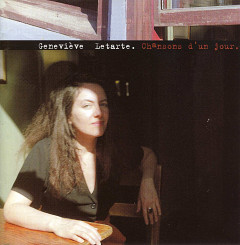
    Chansons d’un jour, Geneviève Letarte dans Vital

    «Review», Dolf Mulder, Vital, 1 mars 2001
    jeudi 1 mars 2001 Presse

    Chansons d’un jour: as the title suggests we have here a collection of unpretentious songs. At first hearing they do not ask for much attention. It is only after a second listening that the songs start to grow. Also by her way of singing Letarte does not immediately catch our attention. She sings a little flat and the music is subtle and intimate. It is all happening under the surface. Be patient with this one because it is really beautiful. It is all done with care and love. With a very clear voice and pronounciation she sings her way through the day on the rhythms of the tango, waltz and blues and with nice melodies. It is her second solo album after 10 years. Her first one Vous seriez un ange was released 1990. Genevieve Letarte (voice, keyboards, accordion) has the company of four musicians: Claude Fradette (guitars, bass, dobro), Normand Guilbault (doublebass), Pierrre Tanguay (drums, percussion) and Serge Boisvert (trumpet). Fradette is responsible for the sobre and effective arrangements. Letarte is a Montréal writer (three novels), singer and performance artist. She can also be heard on the critically accliamed ‘Millennium Cabaret’cd on Wired on Words (2000), which documents the best of the spoken word, performance poetry and poetry/music scene in and around Montréal.

    It is all happening under the surface. Be patient with this one because it is really beautiful.

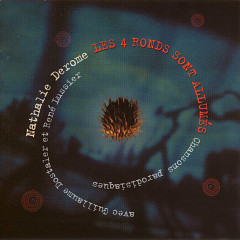
    Les 4 ronds sont allumés, Nathalie Derome dans Vital

    «Review», Dolf Mulder, Vital, 1 mars 2001
    jeudi 1 mars 2001 Presse

    Nathalie Derome (voice) makes her debute with her cd. Accompanied by veteran René Lussier (guitars, daxophone, voice, a. o. ) and Guillaume Dostaler (Fender Rhodes, synthesizer, voice) she sings 11 songs, most of them composed by herself. In contrast with Letarte Derome is more extravert and dramatic in her performance. Enjoyable. For those who want to hear Lussier playing in a more conventional way should listen to this one.

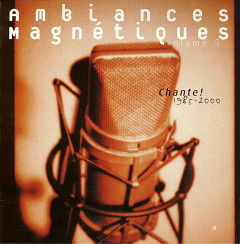
    volume 5: Chante! 1985-2000, Ambiances Magnétiques dans Vital

    «Review», Dolf Mulder, Vital, 1 mars 2001
    jeudi 1 mars 2001 Presse

    From time to time Ambiances magnétiques gives light to a compilation-cd. On this volume 18 different pieces are collected and are a good introduction for those who want to discover this beautiful label. Pieces by Duchesne, Papa Boa, Labrosse, Tétreault, Lussier, Côté, and many others should attrackt you

    … a good introduction for those who want to discover this beautiful label.
  • 12
  • 13
  • 14
  • 15
  • 16
  • 17
  • 18
  • 19
  • 20