Sauter au contenu principal
actuellecd

Blogue

163 résultats
  • 4
  • 5
  • 6
  • 7
  • 8
  • 9
  • 10
  • 11
  • 12
  • L’âme de l’objet dans AllMusic

    «Review», François Couture, AllMusic, 1 octobre 2000
    dimanche 1 octobre 2000 Presse

    With L’âme de l’objet, percussionist Michel F Côté reached his artistic maturity, delivering his best achievement, at least with his project Bruire. For this third album, Bruire has really become a band, as the same group of musicians appear on every track: Jean Derome (sax, small instruments, flutes), Claude Fradette (guitars), Serge Boisvert (trumpet), Martin Tétreault (turntables) and Côté (drums, live electronics). Another change is the fact that the musical approach is now rooted in jazz instead of rock. Improvisation is now fully integrated to the writing. The music on L’âme de l’objet is strongly fed by Côté’s work for theater and dance performances, as it bears a remarkable plastic quality. One can feel the movement. All pieces (initially written by individual members and worked out by the whole band) are very atmospheric and often fitting a strange avant-gardist film noir mood, thanks mostly to the trumpet plus saxophone arrangements and Martin Tétreault’s remarkable performance (and highly original choice of LPs). Highlights include Les deux mégots (“The Two Cigarette Butts”) which opens the album with an excerpt from a “book-on-LP” version of Émile Zola’s sombre novel — L’Assommoir, Jean Derome’s slow-paced new-jazz number Prières (“Prayers”) and Joane Hétu’s Papillons de nuit, of which a version with vocals appears on her album Castor et Compagnie. The set of tray cards serving as a booklet also deserves mention for its artistic quality.

    volume 3: Inédits, Ambiances Magnétiques dans AllMusic

    «Review», François Couture, AllMusic, 1 octobre 2000
    dimanche 1 octobre 2000 Presse

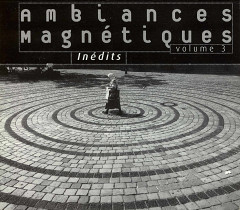
    For the third installment in its compilation series, the label Ambiances Magnétiques decided to give the fan something new: the first two volumes comprised only previously available material and were targeted toward the neophyte, but Inédits (Unreleased) was a fan-pleaser. This CD contains tracks from all nine members of the Ambiances Magnétiques collective: René Lussier, André Duchesne, Jean Derome, Robert Marcel Lepage, Joane Hétu, Diane Labrosse, Danielle Palardy Roger, Michel F Côté and Martin Tétreault. Most pieces were recorded at Studio 270 with engineer Robert Langlois (Ambiances Magnétiques members’ usual hang-out — therefore, sound quality is often excellent) and represent transitional experiments. Some others were recorded by Radio-Canada (Canada’s national radio) and document live projects that never made it on record. It is interesting to note that some performances already hinted at the direction these musicians would take in the late 1990s (especially Côté’s trio Klaxon Gueule, Lussier and Hétu). Inédits contains valuable contributions from Lussier and a noisier-than-usual suite from Derome (very nice) but the album is most noticeable for the contributions of more discreet musicians. Since his 1992 CD Locomotive, André Duchesne has been very quiet and even though his Les Barrages (“The Dams”) is an unremarkable excerpt from a symphonic work, Les toasts brûlées (“Burned Toasts”) is the only existing document from his short-lived band Diesel. Danielle Palardy Roger is another discreet artist; her two performances exemplify her work outside Ambiances Magnétiques’ “girl groups” (Wondeur Brass, Les Poules, Justine}). Finally, the excerpt from Martin Tétreault’s Chronique du disque (an unreleased radio piece) is one of his best performances. Fans of Ambiances Magnétiques will find a lot to explore and be surprised about on Inédits.

    Fans of Ambiances Magnétiques will find a lot to explore and be surprised about…

    Live à la Casa dans AllMusic

    «Review», François Couture, AllMusic, 1 octobre 2000
    dimanche 1 octobre 2000 Presse

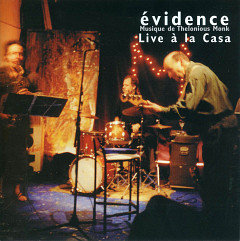
    The trio Évidence has been playing the music of Thelonious Monk on an irregular basis since 1985. Live à la Casa is their second release, fifteen years after their debut Évidence: Musique de Thelonious Monk. Évidence’s originality resides in the fact that this is an alto saxophone/electric bass/drums trio — no piano. Live à la Casa has been recorded at La Casa Obscura in Montréal on January 13 and June 17, 1999.

    Jean Derome (alto sax), Pierre Cartier (bass) and Pierre Tanguay (drums) take much liberty with Monk’s material — a good thing. They revisit classic tunes (Straight, No Chaser, Reflections) and unearth forgotten gems (the 1947 “Thelonious”). Tanguay plays with Monk’s metric as if he were in the school yard (he’s everywhere but on the beat on Blue Hawk) while Derome relies on split-tones to make up for the missing piano clusters that came to be Monk’s signature sound. The music radiates from the musicians’ pleasure of playing these tunes. Monk fans will be pleased by these fresh interpretations from musicians understanding what the pianist’s music was all about. On the other hand, purists will find much to despise on Live à la Casa, but then again purists usually stay away from Monk. Their loss.

    Monk fans will be pleased by these fresh interpretations from musicians understanding what the pianist’s music was all about.

    Do dans AllMusic

    «Review», François Couture, AllMusic, 1 octobre 2000
    dimanche 1 octobre 2000 Presse

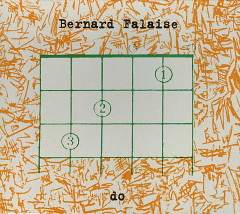
    Do (as in C) is Montréal guitarist Bernard Falaise’s first solo release. This CD contains 15 pieces for multiple guitars (all played by him). Although one can hear traces of every project Falaise worked with during the late 1990s (Papa Boa, Les Projectionnistes, Klaxon Gueule, Marie-Jo Thério}), the one influence that comes the most forward on Do is his prog rock background with the band Miriodor. These are very structured pieces drawing as much from Robert Fripp’s guitar loops than René Lussier’s early works(Fin du Travail, Soyez vigilants, restez vivants! with Jean Derome}) and the avant-prog aesthetics of the label Cuneiform Records (for which Miriodor records), namely bands like Otolithen and Blast. Falaise’s musicianship needs no presentation: he is a master of his instrument. But to discover him a very capable composer is a real treat. Most pieces have a three-level structure: in the background are Frippertronics-like soundscapes or textures produced by softly scratching the guitar strings (a technique he used on Klaxon Gueule’s Muets); then comes the riff or rhythmical frame of the piece, the structure itself, complete with changing time signatures, intricate patterns, etc. In the foreground is a melody, a solo or another guitar line acting as counterpoint to the frame. The result makes beautiful guitar craft. The almost-epic Entonnoir is a fantastic piece of work and the solo on “Acte II” is heart-wrenching. The violent setting of Croco n’est pas mort is another highlight showcasing great percussive work all created with the guitar. Even though some of Falaise’s techniques might seem a little dated (like backward soloing and Frippertronics), the guitarist reminds us all that it is possible to make cutting-edge demanding guitar music without resorting to the extremely abstract. Do comes very close to masterpiece.

    Do
    Falaise’s musicianship needs no presentation: he is a master of his instrument.

    Full Blast dans AllMusic

    «Review», François Couture, AllMusic, 1 octobre 2000
    dimanche 1 octobre 2000 Presse

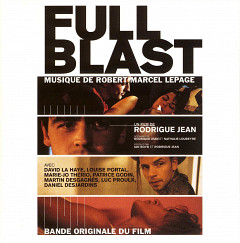
    Ambiances magnétiques’ Robert Marcel Lepage has written numerous soundtracks for television, dance and cinema. The music he composed for Rodrigue Jean’s film Full Blast is one of the rockiest things he’s ever done. The movie focuses on the lives of young trash rock musicians and Lepage’s music follows accordingly. Singer Marie-Jo Thério was already playing in the movie: her voice is a wonder of strength and uncertainty and Full Blast is a still too rare occasion to hear her in a rock context (her beautiful album La Maline, released in early 2000, is full of slow songs built on delicate arrangements and whispered vocals). This is not her first collaboration with the Ambiances magnétiques crowd, as she guests on Papa Boa’s Un Lutin (from the CD Tête à queue) and guitarist Bernard Falaise of the same band worked closely on her La Maline. Musicians on Full Blast include Québec trash pop phenomenon Fred Fortin (bass) and his guitarist Olivier Langevin, along with various drummers. Vincent Letellier provides drumloops on one track(“Fullrave”) and Martin Tétreault builds atmospheres out of his turntable experiments. Lepage wrote short tunes (mostly one to three minutes long) in accordance to the fast-paced editing of the movie. The dominant style is dirty bar rock with about half of the numbers instrumentals, the other half with singer Thério. Sound is often muted — like recorded from a distance — and Thério’s performance includes signal overloads and microphone feedbacks (once again, the small bar feeling). The music stands rather well on its own, although excursions in rave music and country rock are disruptive when one considers the album as a whole. Still, Full Blast is a good occasion to hear Marie-Jo Thério and Fred Fortin in an unusual setting. One must point out that, although released by Ambiances magnétiques, an experimental music label, this album remains very easy to listen to.

    One must point out that, although released by Ambiances Magnétiques, an experimental music label, this album remains very easy to listen to.

    Qu’ouïs-je? dans AllMusic

    «Review», François Couture, AllMusic, 1 octobre 2000
    dimanche 1 octobre 2000 Presse

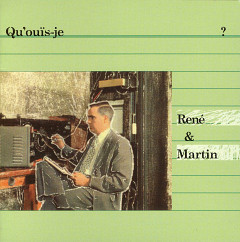
    Qu’ouïs-je? (an old-fashioned french form of saying “What do I hear?”) is the follow-up to René Lussier and Martin Tétreault’s 1999 Dur Noyau Dur. Although the track titles all end in “ure” just like the previous record, Qu’ouïs-je? is very different from its older brother. This time around, instead of rubbing his guitar strings with steel wool, Lussier focuses on the daxophone (a bowed instrument invented by Hans Reichel}). As for Tétreault, he works less inside his pick-up and experiments with analog synthesizer and beat box. The resulting music is a lot less abstract and unidimensional than on Dur Noyau Dur. There is much more happening: the music squirts, jumps and stumbles out of the speakers. The shortness of these improvs allows for frequent changes of settings and eludes over-stretched ideas. Both musicians play with (and not from or over) each other, creating short-spanned musical universes of twisted sounds and surprising encounters. Most of the times, the listener cannot tell who plays what and how they did it — remember the CD’s title? While Dur Noyau Dur was serious to the verge of pretentiousness, Qu’ouïs-je?is playful and entertaining while proposing a strong artistic statement.

    … the music squirts, jumps and stumbles out of the speakers.
  • 4
  • 5
  • 6
  • 7
  • 8
  • 9
  • 10
  • 11
  • 12