The Enormouslessness of Cloud Machines dans The Wire
mercredi 1 mars 2000
Presse
Canadian sound artist

Canadian sound artist
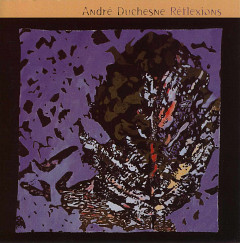
A près quelques recherches (aaaaah
Ça commence tranquillement avec Fer Forgé, une pièce douce, mélancolique, (Vu Marina Larouche à la télé la lèvre pendante, les bras croisés, l’air renfrogné. La madame était pas contente.)
Et ça continue
Puis arrive Une souris dans ma chambre. De la bonne musique jouée par un bon musicien. (Vu à Musique Plus une remise de prix où toutes les gagnantes, à moitié nues, remercient Jésus-Christ, Le Seigneur, Dieu, etc. Probablement pour leur avoir donné de si beaux corps. Le monsieur était content.) Et ça continue avec Conversation. De la guitare, des notes, un souffle… (Su qu’un joueur du Canadien de Montréal— c’est là qu’ça s’passe — a été soulagé de 100000 bidous parce qu’il a été pris en flagrant délit de ski. Le monsieur était pas content et nous avons versé une larme de crocodile sur son sort.) Et le disque se termine comme il a commencé, de la guitare tranquille, bien jouée, un peu nouvel-âgeuse. (Vu le gala des Masques où tout ce qui méritait un prix en a reçu un. Tout le monde était content.) OK, avouons tout de méme que c’est bon. C’est calme, reposant et ça s’écoute bien en ce bel avant-midi d’hiver. Je vais le réecouter et arrêté de réfléchir, promis…
Tiens
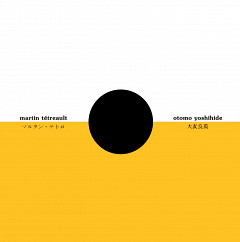
Martin Tétreault, Canadien timide, préfere profiter de sa collaboration avec Otomo Yoshihide, pour scratcher plus que de raison tandis que ne viennent le pertuber que quelgues rares citations. Tétreault, on a pu le voir sur scène, a tendance a jouer au tennis avec des bras de platines, le nez collé au rond central. Cette vision différente de la musique, entre Dee Nasty et Marcel Duchamp, signe ici son plus grand méfait
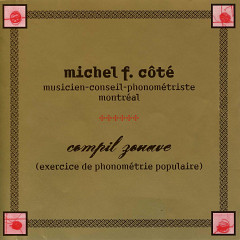
On his eclectic recording on, Côté has assembled varying groups of notable French Canadian musicians to play mostly original material in a very unorthodox way. His bands range from duos to sextets and each uses an approach to music that is certainty atypical. The music has an eerie sense of illusionism to it, being comprised of electronic and acoustic effects that make the listening experience a strange one. Côté is not a traditional percussionist. He uses various objects and electronic devices to set up odd and asymmetrical rhythm patterns and special effects. He is also a strong advocate of using electronic impulses, dial twisting, and recorded insertions with his music. For example, Chet Baker is in the background on the Let’s Get Lost trip, and elsewhere, turntable static and odd effects filter into the mix to substantiate further the nonuniform nature of the program.
All of his cohorts join in on the fun to give the session its flexible. unpredictable appeal. Derome’s strong playing on baritone and the other reeds is more accessible as is the untypical mellow blowing from trombonist Walsh. Most others go off regularty on diverse tangents. Fradette and Falaise allernate with their unusual approach to guitar playing and others wander in and out of the music in theatric, off-the-wall style. Côté mixes Japanese koto music with etectronic imputses on one piece, white overtaid operatic voices or weird time changes suddenly seem commonplace on other tunes.
Côté appears to be trying to convince us that weirdness is the standard but just when you start gening used to this styte he switches to a very straight-ahead, tongue-in-cheek rendition of a song to prevent you from getting comfortable. His music seems to be designed to keep you off balance. and he succeeds in that endeavor.
As an addenda to the above, I originally passed on these discs to Nick Mott as I was getting deluged with too many items to review, though I did review one of them, which you may find of interest in the way of comparison…
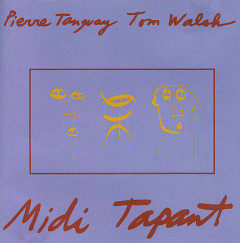
The unlikely duo of Pierre Tanguay (drums, percussion, objects) and Tom Walsh (trombone, sampling) aptly make an unlikely music. And, I mean unlikely. Believe me, this often runs close to lancu Dumitrescu in its textures and sonic counterpoints. Though the trombone takes the music elsewhere on occasions, and I can picture Conrad Bauer together with the Deep Listening Band. It’s almost as though Jon Hassell makes a guest appearance elsewhere. Despite any of those comparisons, however, this a diverse album indeed, sometimes dark and flowing music, and often challenging in its execution.
Six months on I think we’ve now got a dozen more unheard discs from the label. Busy people aren’t they
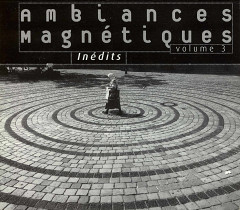
I haven’t heard Volumes 1 or 2, but here we have a 24-track compilation featuring, amongst others (you guessed it)