Tricotage dans Informator “Ars” 2
«Review», Henryk Palczewski, Informator “Ars” 2, no 28, 1 septembre 2000
vendredi 1 septembre 2000
Presse

If you’ve had enough of the fidget and scrape school of improv, may I suggest you try a large draught of Klaxon Gueule
The trio’s first effort, a double entitled Bavards, was an energetic ensemble effort which touched on improv, punk and a variety of other styles. Muets, their second disc, throws out the rulebook and sets about creating an eerie world of dry scrapings and sudden electric interjections.
Stylistically AMM may be the closest reference, however the trio eschews longform investigations in favour of short, measured meditations.
The first few tracks concentrate on a microtonal sound world of string scrapings, rustling noises and gentle electric rumbles then track 4 breaks the gently lulling ambience with shocking electric blasts. A metronomic device ticks away quietly in a bath of fidgeting, buzzing drones (a la Keith Rowe’s desktop guitar excursions). Assorted devices are rattled and strummed whilst dense jolts of power chords threaten to blot out the whole thing.
Track 5 displays a sudden change with a chorus of incomprehensible whispers are ridden over by Michel Côté’s rattling percussion work set against a background of phasing drones.
Track 8 inhabits a world of huge bass drones. A chiming percussion sample keeps time whilst Alexandre St-Onge’s arco bass thrums and bends the bottom end all out of shape. Bernard Falaise’s fractured electric guitar scrapes and keens over the top and the thing eventually mutates into a pulsing, vibrating mass.
The trio are credited with only guitar, bass and drums as instrumentation however I could swear other assorted electronic devices are in use such are the range of looped and manipulated sounds, Bernnard Falaise’s guitar in particular is expertly employed throughout like some kind of finely tuned sand blasting instrument, burnishing and tarnishing the contributions of the others.
If you thought guitar, bass and drums had nothing left to offer, Klaxon Gueule have served up a whole new cocktail that deserves your attention.
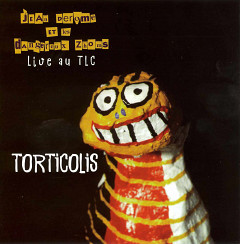
Qui a déjà vu Jean Derome sur scène, seul ou accompagné de la perceuse d’oreilles Joane Hétu, sait que l’homme refuse l’ennui. Sur ce 3ème disque en compagnie de ses Dangereux Zhoms il porte l’improvisation musicale à ses limites
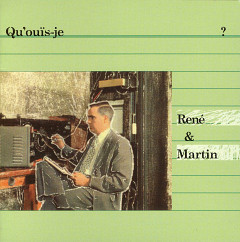
The second disc is a collaboration between Lussier and Martin Tétrault, with Lussier on “daxophone” and Tétrault on synth, pick up and “boîte à rythme”. 19 tracks inspired by musique concrète traditions, or anti-traditions, depending on your perspective. For some reason, each track title carries the suffix “ure” (Augure, Nature, Mixure, Culture… ) and defines the theme for each composition. Recorded in 1998 — this time in the Radio Canada studios in Montréal — this collaboration is a surprising clash of two radical improvisers working together to create 19 soundworlds of varying moods and themes. Lussier and Tétrault contribute whirrs, whistles and grating sounds corresponding to the particular theme of the composition. For instance, Nature sounds like a virtual forest complete with clusters of birds and the rustling of leaves. Light contrasts with dark on this disc with the threatening sounds in Tellure or the warbling and growling of Aventure. The sounds throughout the disc range from very loud shrieks to quiet rumblings, but mostly things comfortably lie somewhere in between. Lussier and Tétrault work extremely well together, and they have succeeded in creating an inventive and unique record. Recommended for the adventurous.
The solo disc by René Lussier presents fourteen improvisations for electric guitar as they were recorded in 1998, without any sort of montage or overdubbing. Lussier utilised eight microphones for the recording, giving these improvisations the appearance of a more elaborate montage. A diagram shows where the microphones were placed. Most of them are placed at various points in the room, some mono and some stereo, but the eighth microphone was placed outside of the recording room
Musique, peinture, danse, littérature, théâtre
Une femme batteuse. Pas battue
Cela commence d’abord par un cul-de-sac.
Nous sommes au tournant aes années 80. Un vent nouveau souffle sur le monde musical contemporain, un peu sulfureux. Le phénomène, baptisé musiques actuelles, se révolte contre l’intellectualisme de la musique contemporaine et la rigidité de la musique écrite. Les créateurs retournent au sous-sol, se souviennent du rock’n’roll et se lancent sans filet dans les trapèzes de l’improvisation. Le décor est maintenant campé,
Les débuts l’enthousiasment.
Période bénie
Une batterie pour dire
Un leitmotiv dans les paroles de
Les premières réalisations sont
La vie offre parfois de mauvaises surprises. A une époque où
Sa batterie se fait donc extension de son corps, lieu d’une action qu’elle nomme
C’est qu’avec sa batterie et sa voix, elle se cherche un interlocuteur, le
Malgré ce découragement, elle ose poursuivre.
Et l’avenir
On a tous, quelque part, une image stéréotypée du créateur qui souffre. Pas elle.
Arrivée à la cinquantaine, elle se sait philosophe au point où elle ne veut modestement pas le dire. D’un rien, elle cherche le tout. D’abord la paix dans l’existence. Le jardin de sa petite maison peinte en orange est assez éloquent à ce sujet. La couleur, cela influence
Tout comme ses intérêts actuels.
La création de l’avenir, pour
![Danielle Palardy Roger [Photo: Céline Côté, Montréal (Québec), octobre 2022]](https://res.electrocd.com/image.php/image/r/roger_da_13728.jpg?width=n2&cropratio=1:1)