
Joane Hétu dans Informator “Ars” 2
![Joane Hétu [Photo: Céline Côté, 2018]](https://res.electrocd.com/image.php/image/h/hetu_jo.9572.jpg?width=n2&cropratio=1:1)
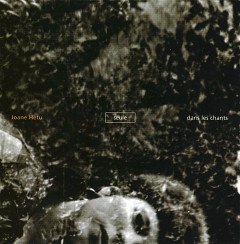
Seule dans les chants, Joane Hétu dans Vital
The title of the new cd by Joane Hétu describes exactly what it is
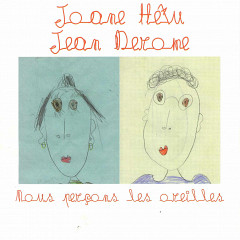
Nous perçons les oreilles, Jean Derome, Joane Hétu, Nous perçons les oreilles dans Revue & Corrigée
Justement, c’est le registre qu’a choisi — encore elle — Joane Hétu dans un second opus en compagnie de Jean Derome (par ailleurs compagnon de Castor et compagnie) Nous perçons les oreilles s’inscrit en effet dans la suite logique des récents enregistrements bruitistes de Lussier / Tétreault ou de Labrosse / Mori / Tétreault, avec une approche nettement plus acoustique
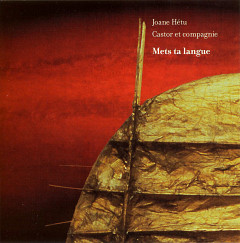
Castor et compagnie: Mets ta langue, Joane Hétu dans Revue & Corrigée
Ce n’est pas vraiment Sade, mais les textes sont bien osés, délicieusement érotiques et ils auraient bien entendu convenus à Justine. Joane Hétu a préféré se les garder pour elle et son groupe.
Gémissements et râles mais aussi d’autres délires vocaux sont ainsi au rendez-vous d’une musique fortement structurée et puissante, qui mêle l’humour et la tendresse mélodique à des effets bruitistes issus d’une pratique d’improvisation sonore qui caractérise de plus en plus le collectif québécois.
Nous perçons les oreilles, Jean Derome, Joane Hétu, Nous perçons les oreilles dans Cadence
Joane Hétu (alto and voice) and Jean Derome (alto, small instruments, percussion, and wice) appear as a duet on Nous perçons les oreilles (Ambiances magnétiques). This time, the music is the more dominant influence, with the vocals adding color and texture to the fierce alto screams rather than acting as a story-telling device. Hétu again uses scatting vocal utterances in conjunction with the music, but she devotes equal concentration on this set to the alto that she blows with reckless abandon on many of the selections (Nous Perçons / Le Poinçon / Jonquille / Les osselets / Lea / Les oreilles / L’enclume et le marteau / L’étrier / La ouate / Les orteils / Ça va pas). The use of voice to complement music has become standard fare with Derome (he scripted all the text), and he and Hétu use it intelligently on this date as an alternate for additional instrumentation. Their voices interact with their instruments in staccato fashion to provide a diverse sound stage of irregular beat and freedom playing. When the two are in tandem on alto, they play either a cat and mouse sound game or blow intensely in freeform style. The cacophony of the horns melts into screechy vocal outbursts or guttural tones to yield strange but musical results. This recording is unusual but certainly excitinq and original.
Nous perçons les oreilles, Jean Derome, Joane Hétu, Nous perçons les oreilles dans The Wire
Derome’s duo album with Joane Hétu is also suffused with playful elements, especially Jonquille. In which a list of single words is recited to charming rhythmic effect. Mostly however the duo explores abstract improv. Hétu’s wordless vocals (and occasional,alto sax) rising expressively against Derome’s alto sax and numerous small wind instruments. Use of the latter lends the improvising a refreshing anti-virtuosic feel, where technical polish is abandoned for a more rough and ready celebration of unusual sound creation. L’étrier typifies the physical thrill of extreme sounds in extraordinary juxtapositions. Fans of Phil Minton and Doger Turner’s duo will welcome this equally adventurous Canadian pair with wide open minds.