actuellecd

Blog

3585 results
  • 579
  • 580
  • 581
  • 582
  • 583
  • 584
  • 585
  • 586
  • 587
  • Ding Dong de luxe in Revue & Corrigée

    “Critique”, Revue & Corrigée, no. 32, June 1, 1997
    Sunday, June 1, 1997 Press

    Avatar: réincarnation de Vishnu? transformation d’une chose? changement malheureux, aventure pénible? Assurément, la première définition du Larousse est celle qui convient le moins pour le nouveau label «québécois». Les deux autres peuvent lui être appliquées selon votre attitude face aux événements sonores non conventionnels. On y trouve en effet de curieuses choses; des sons, des voix, des bruitages, des jingles, aux formats (durée) très variés.

    Ainsi Ding Dong Deluxe offre une compilation de 99 propositions sonores en boucle — l’ultime sonorité de la dernière reprenant la première contribution. L’appareil buccal des insectes de Georges Azzaria — entre l’instantanéité et le bref, pour une durée totale de 65 minutes. La brièveté de ces pièces est d’autant plus évidente que la 99e et dernière (Horaire de Jocelyn Robert) dépasse les 29 minutes. Bref (c’est le cas de le dire), calculez la durée moyenne des 98 premières propositions dûes à Pierre-André Arcand, Stéphane Caron, John Oswald, Dan Lander et une vingtaine d’autres intervenants.

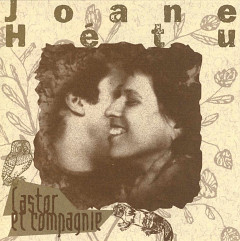
    Castor et compagnie in Hollow Ear

    “Review”, Hollow Ear, June 1, 1997
    Sunday, June 1, 1997 Press

    On this side of the Atlantic, the experiments continue in a more agressive fashion in Montréal. Joane Hétu, wondeur-brasser and composer has released another jarring adventure, Castor et Compagnie. This is her first “solo” recording, although she is joined by AM regulars Diane Labrosse (keys and accordion), Jean Derome (brass, woodwinds, percussion and effects), Pierre Tanguay (percussion) and some bass tracks from Luc Bonin. The beauty of all the music Hétu makes is its refusal to be described by genre or comparison: jazz, new classical, punk-funk, experimental noise; Stockhausen, Glass, Beefheart and Zappa all seem vaguely appropriate until you really listen. Castor et Compagnie adds another element, one of erotic romance. The texts that inspire these pieces come from Hindi love recipes, Arabic sex-play games and old ribald folk songs, and the music created around them is a rich mix of lush and lustful, one moment a Brazilian cliché, the next a raw revel or a scream. Her edgy, acidic voice plays hard against all of this, and she takes the most obvious themes and makes them her own in surprising ways.

    acidic voice plays hard against all of this, and she takes the most obvious themes and makes them her own in surprising ways.

    La plante humaine in Le Devoir

    “Une cuvée magnétique”, Mario Cloutier, Le Devoir, May 24, 1997
    Saturday, May 24, 1997 Press

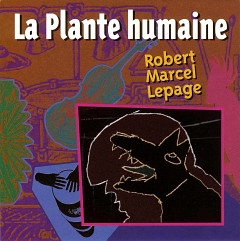
    Micro et macro musique, implosion et explosion, voyage intérieur et périple extra-planétaire, autant d’influence moussorgskienne que pinkfloydienne, la musique qu’a composée Robert Marcel Lepage pour le très beau film de Pierre Hébert, La Plante humaine, célèbre d’abord et avant tout le pouvoir évocateur des contrastes.

    Cette trame musicale agit telle une extension du film et de ses images mais contient en elle-même des pièces qui «extensionnent» le propos, le contenu, la forme, l’une de l’autre. En deux mots, Robert Marcel Lepage a de la suite dans les idées. La stridence d’un violoncelle amène à celle d’une guitare hard rock; l’expérimentation se marie à la mélodie; le bruit prolonge l’harmonie. À cet égard, le mariage Lepage-Claude Beaugrand, magnifique concepteur sonore s’il en est un déjà remarqué dans le film Les Pots cassés de François Bouvier, continue de donner des fruits savoureux. Car le jeu et l’humour de Lepage ne se cachent jamais loin derrière le mystère, la peur ou la colère qu’il sait susciter en musique.

    Aidé en cela par un big band actuel magistral, dont l’inimitable Pierre Tanguay, maître des baguettes qui peut soutenir n’importe quelle orchestration, qu’elle privilégie les cordes pincées ou frottées comme dans la magnifique pièce La Poursuite du sens. Seul hic, la durée de ces morceaux de choix. Le cinéma veut du court et varié. On aurait aimé voir se prolonger Gog et Magog, Babel et Vous devez trouver le temps long? … Non, M. Lepage, on en redemande.

    Bavards in AllMusic

    “Review”, François Couture, AllMusic, May 6, 1997
    Tuesday, May 6, 1997 Press

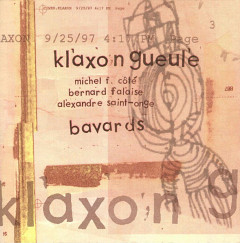
    Michel F Côté, Quebec’s most eclectic percussionist, had decided to put his Bruire ensemble on hold after three records on Ambiances Magnétiques to form a new band. This time, he proposed a trio with Bernard Falaise (Miriodor, Les Projectionnistes) on guitar and Alexandre St-Onge on bass. Klaxon Gueule (something like “Yelling Horn”) was at first a talkative trio — after all, it is the title of their album (Bavards). The first disc of this short 2-CD set contains twelve improvisations titled humorously (Aptitude algébrique innée equals “Innate Algebraic Aptitude,” Friandise cannibale equals “Cannibal Candy”). To the nervous drums of Côté and the busy bass of St-Onge, Falaise adds noisy textures with sharp angles, creating an electric, noisy free jazz. The second CD showcases Klaxon Gueule with saxophonist Christopher Cauley on six quartet improvs. Here, the music is more in the orthodox free improvisation realm. The contagious energy of the musicians make Bavards a real treat. This was recorded at a time when St-Onge still approached the bass in a conventional way and the trio played jazz-anchored improv. The situation would change drastically with their second CD, eloquently titled Muets (“Silent”), an exploration of textural string-scratching, feedback-controlling free improv.

    The contagious energy of the musicians make Bavards a real treat.

    Chevreuil in AllMusic

    “Review”, François Couture, AllMusic, May 1, 1997
    Thursday, May 1, 1997 Press

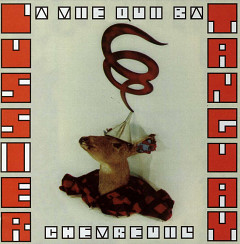
    La vie qui bat: Chevreuil (“The Beating Life: Dear”) was released at the same time and on the same label as La vie qui bat: Chèvre, but the two could hardly be less alike (except for the fact that they both feature guitarist René Lussier and drummer Pierre Tanguay). While Chèvre contains dense and serious free improvisations with Lussier playing acoustic guitar, Chevreuil is mostly made of written songs and/or prepared improvisations with the same musician on anything but that instrument. It shows the clownish side of the duo, an approach strongly reminiscent of Lussier’s work with Jean Derome during the 1980s in Les Granules. When the pieces are not thoroughly written like Salade du Chef (“Chef’s Salad”), La toune dure (“The Tough Tune”), or La vie qui bat they are at least planned ahead. Of this latter category the best example is the suite Le Catalogue, made of very short improvs on predetermined animal-related themes. Other tracks like Le Chameau (“The Camel”) and L’Éléphant (“The Elephant”) follow the same path: humorous improvised impressions. Lussier favors the electric guitar and the daxophone. Written pieces are songs in a similar vein to what the Derome/Lussier duo recorded: dismembered, funny and never meant to be taken seriously. Vocals are an integrated part of the instrumentation, which is not the case on the other CD. This one feels like two friends kidding around — two very talented musicians-friends, that is. Those looking for engaging improvisation will be disappointed, but fans of Lussier’s lighter side will find La vie qui bat: Chevreuil a suitable follow-up to Les Granules’ Au royaume du silencieux.

    … dismembered, funny and never meant to be taken seriously. This one feels like two friends kidding around -- two very talented musicians-friends, that is.

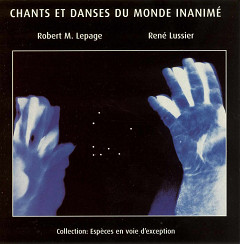
    Chants et danses du monde inanimé, Robert Marcel Lepage, René Lussier in Cadence

    “Review”, Chris Kelsey, Cadence, no. 23:5, May 1, 1997
    Thursday, May 1, 1997 Press

    The most interesting thing about this CD of mostly free improvisation is the opportunity it affords us to monitor the artists’ progress from 1984, when the first seven tracks were recorded, to 1996, when cuts 8 through 16 were laid down. In ’84, both Lussier and Lepage were well on their way to developing their own voices, though both were still manifestly groping. Lussier’s style was a mechanistic abstract-expressionism; his timbres were harsh, his lines jagged, his melodies and hammonies of little consequence given his extreme textural freedom. By ’96, the guitarist has his materials under control. The rough edges are leH that way purposely; they are no longer perceived as accidents. Lussier’s increased skills have given his work a more humane cast- ironic, perhaps, given this album’s stated intent, which is as a parody of our mechanized consumer society. Lepage’s development is similar. Where in ’84 he was searching — playing two saxes simultaneously, manipulating his tone and articulating in an extreme and sometimes clumsy manner — by’96 his chops are together. The harshness is leavened by a control that wasn’t there twelve years earlier. The mature Lepage concentrates on clarinet, upon which he has a comprehensive technique; hence, his lines are informed by a melodic sense that was far less pronounced on the earlier date. The duo benefits from the individual evolution of the piayers. Where, in the first recordings, the improvising moves in a more parallel direction — the players’limitations prohibit a more integrated, interactive perfommance — the later tracks are far more well-coordinated. The’84 cuts were made by a pair of talented students; the recent tracks by mature fine artists. Consequently, we have one-half of a very fine album — enough, I think, for me to recommend it.

  • 579
  • 580
  • 581
  • 582
  • 583
  • 584
  • 585
  • 586
  • 587