actuellecd

Blog

49 results
  • 1
  • 2
  • 3
  • 4
  • 5
  • 6
  • 7
  • 8
  • 9
  • November 16 – December 16, 2024: [Resolved] Labour Dispute at Canada Post

    Saturday, November 16, 2024 General

    Labour dispute at Canada Post, our shipping supplier, has been in effect since November 15, 2024. The processing of postal shipments of your products is thus on pause, for an indefinite period.

    Digital album sales are not affected by this work stoppage…

    [The labor dispute ended on December 17, 2024.]

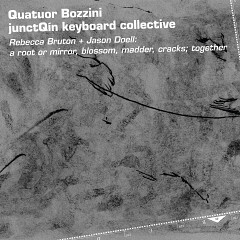
    Rebecca Bruton + Jason Doell: a root or mirror, blossom, madder, cracks; together in The Strad

    “Review”, David Kettle, The Strad, October 25, 2024
    Friday, October 25, 2024 Press

    The Montréal-based Bozzini Quartet has long been a persuasive new music advocate, and this first vinyl release on its own label amounts to a quiet, quirky celebration of its country’s music and musicians. It’s a collaboration with the Toronto-based junctQín keyboard collective (here, three players at a single piano keyboard), and showcases two thoroughly distinctive Canadian composers.

    Rocky Mountains-based Rebecca Bruton mines folk-music sensibilities in her expansive The Faerie Ribbon, which unfolds like a series of brief vignettes observing similar material from contrasting perspectives. She conjures some uncannily beautiful sonorities using harmonies spread right across the piano’s range, plus an orchestral-style richness of double-stopped strings, and there’s a Reichian opulence to the piece’s closing sections, with reedy sustained string harmonies against chiming piano figures. The Bozzini plays with elegance and strong definition throughout, with singing, whistling and humming adding another magical dimension.

    By contrast, Canadian composer Jason Doell explores a fascinating and very simple idea in his to carry dust & breaks through the body. An apparently unchanging electronic drone slides lower by a semitone across the course of his piece. The string players adjust their tuning to it as the work progresses, while the pianists, naturally, can’t. The result is a compelling contemplation of sameness and difference, of out-of-tune-ness and dissonance (where does one end and the other begin?), delivered with wit and insight through slow-moving, subtle gestures and not-quite repetitions. The Bozzini’s account is magisterial, often cool and detached, but bristling with engagement, and supple in its shaping of Doell’s sometimes enigmatic phrases. It’s a rewarding release, captured in close, warm sound.

    … magisterial…

    Rebecca Bruton + Jason Doell: a root or mirror, blossom, madder, cracks; together in Groove

    “Kritik”, Frank P Eckert, Groove, September 24, 2024
    Tuesday, September 24, 2024 Press

    Das Montréaler Streichquartett um die Bozzini-Schwestern Isabelle und Stéphanie hat sich von Beginn an herausgenommen, über die Ränder der Neuen Musik hinweg zu agieren. Zu ihren Interpretationen gehören eben nicht nur Alvin Lucier und John Cage, sondern ebenso elektronische Komponistinnen wie Èliane Radigue oder Sarah Davachi.

    Trifft das Quatuor Bozzini auf das ähnlich freigeistige junctQín keyboard collective, ist musikalisches Um-die-Ecke-Denken garantiert. Für a root or mirror, blossom, madder, cracks; together (Collection QB, 28. August) haben sie sich dieser Abenteuerlust entsprechende langformatige Stücke von Rebecca Bruton und Jason Doell ausgesucht, ebenfalls Grenzgänger:innen zu Ambient und elektronischer Pop-Avantgarde. Wo sich Brutons „The Faerie Ribbon” an der Schnittstelle von Freak Folk und Neuer Kammermusik bewegt, spielt Doells „to carry dust & breaks through the body” auf rein akustische Weise mit elektronischen Drone-ENekten, mit minimalen Verschiebungen in direkter Nachbarschaft etwa zu seinen digital manipulierten Pianostücken auf dem experimentellen Ambient/Pop-Label Whited Sepulchre.

    … musical thinking outside the box is guaranteed.

    Geister in Sequenza 21

    “Review”, Christian Carey, Sequenza 21, September 9, 2024
    Monday, September 9, 2024 Press

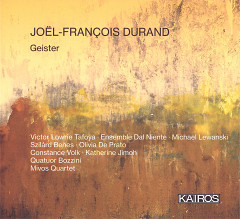
    On Geister, a double-CD release on Kairos, the music of Joël-François Durand receives benchmark performances by some of the best performers in contemporary classical music today. It features works from 2005-2022. Originally from France and currently based in the United States, Durand is Professor of Composition and Director of the School of Music at the University of Washington.

    Over the course of his career, Durand has increasingly used microtones in his works. Since 2019, he has added the technique “beating,” in which two pitches are placed very close together, creating strong fluctuations. Another signature aspect of his style is intricate development of linear material.

    His First String Quartet (2005), played here with fastidious detail by the Mivos Quartet, predates this investigation, but its use of simultaneous pizzicato and arco attacks, microtonal duets, and altered bowing, makes for an intricate musical surface. Written in the same year is In the Mirror Land, a duet played by Constance Volk, flute, and Katherine Jimoh, clarinet. The technique of shadowing, with the clarinet slowly emerging from its overlapping into the background, is important to the piece. Then the duo supply heterophonic overdubs of strident lines. La descente de l’ange (2022), for violin and clarinet, played by violinist Olivia De Prato and clarinetist Szilárd Benes, addresses similar concerns, but with its own distinct formal trajectory.

    De Prato also provides a tour de force performance of the solo work In a Weightless Quiet (2020). At twelve minutes long, the intensity of the piece’s energy never flags.The use of open strings in the aforementioned beating technique appears at structural points in the piece. Then fortissimo fast repeated notes and bowed glissandos are juxtaposed against the beating, harmonics. and multi-stops. It finishes with altissimo secundal passages, double stops, and harmonics — a difficult piece delivered with élan.

    Ensemble dal Niente, conducted by Michael Lewanski, performs Mundus Imaginalis (2015), the largest of the works programmed. Bass drum and a clattering metallic ostinato supply a syncopated groove. Lines overlap, at times contrapuntally, at others doubling to create reinforced textures. The tempo fluctuates, and semitones suggest cadences, only to be canceled swiftly by dissonant verticals. The incorporation of microtones intensifies as the piece progresses. Forte lower brass and chimes are added as it reaches its climax. Then a gradual denouement with a slowing of the percussive groove, chimes, colorful chords, repeated notes in the harp, and sustained wind solos that disassemble the opening material. Overtone verticals provide the piece with a stirring conclusion.

    Geister, schwebende Geister… (2020) is a highlight. It also uses off-kilter percussion, corruscating melodic intervals, and open strings against small intervals to create beating and copious glissandos. Soloist Victor Lowrie Tafoya and Ensemble dal Niente, conducted by Lewaski, provide a fantastic performance that would serve as an excellent introduction for anyone curious about Durand’s music.

    Cast in four movements, String Quartet No. 2 (2020), “Cantar de amigo,” played by Quatuor Bozzini, once again begins by bringing together previously mentioned techniques: the pulsation of tight beating intervals, sharp attacks, and bent sustained notes. Another texture prominent in the quartet is repeated notes set against glissandos. The tuning pitch, A = 440Hz., appears over and over, treated by all of the aforementioned techniques rather than settling into the in-tune version one would expect to hear before the beginning of an orchestra piece. The second movement begins to add harmonics above the A. The third movement puts hollow retorts of different notes below A, most relating to fifths above and below (E + D: other open strings found in the quartet in conventional tuning). The A bends this way and that, with microtonal glissandos distressing its centricity. With loud utterances, a high E starts to take prominence, only for A’s to cluster against it, and then low open strings weigh in as well. The only movement that begins attacca is the last, which at nine and a half minutes is of a significantly longer duration than those preceding. It begins once again with glissandos, but this time these start in the low strings, only gradually having all registers represented. In addition, some move in lower sliding figures, thus are higher up on the stringboard than the usual open sonorities. This creates a bit more of a covered sound. Midway through, octave A’s make a veritable cadence, only to be replaced by beating seconds in various registers. After a significant absence, a dash of repeated notes enter. Overlapping glissandos create a swath of blurred sonorities that persists throughout the middle section of the movement. Multi-octave A’s continue to announce each sectional division. As the piece progresses, glissandos ascend and descend into overlapping, mutable pitch schemes. High B cancels the penultimate octaves, leading to a final section in which the glissandos first grow smaller, prevailingly microtonal, and then wend their way towards A played pianissimo and cut off abruptly. String Quartet No. 2 is a combination of centricity, ambiguity, and extended harmony: a fascinating and successful work played with riveting poise and superlative attention to the smallest details by Quatuor Bozzini.

    Geister is a collection to which I plan to regularly return to listen. It is one of my favorite recordings of 2024.

    String Quartet No. 2 is a combination of centricity, ambiguity, and extended harmony: a fascinating and successful work played with riveting poise and superlative attention to the smallest details by Quatuor Bozzini.

    Hypnokaséta in The Wire

    “Review”, Julian Cowley, The Wire, no. 484, June 1, 2024
    Friday, September 6, 2024 Press

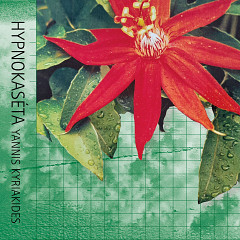
    The Greek title alludes to a suggestion by the late cognitive scientist Daniel Dennett that dreams spool within the slumbering mind, like cassette tapes that have been loaded into consciousness. Cyprus born, Netherlands based composer and sound artist Yannis Kyriakides has drawn on dreams he experienced during the first few months of lockdown, translating their fractured narratives and dislocated imagery into music for string quartet, plus his own live electronics, with guest improvisor Andy Moor wielding electric guitar and cassette tapes. The work’s sequence of 16 sections conveys the enigmatic orientations of the dream state without recourse to cliches of swimmy instability and blurry contours. Kyriakides brings his customary vigour and rigour to the making of music that is nonetheless intriguingly cryptic and irreducibly strange.

    Kyriakides brings his customary vigour and rigour to the making of music that is nonetheless intriguingly cryptic and irreducibly strange.

    Fatrasies in The WholeNote

    “Review”, Ken Waxman, The WholeNote, no. 30:1, September 1, 2024
    Sunday, September 1, 2024 Press
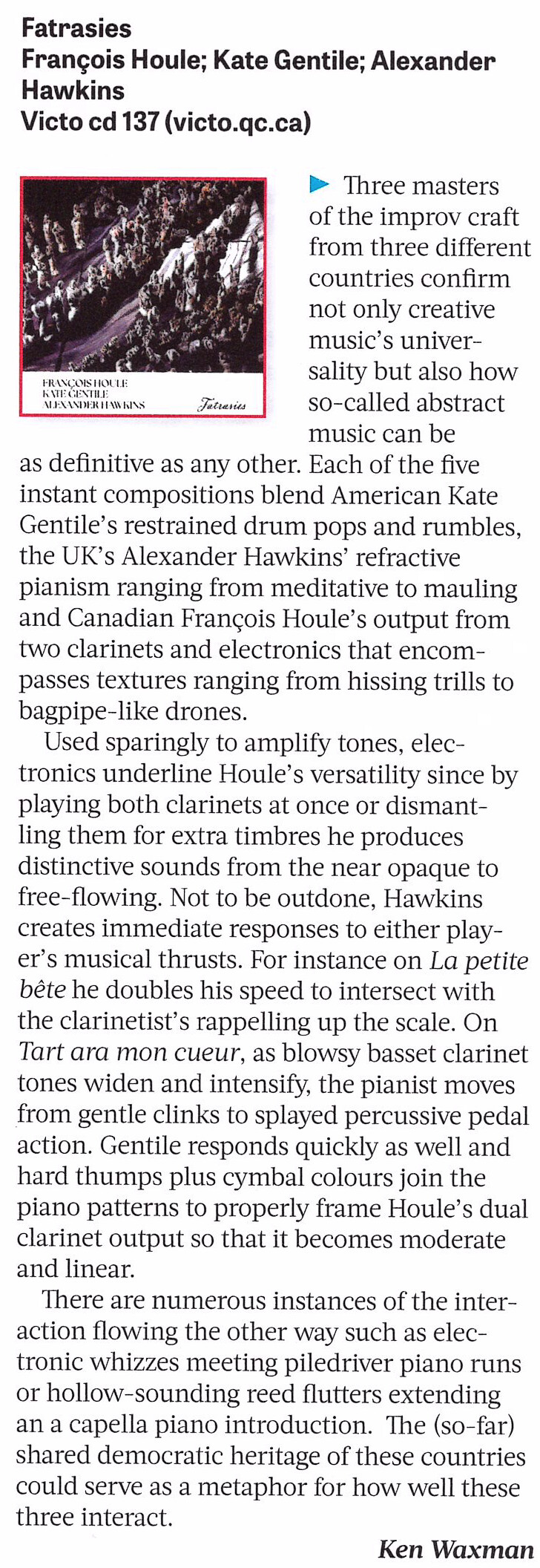
    Three masters of the improv craft from three different countries confirm not only creative music’s universality but also how so-called abstract music can be as definitive as any other.
  • 1
  • 2
  • 3
  • 4
  • 5
  • 6
  • 7
  • 8
  • 9