actuellecd

Blog

68 results
  • 3
  • 4
  • 5
  • 6
  • 7
  • 8
  • 9
  • 10
  • 11
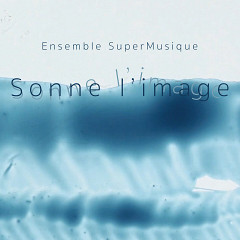
  • Sonne l’image in The WholeNote

    “Review”, Yoshi Maclear Wall, The WholeNote, no. 27:6, April 20, 2022
    Friday, April 22, 2022 Press

    Sometimes, the smallest tidbit of context can make a world of difference when it comes to interpreting art. One illustrative example that comes to mind is the powerful 1997 Derek Bailey and Min Tanaka Music and Dance album, where the listener is primarily attuned to Bailey’s guitar playing but even just a working knowledge of Tanaka’s presence helps establish a real-world setting in the mind of the listener.

    Similarly, Ensemble SuperMusique’s 2019 Montréal Sonne l’image performance is also one of a multidisciplinary nature, and there is something about that framing that feels critical. Even if one doesn’t get their hands on a CD where the visual scores themselves are provided, the music takes on a new shape when the imagination can vaguely infer the imagery that is being responded to. This phenomenon speaks to a desire the spectator has to feel connected to the process itself, where the stage almost seems to disappear and the hierarchy of a concert hall vanishes. But what happens when one chooses to listen ignorantly, fixating on what we’ve been given rather than extrapolating?

    The music itself has a definite determinate sway to it in terms of duration and select composed passages, but this is an inspiring display of collective improvisation. Throughout three movements, all individual elements are interwoven but there is never overt disruption. Everyone breathes together, and nobody takes a solo. Communal contributions take precedence over individual objectives. Patience and timing ensures fluidity.

    … this is an inspiring display of collective improvisation.

    G(o) sol(o) in Vital

    “Review”, Dolf Mulder, Vital, no. 1331, April 11, 2022
    Thursday, April 14, 2022 Press

    Discovering the work of Fred Frith and René Lussier, Falaise chose a similar direction in developing his own voice as a guitarist. From early on, he was interested in extending the possibilities and sounds of the electric guitar. For more than 25 years, he has been a prominent force in the scene of Québec and played with groups like Papa Boa, Klaxon Gueule, Subtle Lip and many other projects and played with many other musicians from Québec. One finds his name on dozens of albums recorded in the last twenty years, from pop and Avant rock to improvised and modern composed music. He records a solo effort now and then, and G(o) sol(o) is the fifth one in this series. In his earlier solo statements overdubbing, editing, and other post-production procedures were essential constitutive elements. Not for his new recording, where Falaise kept these at a minimum to create music played as it is heard. It is hard to believe that sometimes all is played by Falaise simultaneously, but looping and other devices easily create this impression. His experimental and exploring music is beyond recognizable styles and idioms. It is a very original, rich musical world on its own. The opening track Slogan starts with rock-based sensibilities. It is the first of two lengthy improvisations (12 minutes), whereas the other pieces stay 4-5 minutes. The work goes through different stages and feels like a journey, encountering many different textures and patterns. Olga en gondole has a laid back and open atmosphere. On the contrary, Gogol à vélo is a freaky and experimental improvisation built from short movements and interruptions. Galop starts from percussive-like sequences. The sounds change in intensity and colour. Closing track L’ocelot d’Oslo is created from looped sounds of an ambient and keyboard-like nature, with nervous high-pitched sketchy interruptions moving towards a culminating point. His abstract sonic adventures for prepared guitar are varied and intense. Lively and far from academic.

    His abstract sonic adventures for prepared guitar are varied and intense. Lively and far from academic.

    Cage in Nieuwe Noten

    “Kritiek”, Ben Taffijn, Nieuwe Noten, April 2, 2022
    Monday, April 11, 2022 Press

    De invloed van John Cage op de hedendaags gecomponeerde muziek kan moeilijk worden overschat en in tegenstelling tot veel andere grote namen uit de vorige eeuw wordt zijn muziek nog opvallend vaak uitgevoerd, met als hoogtepunt de vorig jaar verschenen box van Apartment House met daarop alle zogenaamde ‘Number Pieces’, uitgebracht door Another Timbre. Maar er is meer. Ook Quartetski bracht onlangs twee ‘Number Pieces’ uit, bij Ambiances Magnétiques, te weten Four6 en One7 en bij Naxos verscheen vorig jaar de Cd American Percussion Works waarop Percurama onder andere ‘First Construction (in Metal) ’ uitvoert.

    Apartement House nam dertien stukken op, ze komen hier morgen aan bod, in een bezetting tussen vijf en dertien leden (het eerste getal van de ‘Number Pieces’ duidt op het aantal uitvoerenden, het tweede op de volgorde binnen de stukken voor die bezetting. ‘Four6’ is dus het zesde stuk in een bezetting voor vier musici), Four6 en One7 vallen daarbuiten. Soms schreef Cage een stuk specifiek voor een instrument, meestal liet hij het echter open, iets dat ook geldt voor de twee stukken die Quartetski hier uitvoert. Four6 dat hij schreef in 1992, het laatste jaar van zijn leven heeft als aanduiding ‘four performers’. Het geeft dit bijzondere kwartet, bestaande uit percussionist Isaiah Ceccarelli, rietblazer Philippe Lauzier, Pierre-Yves Martel actief in de weer met de viola da gamba en diverse objecten en gitarist Bernard Falaise, de mogelijkheid Cage’ materiaal maximaal naar hun hand te zetten. De combinatie van percussie, objecten en rietblazers, viola da gamba werkt perfect, evenals die van akoestische en elektronisch, de elektrische gitaar van Falaise. One7, uit 1990, was dus bedoeld voor één instrument, keuze vrij. Dit kwartet houdt zich er niet aan, al klinkt het hier wel als een onlosmakelijke eenheid, waarbij met name die prachtige wolken van klank opvallen. Niet helemaal conform Cage’ wil, maar wel heel mooi gedaan.

    This quartet […] sounds here like an inseparable unit, the beautiful clouds of sound being particularly striking.

    Voyages||Subaqua in Groove

    “Kritik”, Frank P Eckert, Groove, March 16, 2022
    Monday, April 11, 2022 Press

    Jean-François Primeau arbeitet im Kontrast dazu mit abstrakt gemachten Klängen analoger Synthese an einem kein bisschen abstrakten Projekt, nämlich der klanglichen Illustration der Tiefsee und ihrer faszinierend fremden Ökosysteme. Das passiert auf Voyages||Subaqua (Mikroclimat, 1. März) in einer adäquat faszinierenden Mischung aus virtuellen Wasserrauschen, Echolot-Pings, synthetischen Walgesängen und Wummern und Dröhnen im tiefsten Bassbereich. Ein tiefer Trip.

    A deep trip.

    Motile cilia in Groove

    “Kritik”, Frank P Eckert, Groove, March 16, 2022
    Monday, April 11, 2022 Press

    Das von Joane Hétu kuratierte Montréaler Label Mikroclimat beschränkt sich ebenfalls nicht auf Jazz, nicht mal im weitesten Sinne. Das langformatige Motile cilia (Mikroclimat) des Duos Ora aus Label Co-Betreiber Maxime Corbeil-Perron und Stéphanie Castonguay spielt zum Beispiel im von Industrial und Noise her denkenden Dark Ambient mit Überschneidungen zu modernen Post-Club-Experimenten. Aber eben mit den Werkzeugen der freien Improvisation und der elektroakustischen Komposition, semi-akustisch assembliert.

    … plays in dark ambient thinking from industrial and noise with overlaps to modern post-club experiments.
  • 3
  • 4
  • 5
  • 6
  • 7
  • 8
  • 9
  • 10
  • 11