
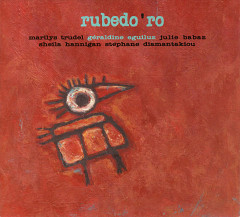
A more magical cauldron of composition and improvisation could hardly be concocted than this creative collection of pieces for voice and string quartet. I had the opportunity of attending the premier performance of this project in Montreal before it got “waxed,” and the recording is every bit as magical as the live rendition of the pieces.
Composer and singer Equiluz has imagined a finely inflected set of nine movements. Not always articulating an explicit text, the voice is used as a fifth instrument in a kind of multilingual scat style. The strong geo-historical connotations of the string quartet (i.e. Europe’s noble courts c. 1700s and on) are here subverted in idiomatic writing combining indigenous sounds of the Americas along with free improvisation and tightly rendered ensemble writing that evokes many local colors, from the lush valleys of Mexico, to the Brazilian Rainforest, to the shouting of the Thunder Beings on the North American plains, and more.
Born in Mexico, the cosmopolitan Equiluz has lived in Columbia, Paris and Lisbon, before coming to Montreal by way of Quebec City. She has performed internationally and is a frequent collaborator with musicians in the thriving Musique Actuelle scene in the province of Quebec. In this ambitious project, a polyglot sensibility comes through loud and clear in the multi-stylistic qualities of the compositions, with titles in a number of languages, like the opener “Aluxes” which announces the music to come via allusions to a playful Maya spirit being, and other titles, like “Tiempo Herido,” that reflect a more mournful mood, or the rhythmically possessed piece called “Tonnere.”
In Rubedo’ro, Equiluz is joined by four Montreal string players
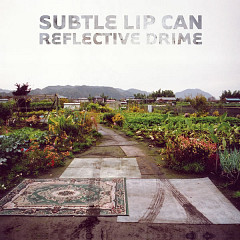
Subtle Lip Can is the trio of Joshua Zubot on mandolin and violin, Bernard Falaise on guitar, and Isiah Ceccarelli on percussion. All members of Montreal’s active improvised music scene, they came together as a trio in 2007, at the city’s regular improv showcase, Mardi Spaghetti. Reflective Drime is their second release, the follow-up to their fine 2010 eponymous debut, also on Drip Audio. As on that album, the music here totally belies any expectations which the instrumental line-up may create. In fact, it is occasionally difficult to attribute particular sounds to one of the credited instruments. In particular, the music often has a deep bottom end that is consistent with a bassist being present, although none is credited
Oddly, the Drip Audio website cites three eclectic comparisons for Subtle Lip Can’s music, saying, “The trio brews up a plethora of sonic phenomena that echoes Morton Feldman’s Triadic Memories, Art Pepper’s Wintermoon (more in the rhythmic sense), and melted melodic moments of Stravinsky’s Rite of Spring.” If you are familiar with those pieces of music, try imagining that combination — the chances are that what you imagine will have few similarities to the actual music here
Although their music is clearly improvised, Subtle Lip Can seem to delight in kicking against the conventional norms of “improv”. So, no track here exceeds eight minutes and the majority are nearer four. The tracks do not go in for extended explorations of an idea or theme, usually sticking with the initial soundscape with subtle (yes
For myself and a number of other attendees at the 2015 FIMAV Fest in Quebec last month, the best set was
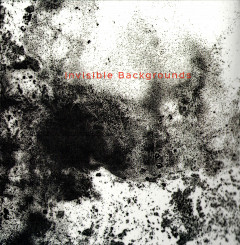
Find out more about Invisible Backgrounds by Philippe Battikha, the most recent item added to our shop.
As many composers continue on a mad dash to ensnare audiences in a spiral of novel sounds, fantastic visuals and complexity, it is rare to find a composer who is interested solely in investigating the phenomena of sound itself. Musical trends have come and gone over the course of the 20th century, and yet composer Alvin Lucier has continued to produce works focused on a single idea related to sound production and the act of listening. This past Sunday, Montréal hosted Lucier as he, the Bozzini Quartet and other musicians performed his works of the past two decades.
At the age of 84, Lucier is a pioneer in the field of experimental music in post-war America. He often makes use of the properties of sound, room acoustics and the experience of hearing in his compositions. Of particular interest in this concert was the phenomenon of “sound wave interference”. This occurs when two sound waves which are very close in frequency approach the ear. The two slightly out-of-sync waves interfere with each other, and we hear this as a sort of ‘beating’ – imagine two instruments playing slightly out of tune. Though undesirable in other forms of classical music, Lucier draws our attention to this and other naturally-occurring acoustic phenomena, often with the use of technology.
Performing pieces of this nature requires painstaking concentration and hard work on the part of the player
Lucier himself performed the piece Bird and Person Dyning, in which an electric bird call interacted with feedback between speakers and a binaural microphone. ‘Dyning’ refers to heterodyning, a term from early radio transmission in which the addition and subtraction of two tones creates two new tones. With the performer required to wear the binaural microphone, the frequency of the feedback was dependent on Lucier’s position in the room. The composer moved in the space slowly and deliberately, able to create uncanny effects through even slight changes in the position of his body. At times, this included the strange experience of difference tones that seemed to form and vibrate right within the ear. The effects of space and resonance were also dealt with in the charming piece Nothing is real, in which pianist Daniel Áñez first recorded fragments of the Beatles song Strawberry Fields Forever with a wash of damper pedal, then replayed the fragments on a speaker housed inside a teapot. By raising and lowering both the lid and the teapot itself, Áñez was able to isolate particular partials within the wash of recorded piano.
The final piece of the evening, Small Waves, brought all of the members of the Bozzini Quartet to the stage as well as Del Tredici and Áñez. In this piece, the performers played long, sustained clusters tuned closely to pitches of the feedback between speakers and six microphones. These microphones were inserted in glass vessels partially filled with water and placed around the space. On occasion, stage hands would pour water between vessels, thereby changing the pitch of the feedback. At 50 minutes in length, this piece was a display of endurance. The Bozzini Quartet’s care and precision was essential to the execution of the piece
In many ways, Lucier’s music can be just as challenging for the listener as it is for the performers. Little of Western art music as single-minded and static, particularly when compared with the emotional journeys in the tradition of Beethoven, Wagner or Mahler. What Lucier’s music lacks in turbulence and cinematic grandeur it gains in quiet contemplation
![Bozzini Quartet / Also pictured: Stéphanie Bozzini, Alissa Cheung, Clemens Merkel, Isabelle Bozzini [Photo: Michael Slobodian, Montréal (Québec), January 20, 2020]](https://res.electrocd.com/image.php/image/q/quatuorbozzini_.9954.jpg?width=n2&cropratio=1:1)