actuellecd

Blog

85 results
  • 4
  • 5
  • 6
  • 7
  • 8
  • 9
  • 10
  • 11
  • 12
  • Somewhere the Sea and Salt in Touching Extremes

    “Review”, Massimo Ricci, Touching Extremes, May 13, 2014
    Tuesday, May 13, 2014 Press

    Judge of the Tribunal of Hip Reviewers: “Aren’t you ashamed, Mr. Ricci, of writing now about an album released in 2009?

    Consider me unrepentant, Your Honor. Instead I should feel mortified in admitting that this is the very first chance for Chan’s music to shape up my ears, all the more so in consideration of her coaction with gentlemen whose business was inspected quite a few times here and elsewhere (step forward, Damon Smith and Weasel Walter). However, the wondrously titled Somewhere the Sea and Salt is so good that it deserves deeper immersions, a top-grade effort by a light-sensitive performer.

    From the get-go one envisions a conspicuous withdrawal from anything that might have been predictable. The modus operandi animating these recordings is rather nonadjacent in regard to your average solo piano outing. Chan is truly inspired by the expressive properties of the instrument’s reverberation, acting as a medium between the unceasing invisible motility that comprises the core of our individuality and the wood/string interrelation turning her gestures into magnificent crystals — either finished or relatively unsmooth — of acoustic matter. She does not use preparations, still applying disparate means to summon forth vibrational radiance: mallets, eBows, Tibetan bowls, mbiras. The tracks — including the clangorous ones — are all gifted with a spectral perfume, presenting the listener with the refreshing sensation of witnessing events occurring within a higher domain of aliveness. When the Canadian decides to play according to “conventional” know-how (that is to say, employing the mere keyboard) there’s no way to remain disgruntled by even the slightest hint of humdrum tactic. Let’s just say that Chan seems to be aware of what is needed to let a sonic conflict be accepted as natural phenomenon (namely, what it indeed is: the cosmos evolves by contrast, yet the masses keep hopelessly looking for painless resolutions, thick-witted rhymes and abecedarian harmonies to quiesce brains in dire need of a critical fine-tuning).

    Chiming intelligence to spare, and what an anti-feminist critic would call “feminine grace” spell out 44 minutes of luminous transport. Episodes like Five-Hundred Echoes and the gorgeously rumbling Eleusinian Mysteries could be utilized as a therapy against the phony worshipping of nondescript masters of nullity. I’d be willing to sleep for days inside this cathedral.

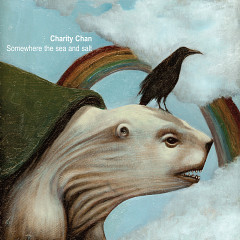
    … the wondrously titled Somewhere the Sea and Salt is so good that…

    6 improvisations in Blow Up

    “Altrisuoni”, Massimiliano Busti, Blow Up, no. 192, May 1, 2014
    Thursday, May 1, 2014 Press

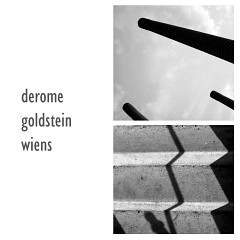
    Attorno all’Ambiances Magnétiques negli ultimi trent’anni si è sviluppato un movimento che ha posto Montreal al centro dell’interesse dei musicisti attratti dalle forme compositive più eterodosse. A testimonianza di tutto ciò, basti pensare che un violinista come Malcolm Goldstein (già attivo a New York negli anni sessanta a fianco di James Tenney e Philip Corner) e il chitarrista Rainer Wiens proprio a Montreal hanno deciso di stabilirsi per condividere con i musicisti locali un percorso di ricerca nella dimensione più creativa del suono, proprio come accade in queste 6 Improvisations frutto del loro incontro col sassofonista Jean Derome. Il trio spazia dal lessico frammentario di Bamboche alle irreali visioni etniche di L’idée de nature, dalle esplorazioni timbriche di Glissements-souffles alla torbida inquietudine di Saturnien, equilibrando con estrema efficacia il dialogo fra chitarra preparata, strumenti a fiato e violino in un continuo avvicendarsi di soluzioni brillanti e inattese.

    6 improvisations, Canard branchu, Le lait maternel, Le Sacre du printemps, Le caillou in Vital

    “Review”, Dolf Mulder, Vital, no. 929, April 21, 2014
    Monday, April 21, 2014 Press

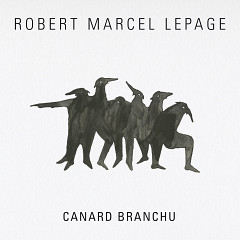
    A new bunch of CDs from Ambiances Magnetiques. From Goldstein and Wiens we know earlier releases as a trio with Ganesh Anandan and John Heward. This time Jean Derome is their partner. As a trio however they have already performed for a longer time. On april 12th, 2013 they recorded this crystal clear recording in the studio. Goldstein playing violin, Wiens mainly prepared electric guitar plus kalimba, and Derome alto sax, flute and objects. Intense and concentrated improvisations with lots of colour and sounds. Fine interplay and interaction between these reputed players, with some breath-taking moments. Like Derome, Robert Marcel Lepage is one of the founding members of Ambiances Magnétiques. He didn’t release many albums in the last few years if I’m right, but now he strikes back with two releases. He presents the more light-hearted and accessible part of the Montréal musical spectrum. Le lait maternel contains 18 compositions Lepage wrote between 2003 and 2010 for film. It has some very catchy tunes like the jumpy Le Rock du Bungalow that evokes orchestral film music from the 60s. Good time music! Very friendly music, tapping from a diversity of styles and idioms. Pieces on Canard Branchu leave some more room for improvisation, but in essence this is also an album of melodious and harmonious music, typical for the Ambiances scene since the 80s. Again performed for a big ensemble of 9 musicians. So both albums offer a bunch of well-defined tunes, dressed up in fine arrangements giving voice to many different instruments and sounds. They may not surprise you, but will sure entertain you. With the new release by Palardy we turn again to a more serious face of this scene. Again we are dealing with one of the early member of the Ambiances scene. Self-taught Danielle Palardy Roger made her mark since the early 80s with groups like Justine, Wondeur Brass and Les Poules. In the last few years — since about 1998 — she concentrates on writing for Ensemble SuperMusique, an ensemble that was founded by her. Compared with earlier projects by her, this one is most close to composed new music and deals with the play between improvisation and composition. Le Caillou is one of her oldest and most played works for this ensemble. It “is a simple game piece in which the players pass the musical development of the piece to each other while building up a slow crescendo; another set of instructions tells the musicians to trace back their steps and play as exactly as possible what they did play the first time around”, Roger explains. The one that surprised me most this time is Quartetski doing Stravinsky. Quartetski is a project founded by Pierre-Yves Martel in 2007, focused on reinterpreting works of classical composers in an improvised setting. They reworked compositions by Prokofiev, Purcell, Satie, Ellington, Cage, a.o. Because of the 100th anniversary of Stravinsky’s Rite of Spring they decided to chose this work. Besides Pierre-Yves Martel (viola da gamba, objects), we hear Isaiah Ceccarelli (drums), Bernard Falaise (electric guitar), Philippe Lauzier (bass clarinet, soprano sax) and Joshua Zubot (violin). Marvellous job in transposing this orchestral work for small ensemble. Martel started from Stravinsky’s two-piano version of this composition. His re-working leaves the original work in tact concerning spirit, energy and drive that is in the original piece. Adding room for improvisation. Chapeau!

    Chapeau!

    Canard branchu in Downtown Music Gallery

    “Review”, Bruce Lee Gallanter, Downtown Music Gallery, April 18, 2014
    Friday, April 18, 2014 Press

    This disc features six clarinetists: Jean-Sébastien Leblanc, Pierre-Emmanuel Poizat, André Moisan, Guillaume Bourque, Lori Freedman & Robert Marcel Lepage on assorted clarinets plus Nicolas Borycki on organ (3 tracks), Fraser Hollins on contrabass and Pierre Tanguay on drums. Mr. Lepage is a clarinet player with more than a dozen discs out on the Ambiances Magnétiques label, each one with a different theme or strategy. There appears to a theme for this disc but since I still can’t read French, I can’t tell you what that theme is. As a big fan of the clarinet myself, I really dig what few clarinet ensembles I’ve been able to check out. This one is equally formidable thanks to the strong writing of Lepage and the spirited playing of the clarinets and rhythm section. Lepage composes quirky, playful melodies which seem deceptively simple yet there is more going on than what we hear on the surface. Some pieces are just the clarinets with weaving their elegant lines. I dig the way Mr. Borycki’s sly yet cheesy organ adds a certain lounge-like charm to Rainettes à la brunante. The ever-inspired Lori Freedman takes a couple of fine bass clarinet solos here, which is yet another reason to savor this gem. What I like most about this disc is that none of it is very avant or overly adventurous. The music stands on its own quietly inventive and thoughtfully played enchantments.

    The music stands on its own quietly inventive and thoughtfully played enchantments.
  • 4
  • 5
  • 6
  • 7
  • 8
  • 9
  • 10
  • 11
  • 12