actuellecd

Blog

187 results
  • 11
  • 12
  • 13
  • 14
  • 15
  • 16
  • 17
  • 18
  • 19
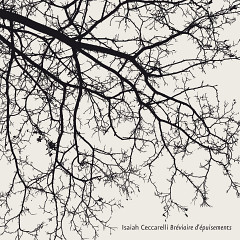
  • Bréviaire d’épuisements in The Squid’s Ear

    “Heard In”, Dave Madden, The Squid’s Ear, May 3, 2011
    Tuesday, May 3, 2011 Press

    I often wonder how music will sound 500 years from now. Will the change be drastic — a stylistic upheaval — or just subtly different? I imagine someone 800 years ago speculated the same about the then-current awakening to polyphonic music (i.e. the motet). Isaiah Ceccarelli’s Bréviaire d’épuisements is that person’s answer.

    At a squint, one can spot the shapes and forms of that era; there are several contiguous movements of different sizes and consistency, spiritual text in French (nothing you find in religious Canon, but a potential addendum to the Apocrypha), plainchant, occasional instrumental cantus firmus and organum. However, the modern spin by Ceccarelli and his sextet make this a truly unique adventure. The four solo sections of this thirteen-piece work is the first striking giveaway of where we are: bowed cymbal. Sometimes reverent, sometimes rude, Ceccarelli works a panoply of harmonics, tempo shifts (pulses via up / down strokes), buzzing, creaking with…well, you know how it sounds; it’s a daring yet somehow unifying pose against the rest of the aesthetic.

    The rest of the album is realized by two voices (Émilie Laforest and Josée Lalonde), two bass clarinets (Lori Freedman and Philippe Lauzier) and Pierre-Yves Martel’s Viola da gamba, hinged on Ceccarelli’s compositions and on poems by Marie Deschênes. The pieces are intimate and recall John Cage and Joan La Barbara’s collaborations (i.e. Mirakus), the group conceiving each note as a delicate whisper (the title alludes to a breviary, or book of daily prayers and lessons, and the mood here is certainly early morning before the sun destroys pensive tranquility). The vocalists move in and out of tonal and rhythmic unison, canonic at times, as the orchestration breezes along in supple support; apart from the playful Intermède, the performers forego extended techniques and flamboyant showmanship for a well-placed drone and intriguing harmonic complexity — something, when combined with the aforementioned foothold in another era, escapes easy labels. Because of the diminutive gestures, the music never dips into textural murkiness, though the progression from work to work displays an increased penchant for dissonance (the liner notes call this a “tension between darkness and light”).

    But enough with fitting Bréviaire d’épuisements into a box. Let’s garnish it with words from 13th century theorist Johannes de Grocheio:

    “…not intended for the vulgar who do not understand its finer points and derive no pleasure from hearing it: it is meant for educated people and those who look for refinement in art.”

    A bit snobby, but truthful.

    I often wonder how music will sound 500 years from now. Will the change be drastic — a stylistic upheaval — or just subtly different? […] Isaiah Ceccarelli’s Bréviaire d’épuisements is that person’s answer.

    Transition de phase in Vital

    “Review”, Dolf Mulder, Vital, no. 779, May 3, 2011
    Tuesday, May 3, 2011 Press

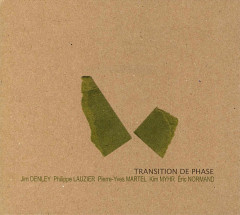
    Denley, Lauzier, Martel, Myhr and Normand participated on the Victo Festival 2010. Tour de Bras invited them for a session just after the festival was closed. Kim Myhr is from Norway, Jim Denley from Australia. The other three artist come from Quebec where it all took place. All five of them participated on the Victo Festival 2010. Jim Denley is the veteran improvisor in this combination known for his extended techniques on wind instruments. But on this recording it is not only Denley who makes use of extended techniques. All of them do. This makes it difficult to detect what comes from what instrument. One may experience this as an disadvantage, but it also has an advantage. It puts the music on its own feet. It is purely the music and sounds one experiences. For sure a very satisfying experience in this case. A fine example of very concentrated and inspired improvisations, full of subtleties.

    A fine example of very concentrated and inspired improvisations, full of subtleties.

    Fléchettes in Vital

    “Review”, Dolf Mulder, Vital, no. 779, May 3, 2011
    Tuesday, May 3, 2011 Press

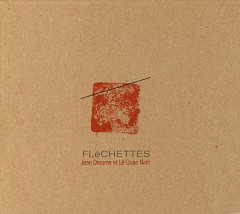
    On invitation by Tour de Bras Jean Derome and Lê Quan Ninh did an entirely improvised set. This worked out so well it is released here on CD. French-based Lê Quan Ninh is classically trained percussionist who worked with contemporary music ensembles and is a founder member of Quatuor Hélios. As an improvisor, he participates at numerous meetings in Europe and in North America. I remember an intriguing duo concert with Cor Fuhler. Jean Derome needs no further introduction. As a duo they give way to some very adventurous improvisations. They had a lot to share. Absolutely a very successful meeting, showing many sides of their improvisational skills. The improvisations are full of many colors, energy and surprises. A very rich album.

    A very rich album.

    Pinta, Niña & Maria in Revue & Corrigée

    “Chronique”, Pierre Durr, Revue & Corrigée, May 1, 2011
    Sunday, May 1, 2011 Press

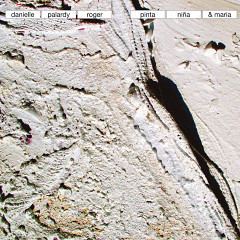
    La traversée de l’Atlantique semble constituer — à raison sans doute — un élément fondateur auquel se rattache l’imaginaire des créateurs d’outre-Atlantique quand bien même leur propos initial en différerait. Déjà Chantal Dumas assimilait, dans migrations océanes (in Le parfum des femmes en 2001) la traversée effectuée par u ne femme avec la lente migration des eaux froides. Ici, la symbolique des trois nefs de l’expédition de Christophe Colomb, à travers leurs différences, est utilisée pour évoquer les métissages musicaux entre tradition orale, musique écrite et improvisation. La Pinta serait l’improvisation (les pièces s’y rattachant étant interprétées par treize musiciens d’ensemble du nom de GGRILL), la tradition orale, qui inclut des textes de la fin du XVe siècle, défendue par l’Ensemble SuperMusique étant véhiculée par la Niña, tandis que la (Santa) Maria hébergerait la musique écrite à travers l’ensemble ECM+. A travers leurs différences, les trois navires participent de la même expédition et l’auditeur ressent dans cet enregistrement davantage l’unité conceptuelle de la composition, due à Danielle Palardy Roger, d’autant plus que l’Ensemble SuperMusique (formation maison) pratique aussi l’improvisation et que certains passages — certaines parties du fret, devrait-on écrire — de la Maria usent aussi des techniques de l’improvisation contemporaine par l’introduction d’échantillonnages et de percussions électroniques associées à une formation par ailleurs purement acoustique.

    … à travers leurs différences, les trois navires participent de la même expédition et l’auditeur ressent dans cet enregistrement davantage l’unité conceptuelle de la composition

    Ave <w> in Revue & Corrigée

    “Chronique”, Pierre Durr, Revue & Corrigée, May 1, 2011
    Sunday, May 1, 2011 Press

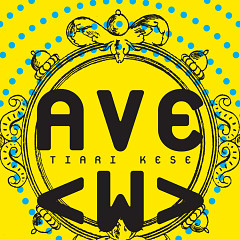
    Nouveau venu au sein du label québécois créé par Michel F Côté, Tiari Kese est un multi instrumentiste (claviers, cordes, cor…) accordant aussi beaucoup d’importance à l’échantillonnage. A l’exception de la présence — plus ou moins noyée dans le maelstrom sonore — du trompettiste Ellwood Epps et de Côté lui-même (percussion, sons et électroniques), il en est le maître d’œuvre et le résultat sonique, sept compositions entre 4 et 14 minutes, s’apparente un peu aux travaux de John Wall, avec peut-être plus d’emphase, plus d’optimisme. Les nappes sonores sont chaleureusement doublées par la trompette (dans Dream of Spartacus’s Spacecraft par exemple), souvent parcouru de petits craquements électriques opérés tels de discrets ruissellements. Les pièces assez cohérentes les unes par rapport aux autres s’ingénient toutefois à s’individualiser par quelque couleur sonore particulière, rendant l’écoute de l’ensemble agréable.

    Les pièces assez cohérentes les unes par rapport aux autres s’ingénient toutefois à s’individualiser par quelque couleur sonore particulière, rendant l’écoute de l’ensemble agréable.

    Hold True (Accroche-toi) in Blow Up

    “Altrisuoni”, Stefano Isidoro Bianchi, Blow Up, no. 156, May 1, 2011
    Sunday, May 1, 2011 Press

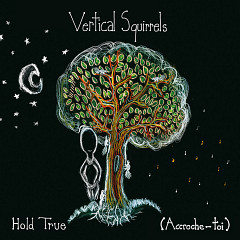
    Un sincopato ritmo jazz e una chitarra che fa pensare al Ribot waitsiano; è (Put Some) Spunk in Your Funk, pezzo d’apertura dell’album dei canadesi Vertical Squirrels, Ajay Heble (piano, melodica, percussioni), Daniel Fischlin (chitarra, flauto provenzale), Lewis Melville (basso, banjo, radio frequenze) e Rob Wallace (batteria e vocalizzi). Ma è solo una delle mille indicazioni fornite da un disco che poi si dimena alla ricerca di onomatopee da veri scoiattoli verticali (Nomads, Sparrows & Machines) e veri ragni meccanici (Danse des araignées mécaniques), si sbilancia recuperando il Davis elettrico in versione notturna e flessuosa (l’ottima ¡Ah/Ha!), snocciola un talkin’ free (L’impatience des poissons), sfiora la psichedelia etnofolkie (Leaps Of Faith), si abbandona a romanticismi classicheggianti (La mnémologie / Amnesiaville) e dolcezze da rock ballad d’altri tempi (Resurrectiong The Good). Il gusto del puro suono che scorre coi freni mai troppo tirati è la via di un’interazione perfetta tra strumenti evidentemente guidati dal piano ma mai comprimari: appena un po’ barocchi, ironici, curiosi, affabili, intelligenti, abili, disincantati, rilassati ma non svagati, i Vertical Squirrels sono tra le cose più piacevoli ascoltate di recente in ambiti (avant?) rock-jazz.

    i Vertical Squirrels sono tra le cose più piacevoli ascoltate di recente in ambiti (avant?) rock-jazz.
  • 11
  • 12
  • 13
  • 14
  • 15
  • 16
  • 17
  • 18
  • 19