actuellecd

Blog

323 results
  • 15
  • 16
  • 17
  • 18
  • 19
  • 20
  • 21
  • 22
  • 23
  • On a Short Path from Memory to Forgotten in The WholeNote

    “Review”, Ken Waxman, The WholeNote, no. 15:10, July 1, 2010
    Thursday, July 1, 2010 Press

    Altering the paradigm so that each instrument is as important as any other creates a more equitable and satisfying performance — and boosts the trumpet’s role. Toronto’s Jim Lewis, Andrew Downing and Jean Martin demonstrate this On a Short Path from Memory to Forgotten (Barnyard Records BR 0311 www.barnyardrecords.com). Consisting of 10 instant compositions, there is no foreground or background instrument. One tune for example could be a capriccio, as Lewis’ joyful trumpet blasts define the theme; another is dependent on Downing’s thumping bass pulsations; and almost all are illuminated more by the splashes of multiphonic color Martin creates with gamelan-like bell tones and triangle resonation than a steady beat from his regular kit. Showcasing Lewis’ phrasing, which ranges from staccato heraldic blasts to graceful flutters, is Eight, the tune in which his moderated a capella puffs give way to a rubato, double-time version of theme and finally to aviary chirps plus whistling resounds. These intertwine with martial rolls and rebounds from Martin and walking slap bass from Downing.

    Altering the paradigm so that each instrument is as important as any other creates a more equitable and satisfying performance — and boosts the trumpet’s role.

    Infininiment in The WholeNote

    “Extended Play: New Roles for Trumpets”, Ken Waxman, The WholeNote, no. 15:10, July 1, 2010
    Thursday, July 1, 2010 Press

    Although the romantic image of a lone trumpeter has been standard in jazz since the time of Young Man with a Horn, musically it’s actually more difficult for a trumpet to be sole horn in a band — at least until freely improvised music rewrote the rules a few decades ago. The reason is simple: unlike the saxophone’s many keys which the soloist can manipulate for different timbres, the trumpet has only three valves and a length of tubing. Brass players thus most often work with a reed partner or as part of an ensemble. However these CDs, featuring mostly Canadian casts, show that notable sessions can appear no matter the instrumental make up. […]

    Ex-Torontonian, now Montréaler, trumpeter Gordon Allen plus saxophonists Jean Derome and Philippe Lauzier take an equally standard role as backing horn section on Montréal band Klaxon Gueule’s Infininiment Ambiances Magnétiques AM 194 CD. Throughout the 13 minimalist tunes the horns extend or amplify improvisations from the band’s core trio — guitarist Bernard Falaise, bassist Alexandre St-Onge and percussionist Michel F Côté. Concerned as much with mood and texture as melody, the scene-setting arrangements frequently find single horn parts providing brief commentary on Falaise’s popping guitar licks, St-Onge’s pulsating rhythms or the knitting-needle-like clatter of Côté’s delicate drumming. The bass line serves as a pedal point drone on Momo pèle, for instance, which fades away following dissociated drum beats, but not before Allen has pumped out bugle-like reveille. In contrast singular note extensions from one saxophone plus chromatic mellow timbres from the trumpeter inflate from distanced peeps to provide a counterweight to dissonant guitar-string snaps and abrasive strums on Brown suinte. […]

    Throughout the 13 minimalist tunes the horns extend or amplify improvisations from the band’s core trio

    Musique de Steve Lacy in The WholeNote

    “Review”, Geoff Chapman, The WholeNote, no. 15:10, July 1, 2010
    Thursday, July 1, 2010 Press

    An album honouring the great music of the late Steve Lacy, an American who spent his last years in France, is well worth seeking for enjoyable interpretations of eight of his songs by Toronto band The Rent whose Musique de Steve Lacy is a very accessible commentary on a leading avant-garde figure’s legacy. Kyle Brenders renders soprano sax, Lacy’s instrument, alongside suave improviser Scott Thomson (trombone), Wes Neal (bass), Nick Fraser (drums) and Susanna Hood (voice) — the latter a vast improvement on shrieking Lacy vocalist (and wife) Irene Aebi. Brenders’ abrasive tone goes beyond most Lacy, but there’s witty trombone counterpoint and attention-grabbing solos. With voice added the Lacy spirit comes across best. If the title track is merely chirpy, the five-part suite Blues For Aida is beautifully worked, voice fully integrated with horns. Other gems include an austere The Bath and an upbeat A Ring Of Bones.

    An album honouring the great music of the late Steve Lacy […] is well worth seeking for enjoyable interpretations of eight of his songs…

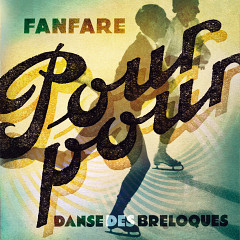
    Danse des breloques, Fanfare Pourpour in Québec Info Musique

    Fanfare Pourpour”, Québec Info Musique, June 29, 2010
    Tuesday, June 29, 2010 Press

    La fanfare est un concept musical qui remonte à la nuit des temps, associée d’abord et avant tout aux activités officielles, qu’elles soient militaires ou civiles. Il s’est toutefois trouvé, à différentes époques, des musiciens pour en détourner la pratique et en présenter une version populaire, qui peut sembler anarchique aux oreilles non prévenues.

    Deux des utilisations dérivées les plus célèbres de l’esthétique de la fanfare demeurent le jazz (les fameuses parades mortuaires de la Nouvelle Orléans) et la musique de cirque. À l’époque moderne, on ne peut passer sous silence le faux groupe Lonely Hearts Club Band des Beatles et toute une esthétique héritée des années psychédéliques. C’est dans cette voie que sont nées des expériences comme le Grand Cirque Ordinaire, qui y jouxtait une activité théâtrale, puis l’Enfant Fort et le Pouet Pouet Band, au cours des années 1970.

    On retrouve d’ailleurs des membres de ces deux dernières formations (Benoît Fauteux, Christine Lajeunesse, Claude Vendette) à l’origine de la Fanfare Poupour, qui prenait forme une quinzaine d’années plus tard, en 1995. À ces fanfarons s’ajoutaient aussi des membres de collectifs tels Conventum (René Lussier), Montréal Transport Limité (Lou Babin, Bernard Poirier), Ambiances Magnétiques (Jean Derome) et d’autres musiciens d’horizons divers.

    Un premier album Fanfare Pourpour… Tout le monde est produit sur la nouvelle étiquette DAME / Monsieur Fauteux m’entendez-vous? (MFMV 01), en 1999. Ses membres ont toutefois des occupations multiples, en plus de mener divers projets personnels et ce n’est que cinq ans plus tard qu’on retrouve un second album Le bal. Il sera suivi par deux autres projets, plus rapprochés, en 2007 et 2010.

    Maintenant composée de vingt musiciens, dont une majorité de compositeurs, la Fanfare Pourpour propose avec Danse des breloques un éventail de leurs différentes écritures, qu’il s’agisse de musiques sautillantes comme la pièce titre ou Le retour de Pelle, de valses expressives telles que Transport Suzanne, voire de flirts avec la musique western, Partir ou bien la pop Croise le pont. L’éclatement de la scène musicale actuelle ferait-il mentir le verdict porté sur Montréal Transport Limité en 1984, prouvant que, oui, en 2010 «Le monde est prêt pour la Fanfare Pourpour»?

  • 15
  • 16
  • 17
  • 18
  • 19
  • 20
  • 21
  • 22
  • 23