actuellecd

Blog

429 results
  • 47
  • 48
  • 49
  • 50
  • 51
  • 52
  • 53
  • 54
  • 55
  • Arbor Vitæ in Exclaim!

    “Review”, Glen Hall, Exclaim!, April 1, 2009
    Wednesday, April 1, 2009 Press

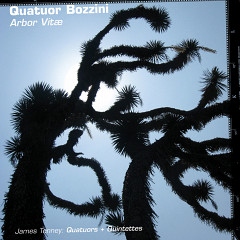
    Although he was born, and died, an American, composer/theorist James Tenney earned a warm spot in Canada’s musical psyche for his tenure as a professor at Toronto’s York University. And it is a motivating mix of affection and respect that moved Montréal-based string quartet Quatuor Bozzini to produce this reverently mounted two-CD collection of Tenney’s entire work of quartet/quintet pieces. Spanning five decades, Arbor Vitæ includes the piece of the same name composed in 2006, the last year of Tenney’s life, an ethereal waving and weaving of microtones, the mid-period Saxony, using tape delay and an extended tamboura-like drone’s unfurling, and early work String Quartet in One Movement from 1955. The foursome grow to a quintet with the addition of percussionist Rick Sacks on 1995’s Cognate Canons and 1997’s Diaphonic Study includes ever-expansive pianist Eve Egoyan. Quatuor Bozzini play every note with microscopic attention to detail and nuance, making even the smallest gesture contribute to this finely faceted gem. But one drawback is Tenney’s penchant for homage, which can be derivative, sometimes of sources other than the composer being honoured. This music is cerebral, no doubt about it, but with the likes of former premier Mike Harris itching to exert an anti-intellectual influence, maybe some grey cell stimulation is just what we need.

    Quatuor Bozzini play every note with microscopic attention to detail and nuance, making even the smallest gesture contribute to this finely faceted gem.

    Out of Nowhere in The Squid’s Ear

    “Review”, Max Schaefer, The Squid’s Ear, April 1, 2009
    Wednesday, April 1, 2009 Press

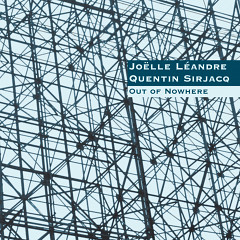
    Cellist Joëlle Léandre and pianist Quentin Sirjacq, though of radically different generations, make of their collaboration an opportunity for a different beginning, where their work will, at least in part, stand out from their respective historic origins, rendering them no longer able to fully grasp it. Fittingly, the pieces forgo a competition of surprises, a proverbial game of chess that would have each player trying to push and trap the other, opting instead for a well-constructed whole that possesses an exhilaratingly hardy, composed chamber feel.

    Each of the pieces manages to be both intimate and suggestive of grand scale. At times Sirjacq prepared piano deceives for its soft, silky chimes, as he later moves into a tough, two handed approach, while the lyricism of Leandre’s neat patterns on violin become decidedly off the peg. Though refined and attractively impassable, it’s also gnarly and encouraging of an active attention.

    Both Leandre and Sirjacq continue to play with exactness and control, giving rise to vivid pieces that, though packed with intense detail, are as tight as a wheel nut. This formula isn’t refreshed as much as needed, however, and later pieces live off of borrowed expressivity. While the first few tracks might come out of nowhere, a number of them appeal only in their recognisability.

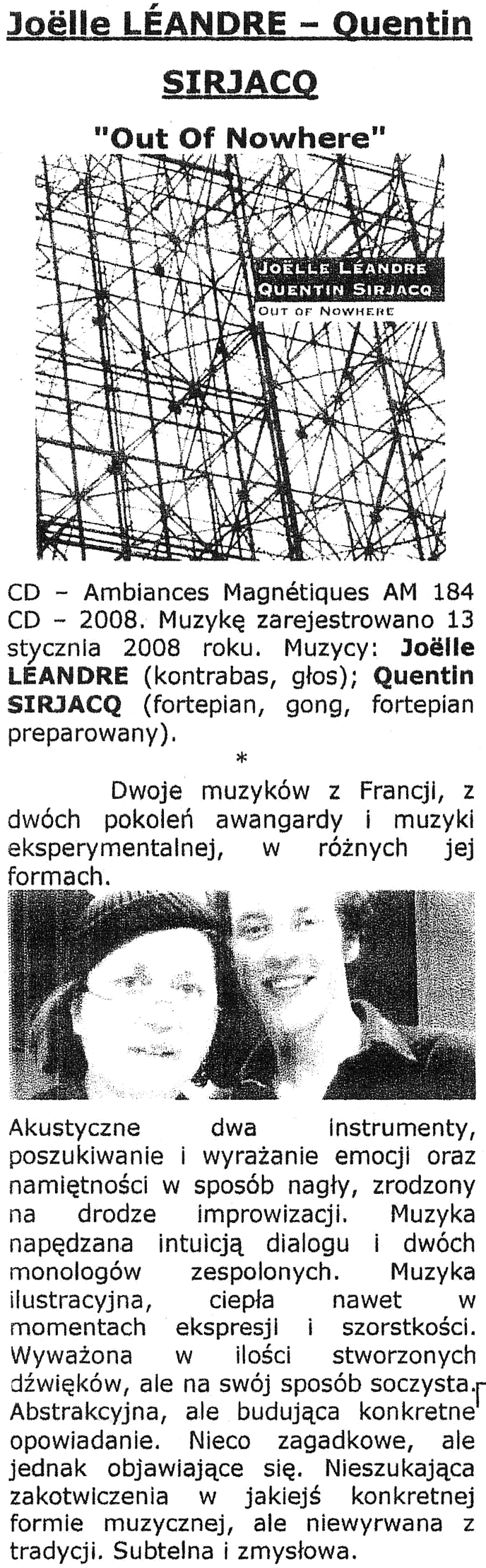
    Both Leandre and Sirjacq continue to play with exactness and control, giving rise to vivid pieces that, though packed with intense detail, are as tight as a wheel nut.

    Arbor Vitæ in The Wire

    “Modern Composition”, Philip Clark, The Wire, no. 302, April 1, 2009
    Wednesday, April 1, 2009 Press

    This two CD set documents American composer James Tenney’s — once described as the New York School’s fifth Beatle — complete music for string quartet and quintet, including his last completed work before his death in 2006, Arbor Vitae. This music is unique, with awesome performances by Quatuor Bozzini, but there are a few points of order to be raised nevertheless. The flimsy cardboard packaging into which the two CDs are stuffed offers no room for proper documentation of the music and, worse still, James Tenney’s name has been printed in such diminutive text on the front cover, it’s easy to overlook that this is a Tenney album at all. These details of presentation matter more with Tenney that for many composers. A work like Koan has a beautiful simplicity in the hearing, but if it’s pointed out that Tenney is using a mathematical process to generate a line that perpetually ascends, an extra layer of understanding is achieved. Arbor Vitae itself and Saxony, written 20 years previously, are sonic monoliths that twist through space motored by infinitesimally small graduations of tuning, changes that are felt more subliminally than actually heard. The set also includes five portrait-like pieces dedicated to Tenney’s mentors and inspirations (Feldman, Xenakis, Ruggles, Varèse, Partch), and the Diaphonic Study for piano and string quartet trades the piano’s equal temperament against subtler tunings in the string quartet: the punchline (and aural illusion) being, it’s the piano that sounds like it is in microtonal nirvana.

    This music is unique, with awesome performances by Quatuor Bozzini
  • 47
  • 48
  • 49
  • 50
  • 51
  • 52
  • 53
  • 54
  • 55