actuellecd

Blog

442 results
  • 19
  • 20
  • 21
  • 22
  • 23
  • 24
  • 25
  • 26
  • 27
  • Shruti Project in Vital

    “Review”, Dolf Mulder, Vital, no. 641, August 25, 2008
    Monday, August 25, 2008 Press

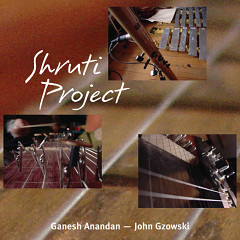
    A fascinating work that leads us into the world of microtonality. “Shruti is a Sanskrit word to denote pitch and interval. A word that also means ‘that which is heard, and the smallest intervals of pitch or the spaces between notes’. Ganesh Anandan was born in Bangalore City (south India). He studied Karnatic music before moving to Canada in 1976. Sound designer, composer, musician and instrument maker John Gzowski also studied karnatic music, played oud and guitar in jazz and folk festivals. With his own ensemble he toured Canada with a repertoire of Harry Partch compositions. Gzowski makes his first appearance in the catalogue of Ambiances Magnétiques, but he has many albums out. With very different musical and cultural backgrounds Anandan and Gzowski share their interest for microtonality. They met in 1996 when Gzowski invited Anandan for his micro-tonal Critical Band at The Music Gallery in Toronto, Canada. Gzowski works with a set of self designed micro-tonal guitars and stringed instruments. Anandan works with self built melodic percussion and string instruments based on the Indian Shruti system. To be more precise, on this new cd we hear Anandan playing a self-built electric 12-string shruti stick, plus metallophones, knajira, moorching, tincan and voice. Gzowski uses the Harry Partch guitar, 19_tone guitar, electric Dowel, ukelin and bells. For their Shruti Project they improvise and mix Indian, Indonesian and western musical styles very fluently and intelligently. Each piece opens a new world. Because they play on unknown and self-built instruments we hear new sounds, news colors. Also the music impresses as we hear very unusual tunings, strange textures and rhythms. It is difficult not to become fascinated by these enchanting interventions. Nonetheless not all improvisations worked for me, and left me with something missing. But all in all this is a very interesting meeting of east and west under the parameters of microtonality.

    A fascinating work that leads us into the world of microtonality.

    Édifices naturels in Vital

    “Review”, Dolf Mulder, Vital, no. 641, August 25, 2008
    Monday, August 25, 2008 Press

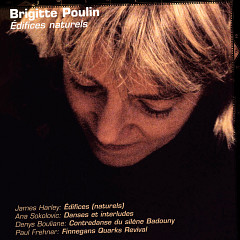
    Poulin is a classically trained pianist. Her repertoire covers all relevant periods, but she feels strongly attracted to modern classical music. Because of this she founded Trio Phoenix (flutes, cello and piano), an ensemble entirely dedicated to new music. Besides she worked with a great diversity of musicians and ensembles. “For a decade, Brigitte Poulin has been commissioning and premiering works by composers who, she thought, could help better define our own piano culture.” From this experience she choose four recent works that found their way to this CD: James Harley’s Édifices Naturels (2000), Ana Sokolović’s Danses et Interludes (2003), Denys Bouliane’s Contredanse du silène Badouny (1998) and Paul Frehner’s Finnegans Quarks Revival (2005-07). At the same she introduces four composers that were unknown to me… The composition by Harley consists of two parts. The first one bursts of energy. The second one is quiet and calm. The composition of Ana Sokolović is inspired on Balkan dance music. It consists of six dances and three interludes. As you can imagine rhythm is a dominant aspect here. The short work by Bouliane is a very ingenious and subtle composition. Finnegans Quarks Revival by Frehner is the longest work of the four. In eight parts this work evokes very different moods during its 35 minutes. Poulin’s choice offers a good insight into the richness of modern composed piano-music, and in Poulin we meet an accomplished and warm-hearted musician.

    Poulin’s choice offers a good insight into the richness of modern composed piano-music, and in Poulin we meet an accomplished and warm-hearted musician.

    (juste) Claudette in emoRAGEi

    “Critique”, Nicolas Pelletier, emoRAGEi, August 20, 2008
    Wednesday, August 20, 2008 Press

    Avec ce mélange de jazz déjanté, de «bruitisme» improvisé et de «beats» solides, le remarquable batteur Michel F Côté a cette fois les deux pieds dans la musique actuelle. Rien à voir avec le précédent album, Flat fourgonnette (Mescal free style) et son blues tribal (et quand même bien modifié) paru en 2005.

    Cet album en format quintet sous le nom (juste) Claudette a beau être bordélique, le tout n’est pas désagréable pour autant. Bernard Falaise est à son meilleur lorsqu’il utilise sa guitare pour générer des paysages sonores grandioses, mais il sombre malheureusement parfois dans la multitude de «petits mottons» de notes dissonantes. Des collaborateurs de longue date, Alexandre St-Onge, Jesse Levine et Gordon Allen, complètent l’équipe.

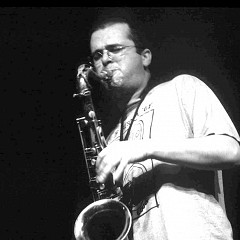
    Le jeu de batterie de Côté est, comme d’habitude, magnifique. Si spectaculaire, mais parfois tellement simple qu’on n’écoute que ça. Son instrument a une sonorité parfaite qui pourrait servir à de super «loops» pour des remixeurs comme Amon Tobin ou Moby. Qu’elle soit en avant-plan ou utilisée comme simple support, sa batterie est le centre d’attention. La sonorité de ce batteur, maintenant âgé de 50 ans, est tout simplement excellente, capable de rock, de pur jazz ou de lounge au détail près.

    Le jeu de batterie de Côté est, comme d’habitude, magnifique.
  • 19
  • 20
  • 21
  • 22
  • 23
  • 24
  • 25
  • 26
  • 27