actuellecd
  • This website is also available in English.

Blog

383 results
  • 40
  • 41
  • 42
  • 43
  • 44
  • 45
  • 46
  • 47
  • 48
  • March 31 – April 8, 2007: A Bozzini Concert Online

    Thursday, April 5, 2007 In concert

    You can listen to Bozzini Quartet’s Here and Now concert online until April 8, 2007. Recorded on February 11, 2007 at BBC Radio 3’s Maida Vale Studio 1 in London (UK), this concert gives us an opportunity to hear Bozzini Quartet playing works by Martin Arnold, Claude Vivier, Howard Skempton, and Markus Trunk. You can also listen to some audio clips of String Quartets, the quartet’s latest release.

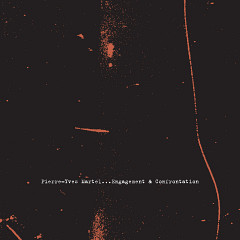
    Engagement & Confrontation in Double Bassist

    “Reviews”, Andy Hamilton, Double Bassist, April 1, 2007
    Sunday, April 1, 2007 Press

    Pierre-Yves Martel is a Canadian experimental bassist whose range includes classical, jazz and improvisation to early music on the viola da gamba. The 18 pieces for prepared bass here are entirely improvised. Martel’s approach is influenced by guitarist Derek Bailey’s conception of non-idiomatic improvisation — which was essentially a reaction against jazz — and by the genre of solo bass albums begun by Barre Phillips in 1968 with Journal Violone, involving virtuoso extended techniques. Martel prepares the instrument with paperclips, rings, sticks and other items placed directly on the strings and on the bridge, and he mixes arco and pizzicato. The 10-microphone recording set-up allows for a close scrutiny of texture. The recording, which has no overdubs, is projected through various pannings and mixes, creating a rich variety of aural perspectives that the sleeve notes describe as a kind of trompe l’oreille.

    The dominant approach is experimental noise as opposed to soundscape. Animals noises are suggested on Correspondences domestiques, and Fromages en crottes is as teeth-jarring as chalk scraped across a blackboard. Seems… far too… familiar is a witty exploration of rattling sounds, while the grindings of Eczema cleverly echo the scratching caused by the skin condition. But this is not purist free-improvisation: Martel does not avoid grooves, for instance, on the chirpily melodic Interlude No.2, and the jazzy Benibraun, while Dresser sets up an East European folkish strumming. Highly stimulating.

    Highly stimulating.

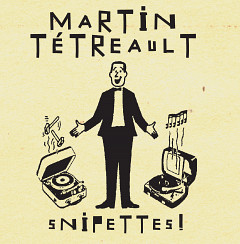
    Snipettes! in Nightlife

    “CDs du mois”, Olivier Lalande, Nightlife, April 1, 2007
    Sunday, April 1, 2007 Press

    Aujourd’hui connu surtout pour ses explorations bruitistes, le platiniste montréalais Martin Tétreault a connu des débuts nettement plus accessibles, qu’on peut maintenant découvrir ou redécouvrir par le biais de cette réédition de ses deux [sic] premières cassettes, parues en 1992. Également nommé Snipettes (morceaux 1 à 11), la première combinait musique concrète réalisée à la table tournante et trafiquage de morceaux populaires repris à l’orgue. La seconde, Morceaux choisis (titres 12 à 23), était une compilation de premières expériences d’échantillonnage pratiquées dans les années 80. Les deux sont autant musicales et humoristiques qu’audacieuses, sans trop de lien avec la nature académique [sic!] de la plupart des parutions de Tétrault ou d’Ambiances Magnétiques. On a l’impression d’y trouver un pendant queb à Some of My Best Friends are DJs de Kid Koala. Pas un précurseur. Autrement dit, le truc a remarquablement bien vieilli. (3,9/5)

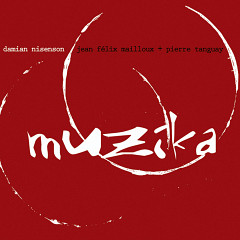
    Muzika in Coda Magazine

    “Review”, Ken Waxman, Coda Magazine, no. 332, April 1, 2007
    Sunday, April 1, 2007 Press

    Looking for a definition of musique actuelle? How about taking it from this CD of emotive Tango and Klezmer-inflected Free Music played by an expatriate Argentinean and two Québécois?

    The emotive tone of this notable disc is set by former South American native and European traveler Damian Nisenson, who plays sopranino, alto and tenor saxophones here and composed all the tunes save one traditional melody. Still, its precise shape is assured by Pierre Tanguay’s robust but perceptive drumming and the controlled potency of Jean Félix Mailloux’s pizzicato bass work.

    Although joyous freylach–like melodies are evident throughout, overall the tunes are played with an underlying catch-in-the-throat sadness. A constricted gullet doesn’t stop Nisenson from honking, double- tonguing or pitch vibrating. Yet even the sing-song Klezmer clarinet channeling in his piercing sopranino solos buttress the compositions’ nomadic allusions.

    Paspire, for instance may have a funky bass line and Nikadance a four-square drum backbeat. But on the former Nisenson’s serpentine, vibrating tongue stops references a Middle Eastern ney and on the later murmuring wide intervals and altissimo reed runs relate to Eastern European country dances. Paspire climaxes with double counterpoint from the plucked bass and vibrating slurs from the tenor, while the other piece’s side-slipping tongue slurs make room for unrefined guitar-like picking and spiccato strokes from Mailloux. Elsewhere Tanguay contributes minute bell ringing, cymbal taps and marital ratcheting.

    No translation is provided but it would seem Muzika can be defined as outstanding and sympathetic musique actuelle trio music.

    No translation is provided but it would seem Muzika can be defined as outstanding and sympathetic musique actuelle trio music.
  • 40
  • 41
  • 42
  • 43
  • 44
  • 45
  • 46
  • 47
  • 48