actuellecd

Blog

276 results
  • 17
  • 18
  • 19
  • 20
  • 21
  • 22
  • 23
  • 24
  • 25
  • July 5 – 16, 2006: Berthiaume Tours the USA

    Tuesday, July 4, 2006 In concert

    Guitarist Antoine Berthiaume will give a series of 6 concerts in the USA in July 2006. Hear Antoine Berthiaume live at the Sound Lab (Buffalo, NY) on July 5, at the Parish Hall (Cleveland, CA) on July 6, at the Bowerbird (Philidelphia, PA) on July 7, at the Zeitgeist Gallery (Cambridge, MA) on July 9, at the Bar 4 (Brooklyn, NY) on July 10, and lastly at the Downtown Music Gallery (New York City, NY) on July 16.

    July 7, 2006: Ensemble SuperMusique Live at the FIJM

    Tuesday, July 4, 2006 In concert

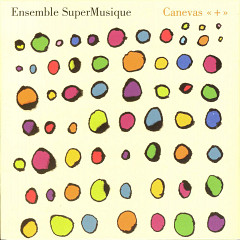
    For the “contamporary jazz” series of the Festival international de jazz de Montréal (FIJM), Ensemble SuperMusique (Jean Derome, saxophones, flutes, game calls; Joane Hétu, voice, alto saxophone; Diane Labrosse, sampler; Danielle Palardy Roger, percussions; Pierre Tanguay, percussions; Martin Tétreault, turntables) will present Canevas 2006 at the Musée d’art contemporain de Montréal on July 7, 2006.

    Songs of Place in The Wire

    “On Screen Review”, Rahma Kkazam, The Wire, no. 270, July 1, 2006
    Saturday, July 1, 2006 Press

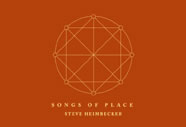
    The movement of the wind across fields of tall grass has always fascinated Canadian sound artist Steve Heimbecker. It creates wavelike patterns that resemble each other, but are never quite the same — an illusion of repetition, as he likes to call it. Illusions abound in the four video and surround-sound pieces brought together on this double DVD-V. In these elaborate portraits of rural and urban environments, mundane places and sounds bathe in a magical, timeless aura, taking on new meanings and a new lease of life.

    Each track recreates a complex spatiotemporal environment extending over considerable distances, thanks to Heimbecker’s trademark mapping system: he identifies the location’s geographical centre, traces a huge imaginary circle around it and then selects eight equidistant locations on its circumference corresponding to the cardinal points. Audio recordings are made at the eight sites, which are also filmed by video cameras. These onsite recordings introduce a live element into Heimbecker’s mapping system. On the most compelling track, Songs of Place: Springwater, video images of rural expanses flash across horizontal bands of varying widths, evoking an endless journey through remote countryside. Accompanied by a dense, hypnotic tapestry of sound, made up of bird calls, rustling, hisses, wind-like sounds and enigmatic tinkles, these images create an impression of floating in a timeless limbo. Although Songs of Place: Vancouver works less well — the images of a bustling city flitting across four narrow vertical bands are reminiscent of a travelogue more than anything else — Songs of Place: Halifax more than makes up for it. Each of its eight juxtaposed images depicts an incessant flow of cars, suggesting the passing of time. As one car takes the place of another, they create an impression of perpetual motion. The illusion of repetition, as Heimbecker would say.

    … an impression of perpetual motion.

    Ellen’s Bar in Downtown Music Gallery

    “Review”, BLG, Downtown Music Gallery, July 1, 2006
    Saturday, July 1, 2006 Press

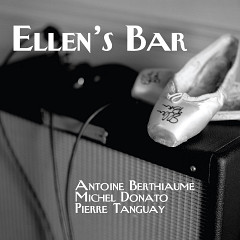
    Leading such an outstanding group of players in the production of an album requires much candor and courage. Guitarist Antoine Berthiuame is joined by Michel Donato and Pierre Tanguay in this dynamic trio that will groove your heart and soul. Ellen’s Bar unveils a different side of Antoine’s multifaceted activities. The eleven originals presented here are bursting with vitality and showcasing a firm and lively guitar style, while relying strongly on the jazz trio tradition. Except for the pieces written by Donato and Tanguay, Berthiaume has dedicated all his compositions to friends made in Montréal and New York over the last few years, while he was studying. So far, Montréal-based guitar great, Antoine Berthiuame, has been involved with three superb improvised discs, Soshin, duos with Derek Bailey & Fred Frith, Leaves and Snow, a trio with Quentin Sirjacq & Norman Teale and duo with Japanese guitarist Takumi Seino. For this new disc, Antoine unveils something completely different, his jazz guitar trio. Antoine has put together an excellent trio of veteran players, with Michel Donato on bass and the ubiquitous Pierre Tanguay on drums. The trio swings with infectious glee. Antoine wrote all but two of the tunes, with one by each other band-member. Antoine has a sunny, Pat Metheny-esque tone, yet writes pieces more difficult than Metheny often does. The trio play tightly together, as well as around one another in circular motion. This is a marvelous trio, where each member is an integral part of the whole. On Mr. Donato’s Le Dentiste, the trio swirls around one another, yet stay connected throughout. Antoine sounds like Lenny Breau here, playing with astonishing grace and that inventive spirit. Weiny is a lush, elegant bluesy ballad that is just so fine. The title track is a sly one with a rich melody that you will forget. The ever-dependable and ever-crafty drummer, Pierre Tanguay, is a marvel of inventiveness, always balancing between swinging and playing around the pulse perfectly. Ellen’s Bar, is this month’s best jazz guitar disc by one trio, whereas the Tom Chess disc mentioned last week featured six trios.

    The eleven originals presented here are bursting with vitality and showcasing a firm and lively guitar style, while relying strongly on the jazz trio tradition.

    Idiolalla in AllMusic

    “Review”, François Couture, AllMusic, July 1, 2006
    Saturday, July 1, 2006 Press

    This studio meeting features the husband-and-wife duo Barnyard Drama (which has expanded to a quartet since these August 2004 sessions) and Vancouver experimental vocalist DB Boyko. All three also performed in Danielle Palardy Roger’s oratorio Bruiducœur, prières des infidèles, hence the Ambiances Magnétiques connection. So we have two marvelously crazy female vocalists (Boyko and Christine Duncan) backed by Jean Martin, who sticks solely to acoustic drums — in Barnyard Drama, he also plays turntables and electronics. Boyko and Duncan are highly compatible. Both are fond of onomatopoeias, characterization, and all-out wackiness with a sense of humor. In their own words, Idiolalla is an invented language disease. And you do get the feeling that something is wrong with them, although in this case two wrongs do make a right: the singers feed off each other’s vocal inventions, staging improbable plays in an alien dialect, with Martin punctuating moods and provoking new situations. The trio goes from pseudo-Inuit singing in bap to mock-Italian opera (funala funala coccino), to epic madness in the nine-minute soul sausages, which could almost be heard as a soap opera episode. The nakedness of the project occasionally feels like a constraint, the sound palette of the album remaining rather narrow, but fans of creative singing should definitely investigate. Just get also Barnyard Drama’s I’m a Navvy or Roger’s Bruiducoeur… for a fuller picture of these artists’ work.

    … onomatopoeias, characterization, and all-out wackiness with a sense of humor.

    Chansons de la belle espérance in AllMusic

    “Review”, François Couture, AllMusic, July 1, 2006
    Saturday, July 1, 2006 Press

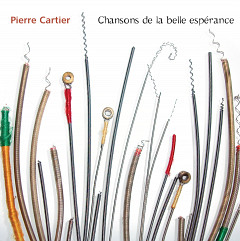
    Chansons de la belle espérance is Pierre Cartier’s third song cycle, his second with this line-up and his most achieved work to date. The bassist’s intention was to produce a set of love songs in continuity with the French jazz standards. But Cartier being the unique artist that he is, the resulting music outgrows its original concept. What Cartier offers here is a delightful set of moving songs anchored in jazz ballad, Baroque counterpoint, (extremely well controlled) avant-jazz dissonances, and improbable melodies. Yes, improbable, because the man has a very personal sense of melody favoring unusual intervals and a certain solemnity that inscribes this album in direct filiation with «Dis, Blaise…», his previous effort. Supporting Cartier is the equivalent of an Ambiances Magnétiques All-Star band, with Jean Derome (sax and flutes), Jean René (viola), Bernard Falaise (guitar) and Pierre Tanguay (drums), all brilliantly executing and extrapolating on Cartier’s scores. Highlights include Dédicace de la belle espérance and its striking melody that immediately sets the tone for the whole album; the lament La chanson de Marie, the song coming closest to the plain chant stylings of «Dis, Blaise…»; and the devastatingly beautiful Mirabeau, the pinnacle of Cartier’s songwriting to this date. Portrait, more overtly jazzy, is the only weaker track on the album, and only because it sticks too close to the artist’s original idea. Cartier had based his previous two projects on the works of French poets (Yves Bonnefoy for Chansons de Douve, Blaise Cendrars for «Dis, Blaise…» chanson du Transsibérien). This time, he selected poems from a number of Québécois poets (Michel Garneau, Gaston Miron, Pierre Perrault, Paul-Marie Lapointe), plus one by Apollinaire and another by himself — a first. English-speaking listeners can rely on Cartier’s short analysis of each poem to get the gist of it. But in the end, and even though these poems rank among the best in Quebec literature, these songs will move you, whether you understand them or not. Cartier’s soft, fragile tone and Gregorian solemnity probably make him a case of love-him-or-hate-him; honestly, this reviewer would not know. Highly recommended.

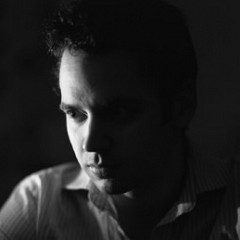
    But in the end, and even though these poems rank among the best in Quebec literature, these songs will move you, whether you understand them or not.
  • 17
  • 18
  • 19
  • 20
  • 21
  • 22
  • 23
  • 24
  • 25