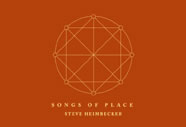
Songs of Place, a series of sound portraits of urban and rural places (Halifax, Montréal, Vancouver) initiated by the tireless Steve Heimbecker in the year 2000, is the latest stop on our journey to the heart of art and the renewal of formal repertories. This elaborate, multi-perspective work evolved in accordance with the artist’s travels, often occasioned by invitations or artist residencies in Canada. Songs of Place was created in the context of a residency at Oboro, a vital and atypical player on the Montréal scene (www.oboro.net), and came out in the spring of 2005. Using multiple recordings produced over a brief period of time, these works seek to capture the sound space that is specific to a place, so as to reveal the place in-itself. It is a journey to the heart of a place’s physical resonance, an interior journey that transcends the world of the senses.
The series Songs of Place is as difficult to categorize as Steve Heimbecker himself. It is a visual and sound work that fully engages the audience’s senses and sensibilities. This work is at the crossroads of electroacoustic composition, soundscape and acoustic ecology, video editing and sound sculpture. Category aficionados, beware! Steve Heimbecker is the perfect illustration of the Nietzschean principle according to which the saving virtue of a journey is only to be found on the zigzag of the crooked path.
A Saskatchewan native Steve Heimbecker received a fine arts degree from the Alberta College of Art and Design (Calgary, Canada). Though he has never abandoned his interest in the visual, or more specifically spatial dimension, sound has become the main focus of his creative practice. Heimbecker, who actually defines himself as a sound sculptor, is interested in the sculptural effect of sound. Recognized for his works in the audio art and electroacoustic fields, he has also created several sculptures and installations that incorporate sound components and sound-generating devices of his own invention.
Heimbecker’s installations are part of a very rich tradition of alternative music and sound production system design that go back to the experiments of the Futurists and Dadaists. It is in this vein that he presented the personal exhibition “Soundpool: The Manufacturing of Silence” at the Illingworth Kerr Gallery of the Alberta College of Art and Design. In this whimsical installation, eight large-scale paintings, which also function as loudspeakers, engage both eyes and ears. Once activated the installation envelops the audience in an inaudible though physiologically perceptible three hertz vibration amidst a cacophony of motor and machinery noise. This installation was subsequently shown in Montréal (2001), Quebec (1996) and Edmonton (1996).
As part of the international exhibition and conference “The Tuning of the World,” held at the Banff Centre and the Nickle Arts Museum of the University of Calgary, and inspired by R Murray Schafer’s eponymous book, Heimbecker created the installation The Acoustic Line as the Crow Listens (1993), in which he explored the acoustic spaces of vast outdoor places. To accomplish this work the artist, who is also a founding member of The World Forum for Acoustic Ecology, recorded eight points simultaneously over a linear distance of 1.5 kilometres in order to develop “sound mappings”, and to engage in a spatially rich auditory experiment by using the speed of sound in the natural environment as a sonic event that can be recorded and hence played back.
During the same period Heimbecker developed techniques for mixing direct and prerecorded sounds for quadraphonics and octaphonics on a multichannel system that he designed. A series of concepts such as “the soundpool”, “sound sailing”, “acoustic mapping”, and “dynamic voltage mapping” emerged from these techniques, which envelop the listener in a rich sonic fabric. This technical process follows in the footsteps of concrete music, initiated by pioneers such as Pierre Schaeffer, who used recorded sound in the environment to create works.
Songs of Place is a work worthy of total immersion, for even though it appears to be solely about the everyday life unfolding in a place, the resulting portraits reach beyond that level. The everyday in fact takes on an extraordinary quality when it is rendered audible at such a high resolution. The two DVDs contain four multiphonic video and sound portraits of places (Halifax, Montréal, Vancouver and Springwater, Saskatchewan), which were created using quadraphonic recording and production techniques. The guiding principle is based on applying a mapping system, conceived by the artist, to identify a geographically determined centre and circumference. In choosing eight to ten equidistant locations, corresponding to the cardinal points, a virtual circle is traced and an omni-directional and quadraphonic recording is made at each location. The still images and video are turned toward the outside of the circle’s perimeter and are recorded at the same locations as the audio. One is thus at the heart of the interface, understood in the Kantian sense of the term.
The system essentially functions like the score of a composition that calls both on artistic intention and randomness.
The recording locations are all outdoor public spaces: streets, crossings, parks, riverbanks and seashores. This particular mapping of space reveals a complex temporal organization and experience based on a spatial deployment that succeeds in capturing what many approaches fail to accomplish: the expression of a place in-itself, the revealing of the identity and heritage of our public spaces.
Though these portraits are essentially meditations on the currents that nourish these places, they also allow the audience to switch viewpoints between the multiple subjective perspectives unfolding along the circumference of the mapped space and between its periphery and centre. A space where we find ourselves fixed but not still, wavering between immobility and movement. In the same way that walking is an odd forward flight predicated on the dance of disequilibrium, with Songs of Place Heimbecker gives us the opportunity to understand the multidimensional currents of a place. In fact, his works as a whole are perhaps best characterized through the analogy of the squaring of a circle: the eight points of the octaphonic audio evoke a cube, or, by extension, an immersive sound experienced in four dimensions (the fourth being time). Thus submerged in a pool of sounds and the resonance of a place, we perceive the out of the ordinary as we are plunged into a musical universe of a rare serenity. In closing, Steve Heimbecker’s greatest victory, that which makes Songs of Place a remarkable and significant work, is to invite us to discover time in its dual dimension of flow and suspension, as a song both visible and audible. [English translation: Bernard Schutze]