actuellecd
  • This website is also available in English.

Blog

258 results
  • 35
  • 36
  • 37
  • 38
  • 39
  • 40
  • 41
  • 42
  • 43
  • February 12, 2005: Mois Multi Presents Soft Avatar, Québec City

    Tuesday, January 25, 2005 In concert

    Mois Multi, a festival of technological art, presents Soft Avatar, a concert of performances made with four original digital instruments created by the audio art collective Avatar, on February 12, 2005 at the Multi hall of Québec City’s Méduse complex. Jocelyn Robert, Louis Ouellet, Mériol Lehmann and Éric Morin will make a demonstration of “Map-O-Mix.” Philippe Pasquier will use the “MachinesMOTOR” in an multi-channel audiovideo context. Jocelyn Robert will perform with the “MRNJR” (a double Macchina Ricordi) and Georges Azzaria performance will feature the “DÉCHIQUETEUSErecoleuse” (CUTTERpaster). Finally, Christian Calon will present four compositions, each of them executed with one of the four software.

    Puce à l’oreille in emoRAGEi

    “De zéro à disque”, Nicolas Pelletier, emoRAGEi, January 21, 2005
    Friday, January 21, 2005 Press

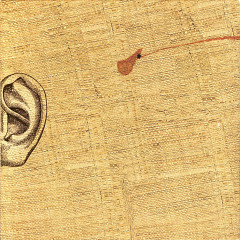
    Violoncelliste et chanteuse au parcours hors du commun, Mélanie Auclair utilise son instrument comme les Bernard Falaise, Charles Papasoff ou Joane Hétu utilisent leur guitare, saxophone ou voix: avec originalité, recherche et une certaine complaisance dans la production de sons spéciaux. Cette Puce à l’oreille est un assemblage de diverses rencontres faites au fil des expérimentations ou improvisations. En plus des sus-nommés, le machiniste Papa Sucreah, le pianiste Vincent Réhel, Éric Auclair, Guy Thouin et Michel Dubeau participent aux pièces de Mélanie. Études de sonorité, minimalisme, couleurs internationales (grâce aux percussions indiennes de Thouin et au shakuachi de Dubeau) et dialogues vocaux ou instrumentaux viennent tour à tour illustrer cet album qui s’écoute mieux une pièce à la fois, que les unes après les autres, tellement elles sont différentes, tant dans leur approche que leur résultat. N’y cherchez pas de liens avec Jorane. Rien à voir, c’est complètement un autre univers.

    Mingus Erectus in The Gazette

    “Review”, Irwin Block, The Gazette, January 20, 2005
    Thursday, January 20, 2005 Press

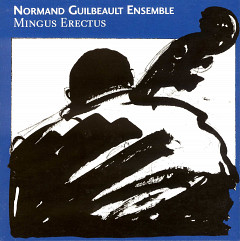
    The legacy of Charles Mingus, the tempestuous bassist/leader who recorded powerful statements reflecting the American Condition in the 1950s and 1960s, has never been fully explored. Bassist Normand Guilbeault has captured seven pieces the admixture of joy and anger that is Mingus. Add to that one original by reedist Jean Derome to make up this live recording. Trumpeter Ivanhoe Jolicoeur and clarinetist Mathieu Bélanger join Jean Derome in some outstanding solos. Mingus fans will appreciate the passion in the 12-minute opener, Pithecanthropus Erectus, and the closer, Moanin’. In between are some lesser-known Mingus works. Guilbeault and drummer Claude Lavergne update Fables of Faubus with shouts in honour George Dubya, all in the anti-establish Mingus spirit. 4

    … all in the anti-establish Mingus spirit.

    Douleur sourde in L’Express

    “Chansons sans pitié”, Dominique Denis, L’Express, January 18, 2005
    Tuesday, January 18, 2005 Press

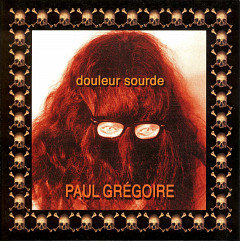
    La notice biographique nous présente Paul Grégoire comme un «sculpteur, performeur et musicien» qui occupe la scène artistique québécoise depuis le début des années 70. À l’écoute de Douleur sourde (Ambiances magnétiques/SRI), son premier CD, on aurait pu ajouter «poète, chanteur country, crooner impénitent et saboteur de repères familiers».

    Je serais presque tenté d’inscrire «humoriste» au bas de la liste, vu l’esprit tordu-et tordant-qui habite ces détournements de monuments, transformant Only You en Ti-Minou et Blue Monn en… Moumoune, selon un procédé d’adaptation aussi libre que grivois qui sévit dans toutes les cours de récréation dignes du nom.

    Mais pour emprunter la devise d’une ancienne revue satirique, ce n’est pas parce qu’on rit que c’est drôle. Comme tous les gratteurs de bobos, Grégoire ne se fait pas saigner pour nous choquer ou nous divertir, mais bien pour rendre visible-et audible-sa douleur sourde.

    Mingus Erectus in AllMusic

    “Review”, François Couture, AllMusic, January 17, 2005
    Monday, January 17, 2005 Press

    Back in 1996, the Normand Guilbeault Ensemble had recorded Hommage à Mingus (“Tribute to Mingus”) for the label Justin Time as the culmination of a couple of years of work and shows. The group carried on, but the Mingus project was put on the shelf, only to be dusted down a couple of times a year for special events. Slowly, the quintet came back to Mingus’ body of work, changing its repertoire and by February 2004 the Mingus project was back to full speed, ready to be captured live over two nights at the Va-et-Vient, one of Montréal’s most forward-thinking jazz clubs. Mingus Erectus offers seven revamped Mingus standards and not-so-standards, plus one original by sax player Jean Derome. Guilbeault’s other partners are Ivanhoe Jolicoeur (trumpet), Mathieu Bélanger (clarinet) and Claude Lavergne (drums). The set starts with a vigorous rendition of Pithecanthropus Erectus, led by Guilbeault’s quiet yet oh-so-efficient bass line. If that one makes a predictable opener, the choice of All the Things You Could Be By Now If Sigmond Freud’s Wife Was Your Mother and Tijuana Gift Shop are more surprising and a great change of pace. Bélanger throws in a dizzying solo in the first one, although the real treat is found in the group playing, tight and playful. The lighter Tijuana Gift Shop works out nicely but leaves less of an impression, while the ballads Conversation and Peggy’s Blue Skylight are treated with the utmost respect — which does not rule out some creative melodic developments. Fable of Faubus gets a very different treatment. Entirely updated to (dis)honor US President George W. Bush, this biting Fable of (George Dubya) Faubus adds a lot of crunch — good thing most listeners of creative jazz are of left-wing persuasions! Guilbeault and Lavergne’s vocal imprecations make the piece stand out on this otherwise instrumental record and, if the musical treatment sticks rather close to home, the political hijacking will surely please Eugene Chadbourne fans (and a few others too!). Derome’s MDMD is a nice slow-bop number, although it lacks some fancy. The set ends on a festive reading of Moanin, led by Derome’s swinging baritone sax. This second installment in Ambiances Magnétiques Jazz series makes a convincing statement, and the excellent live capture adds extra ambience to the performance.

    This second installment in Ambiances Magnétiques Jazz series makes a convincing statement, and the excellent live capture adds extra ambience to the performance.
  • 35
  • 36
  • 37
  • 38
  • 39
  • 40
  • 41
  • 42
  • 43