actuellecd

Blog

258 results
  • 27
  • 28
  • 29
  • 30
  • 31
  • 32
  • 33
  • 34
  • 35
  • Veuillez procéder, Rouge ciel in Agartha

    “Rouge Ciel interview”, Marcello Marinone, Agartha, March 15, 2005
    Tuesday, March 15, 2005 Press

    One of the most interesting and original new bands, a mixture of rock, prog, jazz, folk and contemporary music. We talk with Rouge Ciel’s violinist: Guido Del Fabbro .

    1. The beginning, the history, the influences, the origin of the name, of Rouge Ciel

    The band started in 1996 as an acoustic guitar/violin duo (Antonin Provost and me).The name come from this period but sincerely, I really don’t know when it come out, but like our music it’s more an impression than anything else. By the way in French it mean «red sky» or in fact «sky red» (not as: the sky that is red but as a color name). In ’97 we met Simon Lapointe, jamming at a high school winter camp and Némo Venba joined the band one year later (for 3 months R.C. was a sextet). For the first 3 years we were mainly influenced by early jazz-rock, acoustic projects from Windham Hill records, late ’70 ECM albums and some prog bands old stuff but new- music and contemporary music were gradually incorporated in the band composition process and general approach.

    2. Your first album will be reviewed by the critics as strongly referred to the historical Canadian band Conventum…which is your opinion.

    Even we never tried to imitate their work Conventum surely was a great inspiration for us. The way they blended their folk influences into their own vision of music is incredible. What André Duchesne, René Lussier and Jean-Pierre Bouchard did since Conventum are still strongly interesting us.

    3. Make a description of your music

    It’s a blend of new-music, folk, dirty rock, contemporary and classical influences. Sometimes separately and sometimes at the same time.

    4. Which aspects of your music do you think are really innovative elements? and which ones are taken from the tradition or comparable to other artists works?

    I think it’s quite impossible to say that you are making something really new in music. It’s all about how you use your imagination to construct a music of your own . In Rouge Ciel the possibilities of different instrumentations and playing and the restriction of having no bass player really build our sound. We are inspired by the past and our era but we are very curious of what we will do with all this in the future. The greatest thing, I think is that we can’t really know.

    5. What about the Canadian alternative music scene? There are some interesting new bands? Do you know some Italian bands?

    For the last two years I’ve been listening to a lot of new song writers (franco and anglo) from Montréal and Quebec area, to old rock, country and bluegrass albums.So apart of the “musique actuelle” scene that I’m close of I have’nt seen that much in alternative scene.There is one band I’m in you should look at,it’s Concorde Crash you can hear some stuff on concordecrash.com. Shame on me I don’t know much about the alternative italian music scene since PFM but really i must look at it. Here, there is a revival of old popular songs in the italo-canadian musical community that is very interesting.

    6. A new album is ready to release, the difference from your first, the release date, a brief history about the production.

    We all have taken some experience since the first album so it was easier to work on this one. We recorded it in 3 days in October ‘04 at the Studio Victor in a big room with an acoustic piano. We played all the main parts the 4 of us at the same time and after we add some overdubs. I think this album sounds better, it’s more raw and have more soul in the producing process. We mixed it at the 270, a smaller studio with a really good mixing board. I hope it will please our public because we’re happy about the result. The funny thing is that even if it’s a new album the more recent compositions are from 2000. It’s suppose to be available in the beginning of spring.

    7. There is a future for non-conventional music in your opinion?

    Yes, because non-conventional music and musicians are a source of inspiration for more mainstream artists.

    8. Which is the feedback for your first album? Are you satisfied?

    The critics were very good with us in general and we are pleased with that. The sales part is an other story but it’s not that bad.

    9. Who or what inspired your first two albums?

    We composed this music between the mid ’90’s and 2000 (from 15 to 20 years old) and it was a period of great musical discovery so it’s hard to point on one or two specific things that inspired us . It’s more the open state of mind that we were in that was important.

    10. Which musical aim do you want to reach with your compositions?

    Challenging ourselves, having fun and play with feeling no matter how complex or not the music we are playing is and never be afraid of trying new ways of composing or playing our instruments.

    11. By the way, which kind of method do you prefer to use to obtain new solutions in your compositions?

    We tried a lot of concepts like everybody is writing the part of someone else or everybody write a section of a piece etc. Sometimes it worked at the first try but a lot of time the results were not as good as the intentions so the pieces did not make it to the albums. Individually we all have our ways of deconstructing or re-exposing basic ideas using conceptual restrictions of all kind. Writing parts that are not in the natural field of the players is maybe one that we all enjoy.

    12. What about the choice to be a full instrumental band? Do you think it could be possible to incorporate vocal parts in your music?

    It’s an esthetic choice in this band. The four of us could worked on songs together but it would be something else than Rouge Ciel.

    13. It will be possible to see Rouge Ciel perform Live in Europe?

    We have nothing at this time but we will work on it.
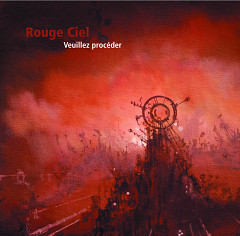
    One of the most interesting and original new bands, a mixture of rock, prog, jazz, folk and contemporary music.

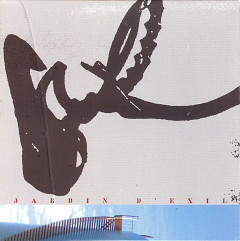
    Jardin d’exil in Splendid E-Zine

    “Review”, Sarah Zachrich, Splendid E-Zine, March 11, 2005
    Friday, March 11, 2005 Press

    Ensemble en Pièces are a jazz quintet about whom information is kind of tough to come by. However,as their liner notes — such as they are — are en Français and Jardin d’exil was financed by a Canada Council for the Arts grant, I’m going to go out on a limb and assume that they hail from somewhere in Quebec. With all this talk of the Montréal scene, Americans seem to have overlooked Canadian musicians who actually speak French. But as Jardin d’exil contains no vocals, it doesn’t make a difference what language the players speak… unless you’re talking’ about the universal language of music, baby.

    Jardin d’exil is a very well put-together record, from the interestingly designed package to the production to the music itself. At first listen, Ensemble in Pièces are the kind of inviting, noninvasive jazz group that undeservedly evokes thoughts of coffeehouses and college-freshman poetry slams. They delicately tread the line between composition and improvisation, usually remaining calm and soothing. Repeated spins of the disc reveal a high level of skill at both performance and emotional manipulation. The train-station wistfulness of For Tomasz is one example. Another is a certain piece of Alborada I: Andy King’s pristine trumpet solo is gradually joined by freely played autoharp and kalimba (lending an interesting world-music feel for a second), double bass, piano and drums, with a variation of the trumpet figure being picked up by sax and the whole quintet traveling in magical tandem for a short time. It’s one of the album’s most engaging sections.

    Jardin d’exil isn’t an especially challenging record, especially if you’re into jazz. There’s very little of the avant-anything here…just some very nice playing.

    Repeated spins of the disc reveal a high level of skill at both performance and emotional manipulation.

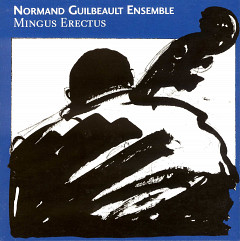
    Mingus Erectus in Montreal Mirror

    “Review”, Len Dobbin, Montreal Mirror, March 10, 2005
    Thursday, March 10, 2005 Press

    It’s now been 26 years since bassist/composer Charles Mingus died of Lou Gehrig’s disease, and his music lives on. The leaders of these two loving, live-quintet tributes are both bassists. Guilbeault’s, done here in Montréal, has Jean Derome, Mathieu Bélanger, Ivanhoe Jolicoeur and Claude Lavergne on eight tracks including Derome’s MDMD and a rousing Moanin’ (my radio theme for many years).…approach the music with reverence and spirit, though Guilbeault’s is a little more on the cutting edge. Both 9/10

    … approach the music with reverence and spirit…

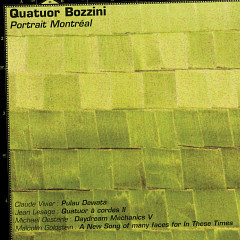
    Portrait Montréal in emoRAGEi

    “Portrait Montréal”, Nicolas Pelletier, emoRAGEi, no. 23, March 9, 2005
    Wednesday, March 9, 2005 Press

    Le Quatuor Bozzini présente ce Portrait Montréal en interprétant deux compositeurs québécois (Claude Vivier et Jean Lesage), une œuvre de Michael Oesterle (Daydream Mechanics V) d’après la poésie de Nicole Brossard et une commande à Malcolm Goldstein, A new Song of many faces for In These Times. Personnellement, c’est Pulau Dewata, écrite par Vivier en hommage à la musique de Bali, qui m’a le plus touché. La rythmique, la mélodie particulière et l’esprit de la danse de Bali y sont tout à fait reconnaissables, pour peu que vous en ayez écouté. Habituellement joué avec de somptueuses percussions traditionnelles, ça devient de la pure merveille lorsque orchestré pour le Quatuor Bozzini qui comporte deux violons, un alto et un violoncelle. La suite de ce disque est plus ardue pour le profane, mais le tout demeure un joli portrait de nos compositeurs montréalais.

    … mais le tout demeure un joli portrait de nos compositeurs montréalais.

    Mingus Erectus in emoRAGEi

    “De zéro à disque”, Nicolas Pelletier, emoRAGEi, March 8, 2005
    Tuesday, March 8, 2005 Press

    Le contrebassiste Normand Guilbeault voue un véritable culte à Charles Mingus qui a roulé sa bosse dans le monde du jazz de 1940, d’abord avec l’orchestre de Louis Armstrong, jusqu’à son décès en 1979. Mingus fut l’un des rares contrebassistes à composer, et surtout, à mener des ensembles de jazz. Après avoir croisé la route des Charlie Parker, Miles Davis, Bud Powell, Art Tatum durant les années 1950, il se tourne encore plus vers l’avant-garde durant les années 1960. Il participera à plus d’une centaine d’albums. Guilbeault, lui, a fondé cet ensemble depuis une quinzaine d’années, par simple bonheur d’interpréter le vaste répertoire de ce géant du jazz. Avec des calibres de la musique actuelle et jazz comme Jean Derome (sax, flûtes), Ivanhoe Jolicœur (trompette), Mathieu Bélanger (fluide clarinette souvent mise en évidence) et Claude Lavergne (batterie), Guilbeault s’éclate visiblement avec Mingus. On passe du bordel le plus complet (Pithecanthropus Erectus) aux morceaux plus accessibles, comme Conversation ou Tijuana Gift Shop, aux vives couleurs mexicaines. Très intéressant!

  • 27
  • 28
  • 29
  • 30
  • 31
  • 32
  • 33
  • 34
  • 35