actuellecd

Blog

258 results
  • 1
  • 2
  • 3
  • 4
  • 5
  • 6
  • 7
  • 8
  • 9
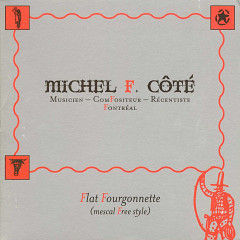
  • Flat fourgonnette (Mescal Free Style), Michel F Côté in UnAmerican Activities

    “Review”, Ken Waxman, UnAmerican Activities, no. 75, December 19, 2005
    Monday, December 19, 2005 Press

    Québécois have been alternately fascinated and repulsed by the United States — and by extension American music — from the time the French-speaking Canadian province began to assert its distinct identity in the early 1960s. Obvious exceptions like Céline Dion notwithstanding, names and language prevent most Québécois artists from affecting a similar transference to that taken by English Canadians, whose shared language with the masses of English speakers south of the border manifests itself in discomfort with many aspects of American values and culture at the same time as proximity allows them to pass as ersatz Americans. Yet, as anyone who has ever seen Québec situation comedies or pop performers can attest, the lure of the U.S. remains in the independence-minded province.

    Percussionist Michel F Côté’s Flat Fourgonnette (Ambiances Magnétiques) is simultaneously a celebration of and a satire on Yankee musical imperialism. A member since 1988 of the Montréal-based Ambiances Magnétiques collective, Côté and the others call their sounds musique actuelle — music of today — and mulch together rock, folk, contemporary classical, jazz, and other influences. Côté, however, is involved with many dramatic, dance, and film projects, to the extent that Flat Fourgonnette’s 19 tracks are often as theatrical as they are musical, with the 20 featured musicians taking on many actorly roles.

    A member of ensembles including the jazz-rock trio Klaxon Gueule, the percussionist provides his interpretation of American music by going right to its source: early folk, country, and pop music. Not only does he mix in excerpts from recordings of Mississippi John Hurt, Hank Williams, and Clarence Ashley, to name three, but many of the tunes have a purported country & western background. That isn’t too far-fetched since cowboy hat, bolo tie, and boot-wearing country singers have long been as much a part of rural French-Canadian spectacles as they are in performances elsewhere in North America.

    The particular talent of Côté, who plays drums, percussion, harmonica, organ, and sings here, is to produce his own songs written in an idiom similar to the actualités so that there’s no fissure. Accordion, steel guitars, and fiddles, shouted “yee-haws”, pinched-noise harmonies and — as Côté puts it — “poor whistling” are therefore put to use alongside the refined and reliable improvisations of folks like trombonist Tom Walsh and reedist Jean Derome. All in all, the treatment of the material is more like the gentle spoofs of guitarist Eugene Chadbourne than the savage parodies of Frank Zappa.

    Among the stand-out tracks are My Girl (“my gal’s a corker/ she’s a New Yorker”) sung in near moribund dead-pan fashion in English by AnneBruce Falconer, whose voice is balanced on top of the quivering soundscape of Bernard Falaise and Claude Fradette’s weeping electric guitars; and Sitting Bull, a 1940s-style faux C&W instrumental featuring speedy fills from Falaise and Frédéric Boudreault on electric bass with Côté contributing vocal gurgling, drum beats, and the rhythmic shaking of a vitamin bottle.

    Also featured are sound manipulations such as House Carpenter and Parti longtemps. The latter uses a false stereo echo chamber to have Hank Williams distantly singing one of his more lachrymose ballads, accompanied by what Côté calls “cheap polyrhytme” from the percussionist plus simple guitar licks and metallic slashes from Frank Martel’s theremin. The former mixes stinging rock guitar distortion, backbeat drumming, organ crescendos, and kazoo-like twittering into a four-chord punk rock-like outing, only to have the tune fade into a recording of old timey banjoist Clarence Ashley picking the same rhythm acoustically.

    Since Côté describes the CD as being poetic like “an old story-telling buffalo”, whose imprecise recollections include cowboys and horses, a saloon and its pretty manageress, a love story, “and even an Indian or two”, it’s not unfair to note that when his compositions are serious, they take on a certain Old World romantic flavor. Yeux de Lucie, for example, features clarinetist Jean-Denis Levasseur, trumpeter Nemo Venba, trombonist Walsh — a committed jazzer as well as a musique actuelle participant — guitarist Bernard Poirier, and Lou Babin on accordion in a brassy lilt, midway between a fanfare and a tarantella.

    Meanwhile Incendies, which completes the program, becomes a Beaux Epoch café waltz performed by Falaise, overdubbed on both electric bass and guitar, Côté on glockenspiel and percussion, and Luzio Altobelli on accordion. Only the squealing split tone from the alto and baritone saxophones of Derome — another long time Ambiances Magnétiques participant, who also plays jazz—hints that this is anything more than easy-listening fluff.

    If it sounds middle of the road, at least this tune is musically sophisticated, high-class fluff, just as many of the other compositions transcend satiric origin to reveal the sensitivity at their cores. Flat Fourgonnette, Côté’s “album of American music” shows that the Québécois, like the Dutch and the Italians — and unlike Americans — can amalgamate energy, passion, caricature, and cacophony into a sonic package. Without bitterness or vulgarity, the outcome is a product that entertains at the same time it stretches sound barriers.

    Since many American improvised music fans are familiar with the distinctive music coming form the Netherlands and Italy, a few more should venture a few miles north of the US’s Eastern border and discover the creations of Côté and his colleagues in musique actuelle.

    Côté… can amalgamate energy, passion, caricature, and cacophony into a sonic package. Without bitterness or vulgarity, the outcome is a product that entertains at the same time it stretches sound barriers.

    December 20, 2005: Tétreault Celebrates the Release of 8 New CDs in 2005

    Friday, December 16, 2005 In concert

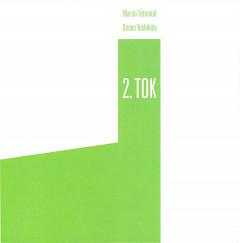
    Martin Tétreault truly had a hyperactive year, releasing 8 new albums on 5 different labels! Come celebrate with Martin and his collegues on December 20, 2005 at the Cheval blanc (Montréal) Here is the CDs that Martin released this year: 2. Tok, Labo MTL, 3. Ahhh, Trace Cuts, Dur Noyau Dur (live en France), Lunch in Nishinomiya, 4. Hmmm, and the 4-CD boxset Grrr Tok Ahhh Hmmm.

    Estrapade, morceaux_de_machines in Geiger

    “Anmeldelser”, Steffen B Pedersen, Geiger, December 13, 2005
    Tuesday, December 13, 2005 Press

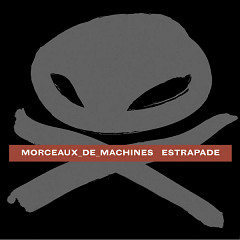
    Gennem efterhånden en pæn række udgivelser fra fransk-canadiske morceaux_de_machines — duoen A_dontigny og Érick d’Orion, som skaber deres musik gennem en kombination af computere, turntables og specialbehandlede cd’er — fået et renommé som ”The B-Boys of musique concrète”. Nuvel, man kan diskutere, hvor meget musique concrète, der egentlig er over deres udtryk og arbejdsmetoder, ligesom mangen en hip hopper helt sikkert vil få sin burger galt i halsen, hvis han lægger ører til parrets improv noise-frembringelser. Men albummet Estrapade, der er opkaldt efter en middelalderlig torturmetode, er da bestemt en interessant lytteoplevelse, hvor pladespillerens rolle i duoens univers kun bliver forstærket ved tilstedeværelsen af Martin Tétreault og japanoise-legenden Otomo Yoshihide, der sågar har gjort en dyd ud af at ikke at putte skiver på pladetallerkenen!

    Yoshihides udtryk har ofte en sælsom, zenbuddhistisk ro over sig, som det dog ikke er lykkedes ham at overføre til denne sammenhæng. Ikke forstået på den måde, at man kastes ud i infernalske støjorgier, for morceaux_de_machines’ musik er faktisk ganske raffineret. Men deres støjopfattelse er klart mere vestlig — centreret omkring interferens-forestillingen mere end idéen om støjen som et billede på tilværelsens enhed af statik og bevægelse. Således består de ni improvisationer, som tilsammen sniger sig op over 75 minutters spilletid, mere af bittesmå temaer, strømme og rytmefragmenter, der med grammofonen og diverse effektbokse som grundredskaber kaster sig rundt imellem hinanden i psykedeliske lydkaskader, der det ene øjeblik kan være voldsomme og katharsiske, det næste spindelsvævsfine og ligefrem smukke. Det hænder, at besætningen ligefrem tryller breakbeats frem af posen, der i passager synes at give de mange lag — som ofte paradoksalt nok arbejder ret perfekt sammen ved at stræbe i hver deres retning — én retning og ét formål, men ellers ligger albummets styrke netop i, at det skaber kaotiske enheder. Kaotiske enheder forstået på den måde, at de scratches, fejlstrømme, effekter og samples, hvert nummer består af, på én gang synes at køre hver deres uafhængige løb og alligevel arbejde sig hen mod ét fælles, naturligt ophør.

    Specielt vellykkede eksempler på denne æstetik er dels kludetæppet Fonçage de pieux, der over 11 minutter lader det ene lag overdøve det andet i en smuk, kalejdoskopisk kakofoni, dels den endnu længere Trépanation, der starter som en collage af slingrende, tiltende vinyl for at ende i en stor, krads og alligevel fantastisk kulmination, der i lige dele er free jazz og noise. Men også den skingre, lavmælt hakkende Tromocrates og det anderledes tordnende, dystre titelnummer bør fremhæves som fine eksempler på, at selv ret harsk noise kan rumme subtile lydlige nuancer, og som helhed er albummet at betragte som vellykket, da det lykkes morceaux_de_machines og staben af gæstemusikere, der også inkluderer sampling-specialisten Diane Labrosse, at angribe deres egen egentlige ret stramme æstetik fra så mange skiftende vinkler, at man interesseret bliver hængende til den sidste resonans toner ud.

    Tortur er Estrapade bestemt ikke, med mindre man da har en syg idé om, at musik skal være rigtige melodier spillet på rigtige instrumenter af rigtige musikere. Man har hørt bedre og mere interessante eksempler på, hvad man kan få ud af at kombinerere støj og improv — f.eks. netop hos Hr. Yoshihide — men morceaux_de_machines’ nye udspil beviser absolut, at også Canada kan producere noise af en stor både æstetisk og musikalsk relevans.

    actuellecd.com at the Opus Prizes

    Thursday, December 8, 2005 General

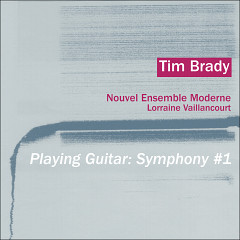
    Many actuellecd.com artists are nominated for the 9th Opus Prizes, awarded since 1996 by the Conseil québécois de la musique. The concert Palimpseste d’orchestre, revisiting the musics of Joane Hétu, Diane Labrosse and Danielle Palardy Roger is nominated for “Concert of the Year — actuelle and electroacoustic musics.” Playing Guitar: Symphony #1 by Tim Brady and Portrait Montréal by the Bozzini Quartet will face-off in the category “Disc of the Year — Modern and contemporary musics.” Canevas «+» by the Ensemble SuperMusique and Estrapade by morceaux_de_machines are both nominated for “Disc of the Year — Musique actuelle, Electroacoustics.” Finally, Mingus Erectus, by the Normand Guilbeault Ensemble is nominated for “Disc of the Year — Jazz and World music.” Winners will be announced on January 22, 2006.

  • 1
  • 2
  • 3
  • 4
  • 5
  • 6
  • 7
  • 8
  • 9