actuellecd

Blog

258 results
  • 11
  • 12
  • 13
  • 14
  • 15
  • 16
  • 17
  • 18
  • 19
  • Chicken in Hour

    “Spins”, Mike Chamberlain, Hour, no. 13:31, August 4, 2005
    Thursday, August 4, 2005 Press

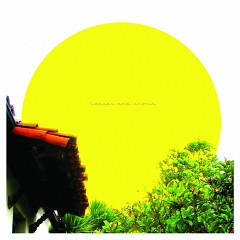
    An electronic screech wakes up the listener to kick off these 30-odd minutes of delightful sound subversion by the trio of Michel F Côté, Alexandre St-Onge and Bernard Falaise, who are not at all your standard guitar/bass/drum outfit. The nine tracks are short set pieces in which the scraping, scratching and rubbing of the acoustic instruments is manipulated electronically to produce ear-tickling soundscapes with cryptic titles like wawawo, dwong and bo doum. Your guess is at least as good as mine. But who cares if it means anything at all, as long as it’s this much fun?

    But who cares if it means anything at all, as long as it’s this much fun?

    Klaxon Gueule in All About Jazz

    “Suoni Per Il Popolo Festival”, Mathieu Bélanger, All About Jazz, August 1, 2005
    Monday, August 1, 2005 Press

    […] One of the best concerts of the festival, if not the best, was Klaxon Gueule’s which took place as part of the &records night. The trio, composed of Michel F Côté (percussive objects and microphones), Bernard Falaise (electric guitar) and Alexandre St-Onge (treated electric bass and voice), has an astonishing ability to always redefine, question and push the boundaries of its approach while remaining faithful to its musical identity as a group. […]

    One of the best concerts of the festival, if not the best, was Klaxon Gueule’s which took place as part of the &records night.

    Leaves and Snows in Phosphor

    “Review”, Paul Bijlsma, Phosphor, no. 118, August 1, 2005
    Monday, August 1, 2005 Press

    A guitarist, a pianist and a sound engineer come together to record leaves and snows, creating a certain seasonal quality. Antoine Berthiaume from Canada, the French musician Quentin SirJacq and Norman Teale hailing from the US have together built on minimal instrumental improvisation. The music sometimes reminds one of a film score, especially when piano is added. Tiny elements, like plucking, occasional percussion and concrete sounds. The music is rather slow; a dreamy atmosphere occurs. Fourteen tracks that bring a pleasant listening experience.

    Fourteen tracks that bring a pleasant listening experience.

    A Global Taxonomical Machine in Phosphor

    “Review”, Paul Bijlsma, Phosphor, no. 118, August 1, 2005
    Monday, August 1, 2005 Press

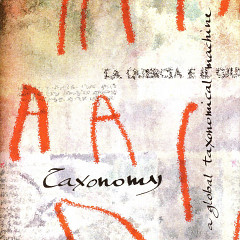
    An Italian trio is behind the bandname Taxonomy. Graziano Lella, Elio Martusciello and Roberto Fega together explore the possibilities between improvisation and noise. Martusciello and Fega are also part of the improvisation group Ossatura, so some of you will have an idea what to expect. Taxonomy presents nine tracks in which calm moments are followed by sudden outbursts, harsh noise is combined with real instruments. The music is full of details and action. A dynamic electro accoustic output.

    A dynamic electro accoustic output.

    Leaves and Snows, Ambiances Magnétiques in The Wire

    “Soundcheck Review”, Brian Marley, The Wire, no. 258, August 1, 2005
    Monday, August 1, 2005 Press

    Of the three players on Leaves and Snows, only guitarist Antoine Berthiaume is known to me, from Soshin, a series of duets on Ambiances Magnetiques with fellow stringbenders Fred Frith and Derek Bailey.

    Berthiaume is nearer to Frith than Bailey in his guitar stylings, and on Leaves and Snows he’s occasionally drawn to the tuneful end of the improvisation spectrum. Freedom Fried and Kawaidski for example, contain elegant, simple melodies and sound thoroughly composed, though they may not be, while Staring at a Western Time is suggestive of Hans Reichel mimicking one of Ry Cooder’s ‘lone guitar in the wilderness’ film soundtracks.

    But enough of comparisons, they distract attention from a key point — the individualism of Berthiaume’s approach, something he has in common with Quentin Sirjacq (piano, sometimes prepared) and especially Norman Teale (electronics). These players already have a distinctive music that, for all its spontaneity, is conceptually rigorous and displays a true group sensibility. They aren’t garrulous or barnstorming players — the music they make is spare and exacting, cool but not chilly, and Teale’s delicate electronic soundscaping and sensitive interactions are remarkable for such a young and relatively inexperienced player.

    Each of them brings something worthwhile to the mix, and Teale’s engineering and editing of the session is exemplary- this is one of the best-sounding CDs I’ve heard for quite some time. In her brief sleevenote to Leaves and Snows, Jöelle Léandre describes the music as “profound” and “lovely”, which sums it up rather well. Consistently attractive without ever lapsing into prettiness, Leaves and Snows is a great success.

    Leaves and Snows is a great success.

    Leaves and Snows in Splendid E-Zine

    “Review”, Phillip Buchan, Splendid E-Zine, July 25, 2005
    Monday, July 25, 2005 Press

    If you asked me to recap one of my fall semesters at college in musical form, I’d play a couple of Neil Young songs and let that be that. If you posed the same request to these three gentlemen, they’d pick up their respective instruments and respond with minimal, ominous improvisation, painting sleepless weekends with detuned clattering and rendering the calmer days between with patient plucking and gossamer textures. I can say this with confidence because it’s exactly what Leaves and Snow is. Recorded during the Fall 2004 semester while these three men were taking classes at Mills College, this avant-garde journal takes us from leaf-fall to snowfall and watches the days grow shorter and shorter.

    Guitarist Berthiaume and pianist Sirjacq both consider themselves to be jazz musicians — though hardly the conventional sort, if Berthiaume’s collaborations with Fred Frith and Derek Bailey are any indication. Teale, meanwhile, works primarily as an engineer, reinterpreting others’ ideas by injecting his own. It’s unclear whether the songs on Leaves and Snow were recorded as single takes or as a series of takes on individual motifs, but its players are such skilled improvisers that either explanation seems viable, just as a very thin line separates Comets on Fire or Bardo Pond’s practice jams from their “written” studio output.

    Despite its consistency in color, Leaves and Snow feels less like a traditional album than a compilation. Music- making approaches differ greatly from track to track. Un petit morceau de visage opens the album with classy Keith Jarrett-style solo piano, after which Teale’s swarthy loops bite and tear through SirJacq’s pregnant pauses. Freedom fried shows the two working in unison, cinematic synth sweeps lifting Sirjacq’s reserved notes. Berthiaume covers a daunting patch of land by himself, alternating between smoky desperado slide (Staring at a western time), zither-like drones (Contemplating innuendo) and all varieties of stomach-churning (in a good way) skronk. On Kawaidski, the three musicians shift focus from melody to percussion, beating on a number of tinny instruments to create a naked, pure landscape.

    Given its fiercely divergent nature, Leaves and Snow doesn’t always go down smoothly. In the right frame of mind, however, its individual songs prove captivating as distinct units. The musicians’ deft economy of space — always fill it up in relation to one another, but still leave plenty of it, even in the climaxes — recalls the finest minimalists, while their bursts of swarming, high volume skree makes wading through the album’s dark recesses anything but unrewarding.

    The musicians’ deft economy of space recalls the finest minimalists, while their bursts of swarming, high volume skree makes wading through the album’s dark recesses anything but unrewarding.
  • 11
  • 12
  • 13
  • 14
  • 15
  • 16
  • 17
  • 18
  • 19