actuellecd

Blog

258 results
  • 7
  • 8
  • 9
  • 10
  • 11
  • 12
  • 13
  • 14
  • 15
  • A Global Taxonomical Machine in Les Cahiers de l’ACME

    “Critique”, Roald Baudoux, Les Cahiers de l’ACME, no. 224, September 17, 2005
    Saturday, September 17, 2005 Press

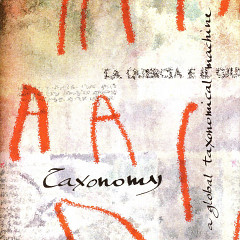
    Taxonomy est un trio italien formé en 2003 et composé de Elio Martusciello (guitare et instruments électroniques), Graziano Lella (ordinateur portable), également connu sous le pseudonyme arg, et Roberto Fega (échantillonnage et traitement). Martusciello n’est pas un inconnu, puisqu’il mène une carrière de compositeur électroacoustique et a remporté de multiples concours dans le monde entier. Mais ici, les musiques sont co-composées avec les autres membres de la formation. De plus, l’improvisation occupe également une large part dans la construction de ces musiques (Martusciello et Fega font d’ailleurs partie du groupe d’improvisation bien connu Ossatura). Les matières sonores présentes A Global Taxonomical Machine démontrent un savoir-faire certain dans l’utilisation de l’outil électroacoustique au travers de la qualité de facture, presque équivalente à ce qu’on peut trouver dans des pures musiques de studio. Taxonomy parvient à relier de manière heureuse des univers variés et des atmosphères sonores contrastées, tantôt agitées, tantôt d’un calme olympien. Malgré ces qualités indéniables, il manque à ces musiques un peu de densité dans l’écriture et surtout une forme. En effet, la succession d’états statiques basés sur des figures sur fond ne donne pas à percevoir une réelle dynamique à l’œuvre dans le temps.

    Taxonomy parvient à relier de manière heureuse des univers variés et des atmosphères sonores contrastées, tantôt agitées, tantôt d’un calme olympien.

    A Global Taxonomical Machine in Sands Zine

    “Review”, Marco Carcasi, Sands Zine, September 15, 2005
    Thursday, September 15, 2005 Press

    Martusciello, Fega and Lella: almost quietly and without unnecessary roars, this trio has released an agile and slim album, one that after a few listenings firmly takes place in your cd player. A Global Taxonomical Machine is made of microstatic, granulous bursts, and of evocative, placid and never too silent silences, often interrupted by sly-as-a-serpent’s-kiss acoustic forays.

    The magnifiyng lens the trio uses has been already tested on many live occasions-the three musicians generate a sound path made of microscopic, isolated cells, each one of them being the constituent of larger structures.

    This is errant electroacoustic music, moved by a quest for the detail; an acousmatic shadow-line that-as in the beautiful Behind Me-crosses and trespasses different stylistic strata, always with an economy of means, careful not to get stuck too long in too fixed a place.

    These are fast and serene neural migrations that move along a series of sensorial, fascinating ellipses; that rummage between improvised spasms and sneaky, minimal instances; a sarcastic behind-the-scene aftertaste that makes all the difference.

    These pieces seem fantastic, strange stammering creatures, grown in the shadow of a mountain made of doubts; they are simple creatures that move continuously and involuntarily forward right when you stumble upon them; they are rude and not really talkative; they do not offer easy grips to be interpreted with, only a general fragrance floating in the air after they’re gone, a particular, interior resonance that deeply shakes without ever being hostile. Harmony and awareness.

    Action and praxis.

    These are fast and serene neural migrations that move along a series of sensorial, fascinating ellipses…

    October 6 – 8, 2005: Pallandre and López at Sonorités Festival, Montpellier

    Friday, September 9, 2005 In concert

    Electroacoustic music duo Kristoff K.Roll and writer Anne-James Chaton selected a wide variety of artists for the upcoming Sonorités festival, dedicated to contemporary writings in poetry, improvised music and sound art, to be held in Montpellier (France) from October 6 — 8, 2005. Amongst the invited artists, composers Jean Pallandre will play on October 7, 2005, and Francisco López on October 8, 2005.

    A Global Taxonomical Machine in Kathodik

    “Review”, Marco Carcasi, Kathodik, September 8, 2005
    Thursday, September 8, 2005 Press

    Reality continuously mutates, depending on the point of observation. A road is not only a road, it has been a mountain, a forest, probably an open sea; maybe even nothing at all.

    Time itself is a concept that most frequently appears to be nothing more than a “market trick” that very little adds to each individual’s life. Quite the contrary indeed!Martusciello, Lella and Fega seem to be perfectly aware of the duplicity hidden under every thing and every event; their solo activities clearly show the unstoppable need to trespass the worn schemes of most electroacoustic improv music; their ideal model is loss, not certainty.

    The language of this unitarian approach seem to greatly amplify their single voices, and to act as an hypothetic convex mirror generating altered visions of the surroundings.

    Ad Esempio, for instance, with its mysterious clarinet moving on the surface of a series of background noise, is exemplary in its enigmatic pace; the distant jerks seem to be actual disturbances of everyday life that suddenly break forward; is this a bad dream fully aware of being bad?

    Probably yes. Everything becomes even clearer in Eme, when a female voice set against silence and a whole array of sound disturbances, exclaims “scamorza e prosciutto”, before being swallowed one more time into the noisy background.

    This is the soundtrack to a hypothetic documentary on a silent Miles Davis, or a reportage on Throbbing Gristle while preparing the sauce for their pasta during the recordings of 20 Jazz Funk Greats, or even a movie yet to be filmed. This is the perfect shell to listen to if you’re treasure-hunting; but if what you will listen is just the sound of the sea, or even nothing at all, do not worry; only the shell and what you want to ear, counts. Everything else will show up, sooner or later, whether you want it or not. The lunar or circus-like contortions-according to your state of mind-that permeate Dipinto sul Nulla are, if that’s still possible, yet another confirmation of everything said so far.

    The crossing over of the mere act of seeing and earing. A road that suddenly transforms itself into a forest and then a stone and then back again into a road. This is without any doubt one of the crucial pivot of our own home-grown contemporaneity.

    Go out and bring it home at any cost.

    Voto 8

    This is without any doubt one of the crucial pivot of our own home-grown contemporaneity.

    A Global Taxonomical Machine in Kathodik

    “Review”, Etero Genio, Kathodik, September 8, 2005
    Thursday, September 8, 2005 Press

    I had been waiting with curiosity for the debut album of this Roman (or almost Roman) trio and I should say that my patience has been amply rewarded by this cd, released by the prestigious Canadian label Ambiances Magnétiques.

    A Global Taxonomical Machine is-thus supported by an outstanding package-an album made of sound graffitis, bits and pieces perennialy torn between order and disorder: their appearance made more fascinating by their unstable equilibrium; their sound structures-albeit quite daring- never undermining the simple listening pleasure. The first track, Bear Witness Against Themselves, immediately echoes what has just been said, with its bagpiper’s theme that dissolves into uncontrolled voices, coughs and metallic resonances. Light the Fires of Insubordination keeps the tension quite high, with a spectacular contrast between a noisy first part and a second one made of imperceptible, almost silent pulses. However, it’s the very beatiful melody of Ad Esempio, played on clarinet (Roberto Fega?)-and continually abused by illogical, unmelodic sounds-that constitutes the highest point of this cd. Afterwards, every probability enters the realm of possibility, and that applies as well to the classically jazz rhythm of the opening section of Dipinto sul Nulla, although only “avant le désastre”, that is before the sudden change that transforms the track into a rolling Gimme Some Lovin’ for the city of the digital utopia. Partly because of that, the following Behind Me-a subtle lesson in minimal ambient-ology-comes out as the most predictable moment of the whole album. Tension gets high again with Eme, the most contorted track of the cd: always variating, it is a true punch under the belt to every idea of stability. After that follows a brief repetitive piece titled Exaust Utopias and an 8-second fragment reminding me of Starfucker’s (Creare Metafore). The cd ends with the draping lines of Euglena-in my opinion the best track with Ad Esempio. A highly recommended disc, the ideal companion to a few solo releases of each member of the trio, Unoccupied Areas by Elio Martusciello (on ReR), Arg by Arg/Graziano Lella (on SIRR.ecords) and Metafonie by Roberto Fega (on Aleatory Prod.).

    Voto 8

    A highly recommended disc, the ideal companion to a few solo releases of each member of the trio…

    Jean Derome in The Globe and Mail

    “Carden Street’s Montréal Invasion”, Mark Miller, The Globe and Mail, September 6, 2005
    Tuesday, September 6, 2005 Press

    It’s the proverbial tale of two cities at the Guelph Jazz Festival this year. This modest but always visionary event, which begins its 12th season tomorrow, honours Chicago’s Association for the Advancement of Creative Musicians on the occasion of its 40th anniversary and acknowledges Montréal’s vibrant musique actuelle scene, now into its third decade.

    The Americans, of course, will get most of the attention, culminating Saturday night when the lately reconstituted and still legendary Art Ensemble of Chicago performs at the River Run Centre. But the Québécois, with their up-to-the-moment mix-and-match of ideas from the jazz, rock, pop and classical avant-garde, should not be overlooked.

    Some 50 Montréal musicians will have appeared in this Southwestern Ontario university town before the festival concludes on Sunday. One of their number, saxophonist and flutist Jean Derome, likens them collectively to “a tribe of Indians,” with the important qualification that “the chief changes all the time.”

    It is, in other words, a highly collaborative and co-operative community. Derome estimates its representation in Guelph this year to be “more than half of what’s happening in Montréal,” where, he notes rather provocatively, “maybe there are even more groups than there are musicians.”

    As that suggests, many of the players do double, triple and quadruple duty in each other’s bands.

    Indeed, ask Derome about the number of groups to which he himself is a party, either as leader or band member. “Now, not too many,” he responds mildly, in a telephone interview from his home in Montréal’s Plateau neighbourhood. “The active ones — around 10 or 12. Less than usual.”

    Derome, a stout yet soft-spoken fellow just turned 50, has been a pivotal figure in Montréal’s left-of-centre musical circles since the mid-1970s, predating the advent of musique actuelle as a catch-all category for the city’s funky, largely Francophone avant-garde. His activities, well documented on CD by the Ambiances Magnétiques label that he and others established in 1983, are remarkable for both the breadth of music and the amount of sheer hard work that they represent.

    One of those aforementioned 10 or 12 bands of the moment is Évidence, whose raison d’être for more than 20 years has been the music of Thelonious Monk. The trio — Derome, bassist Pierre Cartier and drummer Pierre Tanguay — will appear on Friday at the Guelph Youth Music Centre.

    Another is the Fanfare Pourpour, a street band that is scheduled on Saturday afternoon to lead a parade along Wyndham Street and then give a free concert of waltzes and other traditional European music at the festival’s Carden Street tent. There can be as many as 20 musicians in the Fanfare, which often performs in Montréal for social or political causes.

    Derome calls it a “very beautiful, utopian group,” noting that it is run by two of its members, guitarist Luc Proulx and singer-accordionist Lou Babin, as if it were a family rather than a business. “They decided I was artistic director,” he admits rather uncomfortably, referring to the Fanfare’s otherwise wholly egalitarian membership. “I don’t know about that.”

    A third band of those 10 or 12 is the Pierre Cartier -led sextet that will offer the bassist’s classically informed, jazz-song settings of several Québécois poems on Thursday night at Mitchell Hall. A fourth is guitarist Rainer Wiens’s sextet Follow Follow, whose African-derived rhythms will rock the Carden Street tent on Saturday afternoon. That’s an impressive range of musical idioms for one musician to embrace in just three days, and it still scarcely touches on Derome’s work in free improvisation as heard last ear at Guelph in the form of Nous perçons les oreilles (We Pierce Ears), a duo with his wife, the singer and saxophonist Joane Hétu.

    So what makes Jean, um, blow?

    He harks back to his earliest experience as a musician. “The first time you play music,” he suggests, “there’s something there that will always be your way of being a musician. The rest is just learning how to do it, how to say it, how to be more accurate each time you play. But even in the ’nest,’ everything is already there.”

    And Derome’s “way” of being a musician? “First of all, I try to approach music with an open mind. I think that music can be many things. I try to be aware of different cultures, different eras, different styles — and not just as if they’re different clothes that you can wear. I’m always surprised to see that some musicians treat a style of music with disrespect, like a symphony musician who laughs at mariachi musicians, for example. You know, there’s something in the triplet ’swing’ that a mariachi band has that no symphony musician can play.”

    Not to mention the triplet swing of Thelonious Monk — whose compositional trickery continues to tease and taunt even the wisest of jazz musicians. Derome, however, heard something quite basic when he first encountered the American pianist’s music. “It was really open; there was space for me to learn. It’s like Johann Sebastian Bach’s music: There’s something that’s… well, I wouldn’t say neutral… but there’s not so much dramatic ego — the way there is in [Charles] Mingus’s music. For a long time I felt you couldn’t play Mingus’s music if you were not Mingus, it was so personal.”

    Rest assured, Derome knows his Bach and he knows his Mingus. Years ago, he studied the classics at the Conservatoire de musique du Québec à Montréal; lately, he has come to terms with Mingus as a member of the Normand Guilbeault Ensemble, which recently released its second CD devoted to the American bassist’s music.

    “In Monk,” Derome continues, “the tunes are like puzzles. There’s always something. It’s like having a rock outside your house and each time you go by, you stub your toe on it; each time you arrive at bar seven, second beat, there’s a strange note. So you have to be very aware. It’s always very exciting to play and it doesn’t let you just show off your technique; you have to think about the pieces and find a specific feeling for each one.”

    In the end, Monk, Bach, Mingus, waltzes, African grooves, free improvisation and mariachi music are all, in Derome’s eyes, simply “different facets of the same diamond.” Accordingly, it’s only right that he should add on his own behalf, “Sometimes maybe I’m a bit of a chameleon and I change, depending on the context. But I think, deeply inside, it’s always the same musician.”

    “The first time you play music,” he suggests, “there’s something there that will always be your way of being a musician. The rest is just learning how to do it, how to say it, how to be more accurate each time you play. But even in the ’nest,’ everything is already there.”
  • 7
  • 8
  • 9
  • 10
  • 11
  • 12
  • 13
  • 14
  • 15