actuellecd

Blog

304 results
  • 26
  • 27
  • 28
  • 29
  • 30
  • 31
  • 32
  • 33
  • 34
  • Puce à l’oreille in AllMusic

    “Review”, François Couture, AllMusic, June 1, 2004
    Tuesday, June 1, 2004 Press

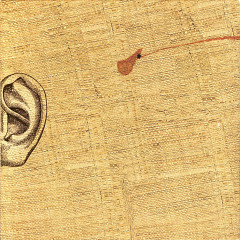
    Puce à l’oreille is Mélanie Auclair’s debut album, released soon after her appearance on the compilation CD Sang 9, a survey of the new generation of Quebec avant-garde artists curated by DAME, Ambiances Magnétiques umbrella company. This new addition to the label’s roster is not all that impressive. Consisting of one solo piece, six duets and one final trio, the album constantly showcases the limitations of the young cellist and vocalist, by pitting her against much more experienced improvisers. The opening track tracks are designated by drawings instead of bearing titles) is basically a drone, elegant and intimate, but lacking in character. The duet with keyboardist Vincent Réhel is interesting, Auclair again sticking to droning textures. Her meetings with tabla player Guy Thouin, saxophonist Charles Papasoff, guitarist Bernard Falaise of Miriodor and Klaxon Gueule and vocalist Joane Hétu feature a wide variety of approaches. Auclair is clearly dominated by the ferocious baritone sax of Papasoff and by Falaise’s ever-fascinating guitar textures, although the piece with the latter is the disc’s highlight, thanks to some highly lyrical passages on the cello and a surprising use of electronic treatments. At the other end of the spectrum, the duet with doublebassist Éric Auclair is weak, failing to go anywhere as it runs from one incomplete idea to another. Measuring yourself up to established musicians on your debut album is certainly a daring move, but in this particular case it works against, not for Auclair.

    André Duchesne in Voir

    “Critique”, Réjean Beaucage, Voir, May 20, 2004
    Thursday, May 20, 2004 Press

    André Duchesne est un habitué du FIMAV. Durant la première décennie du festival, il s’y est produit cinq fois et les années suivantes, il a presque toujours fait partie de l’équipe de régie technique. Le compositeur et guitariste y revient cette fois-ci à la tête d’un projet intitulé Cordes à danser.

    «Rendons à César ce qui appartient à César, commente Duchesne, ce projet n’est pas une commande du FIMAV, mais plutôt du Festival des musiques de création du Saguenay-Lac-Saint-Jean où nous en présenterons la première la veille du concert de Victo.» C’est à son retour d’une résidence d’un an en Allemagne que Duchesne s’est mis au travail sur ce projet, entre autres… «Je suis revenu avec quatre projets différents. L’un est un ‘rapport sonore’ de mon séjour, je dois aussi y retourner pour le mixage d’un album enregistré en concert là-bas avec deux musiciens de dance music, et j’ai un projet de disque de chansons auquel je pense depuis un bout de temps et que je voudrais bien voir aboutir l’année prochaine.» Et puis, bien sûr, ce nouveau projet avec un quatuor à cordes.

    On sait que Duchesne a déjà eu son propre quatuor à cordes, Les 4 guitaristes de l’Apocalypso Bar, mais il s’agit ici d’un quatuor de forme un peu plus classique. “En fait, c’est la rencontre du quatuor à cordes et du power trio (guitare, basse, batterie). J’ai écrit une quinzaine de pièces pour en garder 12, toujours en partant d’un rythme soutenu de la basse et de la batterie sur lequel viennent s’ajouter le quatuor et la guitare. Ça n’a rien à voir avec mon disque Polaroïde (2001), même si l’altiste Jean René et le batteur Pierre Tanguay sont toujours impliqués. Il s’agissait sur celui-là d’une musique de cassures, qui n’avait pas de rythme soutenu, alors que maintenant, c’est tout à fait le contraire, c’est rythmé, sans cassures, plus ludique, même si certaines pièces assez sombres ont quand même trouvé leur place dans le set.»André Duchesne est de ceux qui ont lancé au Québec une musique créative qui est peu à peu devenue ce que l’on appelle aujourd’hui la musique actuelle. Il était parmi les fondateurs du Centre d’essai Le Conventum en 1972. Que pense-t-il de l’évolution de cette musique ces dernières années? «Je suis un peu déçu du peu d’aide accordé à ce secteur musical et aux petites compagnies qui le font avancer, mais je suis aussi content de voir que, malgré ça, on a pu prendre notre place; c’est bien peu de chose dans le système, mais tout de même, nous avons contribué à faire reconnaître la musique des autodidactes, et aussi d’autres musiques qui ne sortaient jamais des universités. Je pense que de ce côté-là, il y a du progrès. Mais il y a des choses qui ne changent pas… C’est aussi difficile de faire de la musique actuelle aujourd’hui que ça l’était il y a 30 ans!»

    Le 21 mai, 00 h 15 Au Cégep de Victoriaville Retransmission en direct sur la Chaîne culturelle de Radio-Canada

    Puce à l’oreille in Voir

    “Critique”, Thierry Bissonnette, Voir, May 20, 2004
    Thursday, May 20, 2004 Press

    Décrit comme une «suite d’instants», ce premier disque solo de Mélanie Auclair est un envoûtant chapelet d’improvisations, où la violoncelliste-chanteuse rencontre des collaborateurs aussi pertinents que Bernard Falaise (guitare électrique), Joane Hétu (voix), Charles Papasoff (saxophone) et Guy Thouin (percussions). Sans trop de prétention, sans trop de failles non plus, l’album mérite d’emblée son titre et nous révèle les géométries d’une intimité avide de surprises et de dialogue. Huit pistes à savourer comme autant de rafraîchissements sonores.

    … l’album mérite d’emblée son titre et nous révèle les géométries d’une intimité avide de surprises et de dialogue.

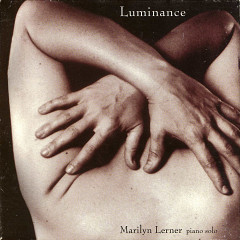
    Luminance in Splendid E-Zine

    “Review”, Brett McCallon, Splendid E-Zine, May 20, 2004
    Thursday, May 20, 2004 Press

    Francophone experimental/improvised music is not always the easiest sell. Even in these Freedom Fries days, I like to think that the reason for that difficulty rests with the “experimental” and “improvised” side of the description. If the preceding conjecture is indeed true, it’s hard to fault even the most open-minded listener for thinking long and hard before purchasing something like Magali Babin’s metal-scraping-against-other-metal-at-low-volumes opus Chemin de Fer.

    On the other hand, however many times you’ve heard that old saw about music’s universal appeal, it’s nice when an instantly arresting yet thoroughly novel and interesting album reminds you of that concept’s veracity. Luminance is the kind of album that can, with proper exposure, gain converts to the improvisational and experimental side of music.

    Warning: opener Plucky would be enough to convince any fence-sitting potential listeners that Lerner is just as obscure and dedicated to avant garde principles as anyone else in her field. The track, consisting of rhythmic piano-string pluckings, is unmelodic, arrhythmic, cerebral and not particularly endearing to the ears (not that there’s anything wrong with that). Immediately, though, the angular shapes it creates are metaphorically washed away by Deluge, a series of close, chromatically moving chords that jump thither and yon over the range of the keyboard. This latter track is far more representative of the tone and sound of the album as a whole; while Lerner certainly intends to explore musical concepts less formal than listeners acquainted with classical piano music might expect, she is not moving entirely in the direction of formless sonic experiment.

    The best showcase for her balancing act comes with the album’s longest tracks. Rife, an exploration of a melody that seems constantly to be tripping its way toward a greater understanding of its underlying composition, incorporates chords that call to mind Cole Porter, scale passages that evoke Rachmaninov, and tonal meditations that could come from cool-period Miles Davis. Wolfen, the other centerpiece, is far more interested in a narrower range of tones; from the contemplative opening to the quasi-industrial, contrapuntal middle-period, to the calmer resolution, the tonal space that the piece inhabits seems narrower than that of Rife, lending the latter piece a more cerebral, less physical feel.

    There are many other fantastic moments here, including the interestingly miked and teasingly titled Codec Moment (see the audio clip; this track is better heard than described) and the case-thumping La boxe. Mostly, though, Luminance is notable for its friendliness and inclusiveness. If you’re on the fence about whether or not experimental/improvised music is for you, here’s a little experiment. Pick up this album and listen to it a few times. If you can’t see why you should have it in your collection, you’re probably just not cut out to listen to the more “out there” side of musical expression.

    Luminance is notable for its friendliness and inclusiveness.

    10 compositions in Zookeeper Online

    “Album review”
    Wednesday, May 19, 2004 Press

    A wonderfully twisted straight-ahead jazz album from this Montréal trio. Derome’s compositions, while certainly acknowledging the jazz tradition, aren’t necessarily beholden to it. Combining a smoky late night swing with modern Euro-jazz and a little bit of improv, this disc is perfectly accessible without the usual retro-swing blandness.

    *1. Med straight swing

    2. Relaxed bluesy mood with double-time solos

    *3. Drifting free improv

    **4. Lumbering low-sax groove

    5. Faster floating swing

    *6. Flute-led quiet melody

    7. Med swing

    *8. Wandering, searching improv

    9. Lazy jazz-funk

    10. Mellow flute-led cocktail jazz
    Combining a smoky late night swing with modern Euro-jazz and a little bit of improv, this disc is perfectly accessible without the usual retro-swing blandness.
  • 26
  • 27
  • 28
  • 29
  • 30
  • 31
  • 32
  • 33
  • 34