actuellecd

Blog

304 results
  • 17
  • 18
  • 19
  • 20
  • 21
  • 22
  • 23
  • 24
  • 25
  • Le bal, Sautons ce repas de midi in Vital

    “Review”, Dolf Mulder, Vital, no. 435, August 18, 2004
    Wednesday, August 18, 2004 Press

    Monsieur Fauteux is a sublabel of Ambiances Magnétiques. It is specialised in more accessible music then normally released on Ambiances Magnétiques. Martel began as a poet and published two collections of his poetry. Later he learned playing the guitar and developped himself into a singer/songwriter. He wrote all the songs and lyrics for his third solo-album Sautons ce repas de midi. Also he plays little guitar, ukelélé, theremin and harmonica.. He is accompanied by Bernard Falaise (guitar, mandolin, keyboards, voice), Éloi Deit (basses) and Michel F Coté (drums and percussion). Martel is not a great singer. I suppose the lyrics are very important — Martel is a poet. But alas I do not speak french, so I can’t say anything about it. Happily the arrangments and playing are very funny and full of ideas. Each song has it’s own atmosphere. This make this album enjoyable and worthwhile also for those who don’t understand french. It’s especially the guitar playing of Bernard Falaise that catches the attention.

    Fanfare Pourpour reminded me of the Willem Breuker Kollektief or the belgian “ballroom” ensemble Julverne. This Fanfare has 15 members and is assisted by 5 other musicians in some of the tracks. We hear saxes, trumpette, clarinette, flutes, but also accordeon, guitar, violin, banjo, etc. On a reunion in 1995 several veteran musicians decided to play again together and Fanfare Pourpour was born. Nowadays veterans and young talents are united in this great ensemble.As the title indicates the ensemble plays a very danceable music, albeit often plunged in a melancholic atmosphere. Music from and for people. No self-indulgent art, or music for the sake of experiment, but music that wants to serve an audience, to make a party. The 16 compostions come from members Suzanne Babin, Luc Proulx, Jean Derome and others. The opening track opens very promising in a gypsy style, but halfway the piece takes another direction. We hear many waltzes, swing and more uptempo pieces, like the excellent La noce du brigand by member Guido del Fabbro. Although I’m open for this kind of music, my attention faded away from time to time. Some of the compositions are a little unsignificant, plus arrangements and playing do not sparkle throughout the ride. But surely an album of honest and pleasant music that will please many.
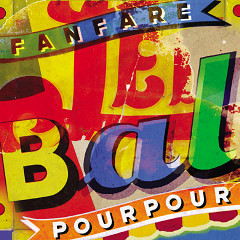
    … honest and pleasant music that will please many.

    September 12, 2004: DAME’s Musicians at the Guelph Jazz Festival

    Wednesday, August 11, 2004 In concert

    From September 8 to 12, 2004,, the Guelph Jazz Festival (ON) will present many workshops and concerts. Several DAME artists will be featured in this year’s edition. On ,September 9, Joane Hétu will be one of the guest speakers at the “Improvising Women Singing” workshop, alongside Christine Duncan, Sainkho Namtchylak and Kate Hammett-Vaughan. That same day, Kate Hammett-Vaughan will perform with Ron Samworth and Bernard Falaise will play with the duo Barnyard Drama. The night ends with a Noma concert. On ,September 10,, the “Instruments, Voices, Narratives” workshop will feature Jean Derome, Joëlle Léandre, Anne Bourne and others. In the afternoon, {nbio:derome_je} and {nbio:hetu_jo} will give a Nous perçons les oreilles concert. Lastly, on ,September 11,, Joëlle Léandre and Les Projectionnistes will also give concerts.

    November 28, 2004: Sounding Objects and Surfaces in Québec City

    Tuesday, August 3, 2004 In concert

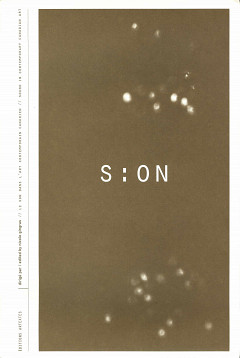
    Frottements, an exhibiton dedicated to the exploration of sounding objects and surfaces, is shown at the Musée national des beaux-arts du Québec (Québec City) September 1 to Novembre 28, 2004. The exhibition’s curator, Nicole Gingras — who also directed the book S:on, Sound in Contemporary Canadian Art, gathered several artists such as Jean-Pierre Gauthier, Raymond Gervais, Jocelyn Robert, the Skoltz_Kolgen duo as well as Martin Tétreault. Tétreault will perform Passages sur illustration sur vinyle on the first night, September 1, 2004 at 7 pm in the museum’s auditorium. On September 17, Skoltz_Kolgen will give a live performance at 9pm.

    Le bal in AllMusic

    “Review”, François Couture, AllMusic, August 1, 2004
    Sunday, August 1, 2004 Press

    The Fanfare Pourpour’s second album is not as much a leap forward from the first, but an overall solidification of the group’s assets. While remaining true to the debut CD Tout le Monde, Le Bal is more cohesive, entertaining, daring, and better recorded. Sax player Jean Derome, one of the most important artists on the Montréal avant-garde scene, produced the album and contributed five new pieces, including the brilliant title track, a painstakingly slow waltz with a Nino Rota-like melody. The line-up of the ever-changing group still features a healthy blend of amateur, semi-professional and established musicians. The core of the group is back: accordionist Lou Babin, guitarist Luc Proulx, violinist Guido del Fabbro, trumpeter Nemo Venba, valve bass player per Christine Lajeunesse, and the one-of-a-kind rhythm section of Jaco Duguay (marching bass drum and cymbal) and Jonas Slowanski (snare drum), a.o. In addition to Derome, Normand Guilbeault (the hardest-working jazz bassist in Montréal) and Claude Vendette (ex-4 Guitaristes de l’Apocalypso-Bar and other André Duchesne projects) round up the ranks. Special guests include violinist Mara Tremblay and drummer Pierre Tanguay, along with singer Tomás Jensen (of the group Les Faux-Monnayeurs) who delivers the dark “Monsieur.” Whether it is a fast-paced street fanfare number or a nostalgia-tinged waltz, every song is heartwarming, entertaining, and highly creative. The group draws inspiration from musette, avant-garde jazz, Quebec and Cajun folk, and dixie, adding its own brand of street-bound big band music with a communal spirit. Certain pieces are simple to the bone, fueled only by the joy of playing together and the craft of its arrangements, while other tunes (namely Derome’s and Del Fabbro’s) push back the bounderies, toying with unusual chord changes and melodies that hide their originality in a second or third listen. Favorable comparisons to Pascal Comelade and the Japanese group Pascals are absolutely in order, as the music finds a striking balance between naive and soulful. Le Bal is highly refreshing, imaginative and creative — and despite the above mentions, one of a kind. Highly recommended.

    Le Bal is highly refreshing, imaginative and creative…

    Puce à l’oreille in Voir

    “Critique”, Réjean Beaucage, Voir, no. 740, July 29, 2004
    Thursday, July 29, 2004 Press

    Le seul fait qu’elle ait frotté les cordes de son violoncelle dans des projets avec Lhasa de Sela, Martin Léon ou Mario Pelchat et que ses cordes vocales aient secondé la voix de Steve Hill prouve déjà que Mélanie Auclair a une palette stylistique assez éclectique. Son prernier effort solo creuse cette veine en proposant six improvisations en duo (et un trio) qui sont autant de «rencontres» avec différents musiciens: claviériste, percussionniste chanteur, etc. Les rencontres semblent souvent rester au niveau du premier contact, chacun demeurant assez réservé, mais certains moments valent le détour: entre autres, le duo avec le guitariste Bernard Falaise ressort vraiment du lot. Le sax baryton Charles Papasoff et le contrebassiste Éric Auclair offrent également de grandes collaborations.

    Mélanie Auclair a une palette stylistique assez éclectique.
  • 17
  • 18
  • 19
  • 20
  • 21
  • 22
  • 23
  • 24
  • 25