actuellecd

Blog

188 results
  • 1
  • 2
  • 3
  • 4
  • 5
  • 6
  • 7
  • 8
  • 9
  • Soshin in Revue & Corrigée

    “Disques”, Pierre Durr, Revue & Corrigée, no. 58, December 1, 2003
    Monday, December 1, 2003 Press

    L’intitulé de l’enregistrement peut prêter à confusion: il ne s’agit pas d’un trio. En fait, les six pièces de Soshin permettent surtout de présenter un nouveau venu, Antoine Berthiaume, seul à officier sur les six pièces du recueil. Jeune guitariste québécois, il se confronte à deux de ses aînés pour cinq pièces en duo (trois avec Frith, deux avec Bailey), réservant la première, éponyme, à un quasi solo (guitare traitée au sein d’un piano, apparemment). Les canaux stéréophoniques étant clairement dévolus à l’un ou l’autre duettiste, les jeux sont parfaitement identifiables. Il n’y a plus lieu, certes, de s’appesantir sur ceux de Derek Bailey et de Fred Frith — encore qu’ici ils soient particulièrement épurés et loin de tout aspect démonstratif — mais d’apprécier leur disponibilité à un dialogue équilibré avec leur jeune partenaire.

    Antoine Berthiaume a la volonté d’explorer les potentialités soniques de sa guitare, aborde cette approche avec délicatesse, avec un «esprit du débutant», sens premier de Soshin c’est-à-dire, ouvert et curieux. Il se réfère donc dans sa pratique à l’esprit zen, esprit qui transcende l’ensemble de l’enregistrement.

    … ouvert et curieux.

    Risque et pendule in SOCAN — Paroles & Musique

    “Lancements”, SOCAN — Paroles & Musique, no. 10:4, December 1, 2003
    Monday, December 1, 2003 Press

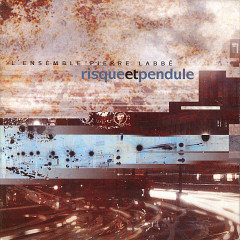
    Premier disque de cet ensemble, on y retrouve une fusion particulièrement réussie de styles et de sentiments. Ainsi Pierre Labbé est extrêmement bien entouré par Nathalie Bonin, Julie Trudeau, Bernard Falaise, Claude Lavergne et Frédéric Alarie. Il signe sept des neuf pièces de l’album et nous fait bénéficier de sa polyvalence en mariant avec brio les musiques contemporaine et actuelle au jazz plus conventionnel. On remarquera particulièrement les transitions intelligentes et subtiles qui relient les différents modes musicaux.

    On remarquera particulièrement les transitions intelligentes et subtiles qui relient les différents modes musicaux.

    Risque et pendule in Vital

    “Review”, Dolf Mulder, Vital, no. 399, November 26, 2003
    Wednesday, November 26, 2003 Press

    This ensemble has the following line-up: Pierre Labbé (tenor sax, flute), Nathalie Bonin (violin), Julie Trudeau (violoncelle), Bernard Falaise (electric guitar), Frédéric Alarie (contrebasse) and Claude Lavergne (drums). Leader Pierre Labbé may be known of that great record Tête à Queue by Papa Boa. A very dynamic brew of avant rock. Falaise was also part of this interesting group. He may also be known of his work Miriodor and Klaxon Gueule, etc. Multi-instrumentalist and composer Labbé is also involved in theatre and dance productions. Currently he works on a solo show of music tales for children, a.o. But let’s turn to the debut of his ensemble that plays some of his recent compostions. Like so many groups they search for a balance between improvisation and written music. And also like so many other groups they make their own blend of rock, jazz and composed music. In the case of the compositions of Labbé this does not mean that they are eclectic or superficial. All pieces form a organic whole, have a clear shape and make you forget stylistic boundaries. The playing is well-tempered, giving room to everybody. Solo’s are not never ending trips, but always short, modest and serving the whole. Arrangements are nice and transparant. Just a cd of warm and intelligent new music that deserves to be heard everywhere.

    … warm and intelligent new music that deserves to be heard everywhere.

    Sang 9 in Vital

    “Review”, Dolf Mulder, Vital, no. 399, November 26, 2003
    Wednesday, November 26, 2003 Press

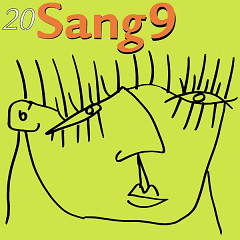
    With this compilation Ambiances Magnétiques presents 20 new groups and artists. Artists that have no album out yet. And listening to this cd not all of them are ready for that, I think. All 20 groups present themselves with one track. Information on all these musicians is included in english and french. All groups involved have in common that they play some kind of ‘new music’. The spectrum is broad. But I won’t go here into each track. So let me at least mention all the groups and musicians that are covered here: In Vitro, Concorde Crash, The Fighting Koalas, Dickie’s Nodan Levesky, Pascal Desjardins & Frédéric Léonard, Mélanie Auclair, Face dans I’dash, Torngat, Kareya, Malarafe, Cléo Palacio-Quintin & Pascal Boudreault, Jocelyn “Doctor” Tellier, Copromélomanie, James Schidlowsky, Hiatus, Tutu Combo, André Marceau, L’Hexacorde, Bobok, Arborisationterminale. It’s no coincidence that the cd opens with a track by In Vitro, certainly one of the most interesting groups presented here. It’s a project started by Colin Gagné and Lévy Bourbonnais that impresses because of the strange and original structure of the piece, moving between improv and structure, acustic and electro. The Fighting Koalas also make a hybrid of acustic and electronic music, but in a more conventional musical form. Dickie’s Nodan Levesky is a quartet of two acoustic guitars, percussion and electric bass. An instrumental kind of rock chamber music that brings back memories of early Conventum. Also l’Hexacorde offers an interesting piece of rock chamber music that you don’t expect these days. Face dans l’dash offers a very noisy and radical excursion. Just like Arborisationterminale Torngat shows the groovy and funky side of Quebec, but fail to convince. Malarafe comes most close to jazz music, with a pianist playing in a style that you either hate or like. But alle of them are capable musicians I must say. For me it are the musicians that experiment with electronic and acustic sound within unusual structures that make this cd worthwhile, like the duo Cléo Palacio-Quintin and Pascal Boudreault. The compilation makes evident that Ambiances Magnétiques does not have to worry about the future. This compilation leaves no doubt that are many interesting things going on there. It should appeal to all of you that interested in the new music scene of Quebec.

    This compilation leaves no doubt that are many interesting things going on there.

    Ohmix, Carnets de voyage, Tout le monde, Speechless, Upbeat, Grain, Chansons d’un jour, Sautons ce repas de midi, Maison douce maison, Studio — Analogique — Numérique, Fanfare Pourpour, Fred Frith, Klaxon Gueule, Frank Martel, Martin Tétreault in actuellecd.com

    “A Gift Idea: Expand Someone’s Horizons”, François Couture, actuellecd.com, November 25, 2003
    Tuesday, November 25, 2003 Press

    The Holidays are closing in. Are you wondering what gifts to buy this year? You’re looking for the original gift, the one that will surprise and please? Why not expand the musical horizons of a loved one, a colleague at work, or a cousin you haven’t seen since last Christmas? Here’s my highly personal selection of gift ideas to introduce someone (or yourself, you’re allowed to indulge from time to time!) to the wonderful world of “musique actuelle.”

    That good ol’ song

    It may seem a bit easy, but everyone likes a good song. That said, we don’t all have the same definition of what a good song is. And the artists in DAME’s catalog take some liberties with this format — that’s what makes things exciting. But Geneviève Letarte’s Chansons d’un jour will please anyone looking for songs with intelligent, accessible melodies and poetic lyrics. The soft melancholy of Chants des adieux, chants de la solitude will profoundly move dreamers in search of a different voice (Lou Babin’s, irresistible).

    You don’t understand French? The lyrics of Jerry Snell’s album Life in the Suicide Riots will make you think hard about the world we live in. And the chugging guitar riffs of André Duchesne ’s Locomotive will catch the attention of any rock fan, even one deaf to French. Speaking of rock, the deconstructed rock of the all-female group Justine can keep you busy for a while, lyrics or no lyrics. Their first album (Suite) is a powerful mixture of progressist rock, while their second Langages fantastiques leans more toward improvised songs. If you want a taste of what songwriting avant-garde artists can come up with, try the compilation album Chante! 1985-2000, a wide and wild selection of unusual songs.

    Party time

    A time for celebrating, letting off steam, and disobedience, the party when applied to music can give way to a distortion of admitted rules. L’Orkestre des pas perdusinjects a new form of circus life into fanfare music, an infectious R ’n’ B (rhythm ’n’ brass, of course) that will refresh any parade. Its cousin Les Projectionnistes (both bands are led by Claude St-Jean) trades circus for rock and the brass section transforms from funny fanfare to frenetic funk. Taking a different approach, the Fanfare Pourpour leaves the official parade attire behind to favor the spontaneity of a street fanfare. It’s music for “everyone” (Tout le monde, the title of their first album) without dropping to the lowest common denominator.

    In a similar spirit, but adding an East-European flavor and an incredible dose of energy is the group Interférence Sardines, which features two members of the neo-trad group Les Batinses. Jean Derome et les Dangereux Zhoms walks a jazzier road, but its frivolous side easily becomes delightfully exuberant. The group’s three albums are all highly recommended, but Carnets de voyage remains an excellent place to start. And I find the same spirit of excessiveness and raw emotion in La boulezaille (Pierre Langevin and Pierre Tanguay) and Plinc! Plonc! (Jean Derome and Pierre Tanguay), two albums where world music, jazz and free improvisation collide.

    And to boldly go where few have gone before

    Maybe you would like to go further and hook someone on a kind of “musique actuelle” that is more daring and abstract. Here are a few key albums from DAME’s catalogue in improvised and electronic music.

    Martin Tétreault is one of the most fascinating experimental artists right now. His technique at the turntable spins 45 questions per minute. His recent album with Diane Labrosse, Parasites, puts disquieting quiet sounds under the microscope. And Studio — Analogique — Numérique, his fresh collaboration with the Japanese mastermind Yoshihide Otomo, proposes cutting-edge sonic research in very original packaging: a box set of three 3” CDs.

    A pillar of the avant-garde music scene since the early ‘70s, Fred Frith remains the favorite of many connoisseurs. The two albums by the Fred Frith Guitar Quartet (with René Lussier, Nick Didkovsky and Mark Stewart) are essential listens. DAME also distributes the titles released by Frith’s own Fred Records.

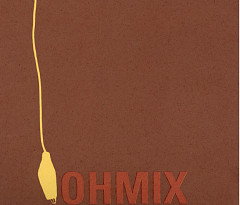
    One of the first groups from the DAME stables to have explored electroacoustic improvisation, the Klaxon Gueule trio revels in noisy textures and demanding pleasures. Their last two albums Muets and Grain met critical acclaim. And I also want to mention the Ohmix compilation album, a daring electronic project where select artists (including Martin Tétreault, David Kristian, John Oswald, Terre Thaemlitz, and Ralf Wehowsky) remix the albums of the label Avatar.

    Finally, instead of sending out the usual Christmas cards, consider the sound post cards produced by the label Ouïe-Dire. These are regular post cards accompanied by 3” CDs from French experimental artists. And happy Holidays!

    L’Hexacorde in Ici Montréal

    “Compact!”, François Couture, Ici Montréal, no. 7:08, November 20, 2003
    Thursday, November 20, 2003 Press

    C’est Georges Brassens qui prend possession du corps d’Urbain Desbois, c’est Richard Desjardins qui attrape au vol la légèreté des chansons de Tomas Jensen, c’est Willy Lamothe qui se marie avec Plume. C’est Frank Martel, l’ovni de la chanson québécoise. Sa poésie mélange les villes et les champs, le quotidien et l’exotique, avec une touche d’humour qui rend l’argumentation impossible. On ne peut qu’opiner du chef en apprenant que «comme le petit hérisson/La femme melon aime à se rouler en boule» ou que «C’est du creux de ses vertèbres/Que provient la bonne humeur du zèbre». Frank déclame et susurre autant qu’il chante, et sa voix imparfaite évoque la chanson country, une impression soulignée par la guitare de Bernard Falaise qui s’en donne à cœur joie. L’équipe n’a pas changé depuis le premier album. Falaise y va de sa mandoline délicate ou d’une guitare électrique lancinante qui pousse vers les terrains actuels, pendant que la basse d’Éloi Deit ancre la musique sur la terre folk et que le batteur Michel F Côté change de style comme un serpent change de peau (sans regarder en arrière). À la première écoute, je gardais un sourire en coin à cause d’une ironie rigolote dans le traitement musical. Mais, dès le second passage, je me suis laissé conquérir par la qualité de l’écriture, poignante et soignée et la sympathie des mélodies, contagieuses comme des ritournelles d’enfants. Ton visage, Stella et Le Limpopo (un fleuve d’Afrique, vous l’apprendrez) sont des pièces d’anthologie de la chanson irrévérencieusement intelligente. Merci Frank. 10/10

    … des pièces d’anthologie de la chanson irrévérencieusement intelligente. Merci Frank.
    10/10
  • 1
  • 2
  • 3
  • 4
  • 5
  • 6
  • 7
  • 8
  • 9