actuellecd

Blog

255 results
  • 3
  • 4
  • 5
  • 6
  • 7
  • 8
  • 9
  • 10
  • 11
  • November 8, 2002: NOMA records!

    Monday, November 4, 2002 In concert

    First of two weekends where NOMA invades La Sala Rossa (Montréal) for the recording of what will become their next album. Presented in part by SuperMusique, in the “SuperOption” concert series, the November 7 and 8, 2002 concerts will showcase, in addition to the usual NOMA musicians (Guy Kaye, François Chauvette, Al Bakulis, Rainer Wiens, Thom Gossage, Normand Guilbeault and Tom Walsh), Martha Wainwright and Michael J Browne who will sing the band’s latest songs (and a few surprises…).

    Chemin de fer in %Array

    “Review”, Christopher Murphy, %Array, November 3, 2002
    Sunday, November 3, 2002 Press

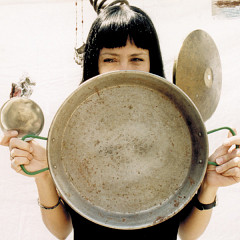
    No Type are probably best known for their quality back catalog of (free) mp3 / gif offerings at www.notype.com which are, without exception, worth downloading in their entirety. Their welcome move into hardware territory has resulted in a number of releases since 2001’s excellent 2CD The Freest of Radicals. Magali Babin’s Chemin de fer features a collection of digitally massaged textures — simple, yet seductive, the crisp recordings feature the magnified sounds of everyday objects placed within spacious soundfields. Opening with the breathy textures of Triturations, Babin sets the scene perfectly for a series of pristine studies, each one mesmerising. Petit jardin features five magnified minutes of razor sharp textures which throb and sparkle, pulsing through repeated patterns. La corde — the sound of a cord pulled taut before sounds are wrenched from it — is childlike in its simplicity, but anything but simplistic. The very ordinariness of the sounds Babin favours mask a delicate ear and deft touch: Monsieur et madame Watt glistens with high frequency electricity underpinned by low frequency murmur; while E resonates like a digital gamelan. It’s perhaps best to close with No Type’s own, apt, ‘file under’ categorisation of Babin’s work:

    File under: microsonic poetry.

    … simple, yet seductive, the crisp recordings feature the magnified sounds of everyday objects placed within spacious soundfields.

    Polaroïde in Splendid E-Zine

    “Review”, Daniel Arizon, Splendid E-Zine, November 2, 2002
    Saturday, November 2, 2002 Press

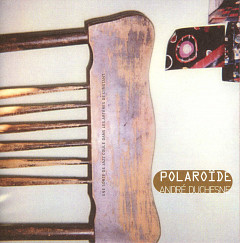
    For thirty years, classical guitarist André Duchesne has been playing Left Bank (Left Bank? How gauche!) cabaret jazz. Smoke-filled improvisation rules most of this album, with song structure either out of the picture, or too complex to be appreciated fully. There is no doubt as to Duchesne’s ability: he paints himself into a corner many times, only to gracefully slip away. This is not to say that all lovers of the nylon strings will enjoy Poloroide; it is quite demanding, and does not lend itself to casual ears. Duchesne asks his listeners to tolerate all of the aimless, uninspired parts in order to hear the more sublimely melodic in a new light.

    Typical of Duchesne’s sound is Polaroide II, which opens with an amiable guitar solo reminiscent of Debussy’s The Girl with the Flaxen Hair. Suddenly, the melody gives way to an atonal mode. As Duchesne’s guitar tone darkens, it is also marked by a wash of cymbals and a mournful violin, completing the threnody. Not exactly Django Reinhardt, but I’m sure that Duchesne would welcome the contrast. His music is purposefully difficult and hard to follow (imagine start-stop experimental jazz improvised by a guitar novice), but his readings retain a healthy measure of poetry. Luckily, the musicianship saves this album from its most awkward moments, creating a fine snapshot indeed.

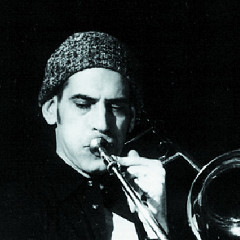
    Luckily, the musicianship saves this album from its most awkward moments, creating a fine snapshot indeed.
    liberum arbitrium in Desiderata

    “Review”, B Wildered, Desiderata, no. 12, November 1, 2002
    Friday, November 1, 2002 Press

    At first, comes off as a busy sounding cd combining lots of noisy electronics and various samplings of voices and what sounds like acoustic instruments. Everything sounds broken up and jammed in together, without much mixing or blending on the first 4 tracks. Suddenly, with track 5 (prime shake), the sounds seem to resolve & form a more coherent depiction of a moving landscape in sound. Quite a difference, with direction and less broken up elements cluttering jumbled edges of the parts. Instead, a streaming rush of bits of semi-obscured events passing thru, similar to audio sources fading in and out of range of a moving persons hearing. A tendency towards a slightly more sparse mix allows the sounds to reveal themselves better. A diverse cd which is impressive on the more developed pieces, and seemingly lost in the scatter on others.

  • 3
  • 4
  • 5
  • 6
  • 7
  • 8
  • 9
  • 10
  • 11