actuellecd

Blog

255 results
  • 1
  • 2
  • 3
  • 4
  • 5
  • 6
  • 7
  • 8
  • 9
  • Twenty Quarter Inch Jacks in Voir

    “Disques”, Réjean Beaucage, Voir, November 21, 2002
    Thursday, November 21, 2002 Press

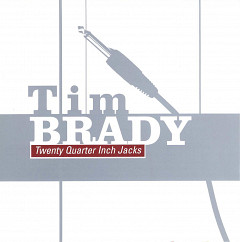
    La pièce-titre est une composition pour un chœur de 20 guitares électriques (toutes jouées par Brady ici) et passe en revue les possibilités de l’instrument, du son le plus propre au plus fuzzé et de la mélodie la plus douce au heavy métal. Commandée par le festival Les Coups de Théâtre pour être interprétée par 20 élèves d’écoles secondaires, on pourrait s’attendre à ce que cette musique soit simpliste: or, il n’en est rien et il faudra entendre ça en concert (création le 20 novembre à 21 h à l’espace chorégraphique Jean-Pienre Perreault pour voir si le compositeur n’a pas surestimé ses musiciens! Aussi sur ce disque, une commande de l’Ina-GRM et une autre du Centre for Contemporary Arts de Glasgow, toutes deux pour guitare et bande, où Brady explore avec bonheur l’espace sonore électroacoustique.

    Brady explore avec bonheur l’espace sonore électroacoustique.

    Twenty Quarter Inch Jacks in AllMusic

    “Review”, François Couture, AllMusic, November 21, 2002
    Thursday, November 21, 2002 Press

    After releasing a pile of albums on the Montréal jazz label Justin Time, which despite its progressive outlook on the genre was always a little overwhelmed by the experimental nature of his productions, Tim Brady delivered in 20 Quarter Inch Jacks his first CD for Ambiances Magnétiques. And a good one it is, ironically lighter than some of his previous recordings yet still challenging and charged with that special Brady-esque guitar humor. The disc contains three new works. First up is the thundering title track, a suite in eight parts running for a total of 30 minutes. Written for 20 electric guitar players (all parts performed by Brady on this recording, but it has been played live with an ensemble), the piece attempts to run through the history of the instrument in a whimsical setting of narrator-and-examples. Movement titles like Metal, Waves, Harmonic Fields or Big Chords are as programmatic as can be. In the Opening, a multi-tracked Brady introduces the notes strummed one by one, à la Viv Stanshall in Mike Oldfield’s Tubular Bells. Taken as a whole the piece presents intricate arrangements, some crunchy playing and good-hearted fun. It could be reasonably deemed too light by some detractors. The sixth part, An Alphabet of Guitarists, is exactly that: Brady calls the name of one guitarist per letter of the alphabet over a group riff left unchanged by these invocations. Its purpose remains uncertain and its presence questionable (guitar fans may also want to debate the composer’s choices). This long piece should not overshadow the presence of Music Box Bell Curves (Hello Paris!), a stunning 14 minutes of electroacoustic music combining wailing guitars, powerful sample treatments and martial rhythms reminiscent of Art Zoyd. The closing Sauchiehall Street is a piece for guitar and tape moving from atmospheric playing to frenzied soloing and back.

    Prairie orange in AllMusic

    “Review”, François Couture, AllMusic, November 21, 2002
    Thursday, November 21, 2002 Press

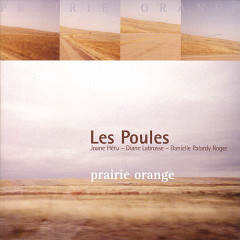
    16 years. It took Les Poules (“the chicks”) 16 years to record a follow-up to the 1986 LP Les contes de l’amère loi. Of course we can’t consider Prairie orange a true follow-up. Too much water has passed under the bridge and Joane Hétu, Diane Labrosse and Danielle Palardy Roger have played together in too many projects to let the quantum jump between the two discs sound anything but natural — or even the same band. This opus, marvelously titled Prairie Orange, presents the three musicians engaged in intense quiet free improvising: no lyrics, no song structures. Roger’s angular beats on the first opus have been replaced by delicate percussion work reminiscent of Roger Turner or Paul Lovens at their quietest. Labrosse works her sampler in much the same way as in her duo Parasites with Martin Tétreault. Treated water sounds, electrical glitches and the occasional recognizable sample (like foghorns) play hide and seek with the scraped and brushed percussion and Hétu’s ghostly, hesitant alto sax. The latter vocalizes on half of the album, her quiet screams and wails as profoundly disturbing as ever — why? Because they sound utterly alien, all the while tapping into something atavistically human. Each piece has been carefully edited and shaped out of longer improvisations to produce a spellbinding set that knows when to stop (a few seconds short of 50 minutes). These three have been sharing stages for 20 years. They have reached a level of understanding, listening and complicity matched only by the best. Highly recommended.

    They have reached a level of understanding, listening and complicity matched only by the best. Highly recommended.

    La spirale de l’escargot in Voir

    “Critique”, Réjean Beaucage, Voir, November 21, 2002
    Thursday, November 21, 2002 Press

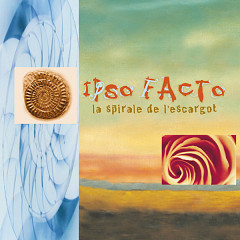
    Le quatuor Ipso Facto est formé de musiciens qui ont de solides formations et une ouverture aux musiques du monde qui leur inspire un son unique et universel. Résolument acoustique, la musique du groupe se métisse d’influences gitanes et latines, le violon de Chantal Bergeron et la guitare de David Bussières semblant danser joyeusement sur les rythmes chauds tenus par le percussionniste Francis Bergeron et le contrebassiste Simon Dolan, avec de temps à autre juste ce qu’il faut de swing pour évoquer le fameux duo Grappelli/ Reinhardt. La prise de son de Bernard Grenon est magnifique. Ipso Facto sera en concert le 26 novembre à 21 h 30 à la Sala Rossa, et on nous promet même pour cette occasion, entre autres interprétations, des musiques de John Zorn.4/5

    «Dis, Blaise…» chanson du Transsibérien in Vital

    “Review”, Dolf Mulder, Vital, no. 346, November 21, 2002
    Thursday, November 21, 2002 Press

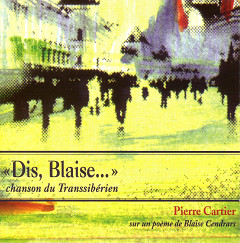
    The poem Prose du Transsibérien et la Petite Jehanne de France written in 1913 by Blaise Cendrars inspired Cartier for this double cd. The poem evocates a journey by a teenager across Russia and Siberia during the 1905 war between Russia and Japan. Cartier sings the poem entirely. “Sings” is not the right word. What Cartier does is somewhere between singing and recitiating. It is obvious that Cartier is impressed by this poem from the swiss writer Cendrars. So in order to enjoy this cd fully it is needed that you have no difficulties with the french language. Because I don’t, I’m not wild about this one. As the music is in function of the text. The composition to this poem is played by Jean Derome (sax, flute), Jean René (viola), Tom wlash (trombone), Bernard Falaise (guitar) and Pierre Tanguay (drums). Plus Cartier himself on doublebass. He also composed the music. Cartier studied doublebass on the conservatory in Montréal and chose a career as a classical musician. He specialized himself in medieval music and gregorian chant. But that’s not all. Cartier met Pierre St-Jak and Jean Derome in 1973 and plays jazz, improvised music and forms of new music that are typical for the Ambiances Magnétiques scene. He guests on many cds by his mate Jean Derome. His own releases reflect a post-bop kind of jazz. With Chansons de Douve (1996) Cartier presents something new, a song cycle for two opera singers and eight musicians. Many influences are melted together in an impressive whole. Dis Blaise… continues more or less in the same vein. It is also a cycle of songs. Not a kind of jazz that is to identify as bop or whatever. Compostions are much more personal here, moving towards modern chamber music.

    Compostions are much more personal here, moving towards modern chamber music.
  • 1
  • 2
  • 3
  • 4
  • 5
  • 6
  • 7
  • 8
  • 9