actuellecd

Blog

132 results
  • 14
  • 15
  • 16
  • 17
  • 18
  • 19
  • 20
  • 21
  • 22
  • Dérapages à cordes in The Sunday Herald

    “Heikalo unleashes intriguing CD trio”, Stephen Pederson, The Sunday Herald, January 28, 2001
    Sunday, January 28, 2001 Press

    Welcome to the weird, wired and wonderful world of Wolfvillebased guitarist, musician, photographer, composer, sound-designer and improviser Daniel Heikalo.

    The cittern and prepared guitar recordings he made himself in his Horton Landing recording studio. The collaboration with Valleybased colleague Arthur Bull, which also includes much play on prepared guitars, is on the Ambiances magnétiques Label, which consistently produces the best, most interesting, and artistically astonishing recordings in Canada and Québec’s “musiques actuelles” scene.

    But here comes the cautionary disclaimer. If you are not a completely open-minded listener with fresh ears, if you are one of those who knows damn well what you like and refuses to listen to anything else, give these recordings a pass. But for anyone interested in the art of music, and in the labyrinthine ways down which that music is found, these charming and artistically brilliant performances will produce a shock of recognition: Heikalo’s music is liberated, original and unique.

    He borrows heavily from all kinds of world traditions, but mixes them up in spontaneous yet disciplined outbursts of musical imagery full of often startling melody, harmony, rhythm and unpredictable sounds. On his Web site (www.trotbo.com) which he shares with his artist partner Tarnara Thiebaux, he describes his music as “freeform folk improvisational — blues, bluegrass, Appalachian, Celtic, Turkish’ Greek, Arabic and Klezmer.”

    Eagle’s Paradise, subtitled The Cittern Project, is entirely dedicated to the four-course, doublestringed, lute-like cittern that, when amplified and played with a “bottle-neck” slide, as it is on Gaspereau Delta Blues, sounds like a cross between an Indian sitar and a dobro. The recording is pristine in its clarity, and Heikalo’s virtuosity is transparently admirable. He is drawn to minor scales and much influenced by mid-Eastern and Indian modalities. His melodies are haunting and exotic and atmospherically suggestive.

    Each track is a single take; since Heikalo is an improviser, his compositions are different each time he plays them. Musically he ranges from the melancholy dance of Goodnight Desdemona (with Ken Shorley on percussion) to the rich and dramatic soundscape of Dans les ruelles d’un navet décoloré (In the Backlanes of a Discoloured Turnip). The Art of the Prepared Guitar is a fascinating exploration of how paper clips, alligator clips, a Parker pen, and even an eggslicer can alter the sound of both electric and acoustic guitars in a way that inspires a creative mind such as Heikalo’s to make gn unearthly and quite beautiful music.

    Some of his experiments include a minimum of electronic signal processing, but it never draws attention to itself in the world of slides, and resonances, and tambourinesque jingles and jangles produced by the way he handles the various gadgets attached to the guitar strings. His duo recording with Arthur Bull includes both musicians playing prepared guitars, Bull adding an ebow (electronic bow) and slides, Heikalo contributing cittern, percussion and voice.

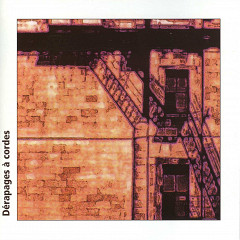
    This ls the wildest music of all as the two musicians produce a musical weather as formless as clouds buffeted and torn by errant winds, and mirroring light. The “dérapages” of the title (Dérapages à cordes) refers to an anchor slipping, and there is a-lot of that as the musicians egg each other on. Again, the minor scale and the world music exotica of the middle East dominates, but there is so much deconstruction going on in these improvisations, it would be more accurate just to call it all coloured sound. A word about Heikalo surrealist titles. He writes that kind of poetry. Eg: L’intergiboulaison des mages infundibuliformes (interacting squalls of funnel-shaped wizards—I think, with Le Petit Robert Dictionnaire at hand), or En attendant la vendeuse de toupies chantantes (Waiting upon the seller of singing tops), or Tintamarre de boulingrin (Noise of the bowling-green).

    Joue Free, Bernard Falaise, Normand Guilbeault, Robert Marcel Lepage in Le Devoir

    “Charmes vénéneux”, Serge Truffaut, Le Devoir, January 27, 2001
    Saturday, January 27, 2001 Press

    Mettons, et non supposons, que le trio formé de Normand Guilbeault à la contrebasse, Bernard Falaise à la guitare et Robert Marcel Lepage à la clarinette ait vu le jour en 1963, lorsque Jimmy Giuffre, qui joue de l’instrument dont joue Lepage, Steve Swallow, qui est propriétaire d’un engin dont Guilbeault est également propriétaire, et Falaise, qui pince des cordes là où Paul Bley intercalait les touches du grand piano, ont injecté une forte dose d’improvisation dans l’univers du jazz.

    L’album que propose la troïka Falaise-Lepage-Guilbeault est de la même eau que celui que signa, il y a 37 ans de cela, le triumvirat amené par Giuffre. Les six morceaux conçus par les Montréalais sont autant d’échos aux pièces composées par leurs aînés. Joue Free, titre de l’album qui vient de paraître sur Ambiances Magnétiques, est une exploration, pour reprendre l’expression imprimée au dos de la pochette, du «spleen particulier du jazz de chambre et du folk blues en hommage à son principal instigateur des années soixante, le clarinettiste américain Jimmy Giuffre».

    En hommage à l’œuvre de l’auteur du célèbre The Train And The River, Guilbeault et ses alter ego ont confectionné un album plein de ces charmes que l’on dit vénéneux parce que déstabilisants, troublants, exigeants. Joue Free a ceci de remarquable qu’il propose beaucoup de profondeurs, un amas de gouffres. Un album qui distribue constamment surprise après surprise.

    L’ensemble est d’autant plus réjouissant que les trois musiciens démontrent une maîtrise exemplaire de leur instrument respectif comme des subtilités propres à tout exercice d’improvisation. Si la musique de Lepage, Falaise et Guilbeault n’est pas de tout repos, si elle n’est pas une de ces musiques conçues à l’aune de la respectabilité, elle a ceci d’essentiel qu’elle favorise le regard droit devant.

    … les trois musiciens démontrent une maitrise exemplaire de leur instrument respectif comme des subtilités propres à tout exercice d’improvisation.

    volume 5: Chante! 1985-2000, Ambiances Magnétiques in AllMusic

    “Review”, François Couture, AllMusic, January 25, 2001
    Thursday, January 25, 2001 Press

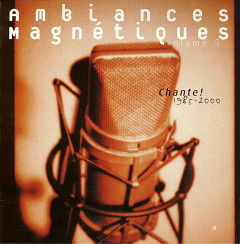
    The production of the Montréal record label Ambiances Magnétiques always oscillated between avant-garde song writing and free improvisation. The former was very important in the early days (1985-1990), later left aside (during the mid-1990s) and finally regained interest at the turn of the century. Ambiances Magnétiques, Vol. 5: Chante! 1985-2000 compiles songs from a broad range of artists on the label and presents them in a comprehensive and exciting way. Although this CD is made of all previously available tracks (two were still unissued on CD: the Wondeur Brass and Les Poules selections), special care has been put in the running order, which makes it enjoyable as a whole. The label had to stretch the definition of the song format a lot to find enough material, though. Selections from Wondeur Brass, Justine, Papa Boa, André Duchesne and Joane Hétu are all strong avant-rock songs. The more classy contemporary song stylings of Pierre Cartier and Geneviève Letarte bring a pensive touch to the ensemble, but one can question the presence of more atmospheric or improvised pieces like Diane Labrosse’s Constellations and Liberté, or Martin Tétreault and Michel F Côté’s Juin. All lyrics are sung in French of course, but in most cases they are not essential to the comprehension of the music itself. Ambiances Magnétiques, Vol. 5: Chante! 1985-2000 does not bring anything new to the table, but it reminds us of the label’s commitment to song writing and makes a good introduction to the more accessible portion of its catalogue.

    Vol. 5: Chante! 1985-2000 compiles songs from a broad range of artists on the label and presents them in a comprehensive and exciting way.

    Live à la Casa in Splendid E-Zine

    “Review”, Noah Wane, Splendid E-Zine, January 22, 2001
    Monday, January 22, 2001 Press

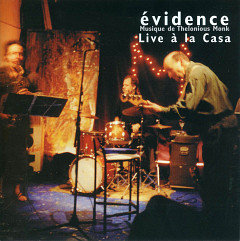
    Évidence is the Montréal trio of Jean Derome (alto sax), Pierre Tanguay (drums) and Pierre Cartier (electric bass). Regular readers of Splendid are sure to associate these names with many of the Ambiances magnétiques releases we’ve reviewed over the years. In most cases the music we’ve reviewed from guys like Derome or Tanguay has been of the highly experimental, free-form variety. With Live à la casa they move onto more well-known ground by performing the compositions of Thelonious Monk. Their effort is generally meritorious. Certainly the group plays tightly and with a certain liveliness, handling itself well enough on classics like Straight, No Chaser, Reflections and Ask Me Now. Derome’s alto sound is just a tad anemic and the rhythm section does seem a bit square, but these guys are well-rounded musicians and you can’t really fault them for not being specialists. I can’t really escape the feeling, however, that they aren’t real dyed-in-the-wool jazzmen, and Straight, No Chaser has been performed by every college and high school jazz combo in recorded history. I’m not saying that Évidence doesn’t have a right to play these unarguably great compositions or even that they don’t do it well. All I’m saying is that, barring brilliantly deep or novel performances, I’m not sure how many recorded interpretations of some of these tunes we really need.

    Dérapages à cordes in Sztuka Fabryka

    “Review”, Geert De Decker, Sztuka Fabryka, January 19, 2001
    Friday, January 19, 2001 Press

    This is the first CD of this guitar playing duo, both has earned their fame during the years in their skills of the guitar. On this CD we hear some improvising music with the guitar. We find 8 compositions with this improvising guitar play where they both explore the colour of the guitar in its different forms. Both play the guitar on a poetic way, with intonation on the sound colour that a guitar can produce. In the opening composition it starts with a Latin coloured composition where a second guitar build an improvisation around. This composition soon starts to get a quicker tune but ends again in a tranquil improvisation. In the second composition they work around the specific sound that the banjo produces combined with an exotic flute instrument. Again this composition receives its specific colour when they change the rhythms of the composition. In a third composition the guitars are played on a non-conventional way, it sounds more as plucking on the strings which produce short quick tunes. At the end Daniel adds some voice to the improvisation. In each composition they work with the guitar in these different ways, looking for the specific intonation a guitar can produce.

    Réflexions in Rubberneck

    “Review”, Chris Blackford, Rubberneck, January 17, 2001
    Wednesday, January 17, 2001 Press

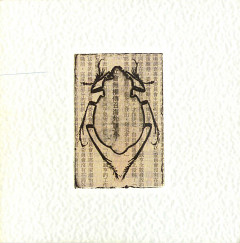
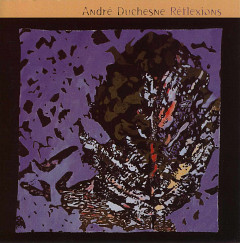
    Odd-one-out in this clutch of guitar-based records is André Duchesne’s Réflexions. By concentrating entirely on unaccompanied nylon string classical guitar, the disc constitutes something of a back-to-basics exercise from a man normally working in electro-acoustic music. The style is reflective and impressionistic, romantic tracings bringing to mind far away places in France and Spain. Despite a tendency to meander, there is much to enjoy on Réflexions, and an undeniably warm and soothing pool of sound bathes the ears. The palette inevitably seems limited and the techniques orthodox in comparison to other guitarists in this batch, but such a naked approach to music-making is commendably bold.

    There is much to enjoy on Réflexions.
  • 14
  • 15
  • 16
  • 17
  • 18
  • 19
  • 20
  • 21
  • 22