actuellecd

Blog

109 results
  • 9
  • 10
  • 11
  • 12
  • 13
  • 14
  • 15
  • 16
  • 17
  • Torticolis in Cadence

    “Review”, Michael Rosenstein, Cadence, no. 25:4, April 1, 1999
    Thursday, April 1, 1999 Press

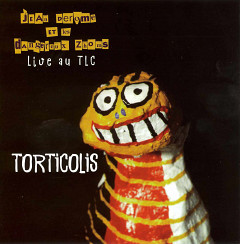
    Multi-instrumentalist Jean Derome is one ot the core members of Montréal’s adventurous improvisation scene. His work ranges from choreography to theater music to film soundtracks to Jazz bands to boundary blurring improvisation. This is the third release by his band Dangereux Zhomes and the eight originals continue in the vein of the first two, offering open sketches for group interaction that draw on the diverse talents and improvisational approaches of the six players. The compositions are based on travel sketches Derome captures while touring with his various groups. These can take the form of darting themes blending elements of rock, funk, Jazz voicings, and folk dance or the barest skeletons for colective textural improvisations. The music benefits from the fact that each of these players frequently collaborates in each other’s music, so they are able to rapidly respond to the kaleidoscopic changes these pieces move through with lightening reflexes. Though there is plenty of solo room, this is ensemble music built from complexly intertwined lines from each. Throughout, there is an element of mischievous playfulness and wry humor as the players draw on everything from birdsongs to circus music to blustering cacophony in these vibrantly shifting improvisations. One minute, they will be tossing off a unison reading of an angular head, the next they’re off slinking through noirish themes, or skronking through a squalling section of electric, rock-tinged freedom. Recorded in concert over the span of three days, the live setting seems to bring out particularly charged performances and an inventive sense of adventure. The rousing final ovation captured at the end of the disk is well deserved.
    Torticolis in Downtown Music Gallery

    “Review”, BLG, Downtown Music Gallery, April 1, 1999
    Thursday, April 1, 1999 Press

    Jean Derome is a wonderful saxist/flutist and composer from Montréal who I have long admired. From the first time I heard his grand quirky duo with guitarist René Lussier — Les Granules at my first Victo fest over a decade ago, through his work with Fred Frith’s Keep the Dog, his excellent Monk tribute and many other projects often with René, I knew that both of these players were special. Now that both Jean & René have about ten releases a piece on their Ambiances Magnétiques label, my Victo buddies & me look forward to each new project with much anticipation. This is the third release by Jean’s band -DZ and is also part of a three cd set. This is an all-star Canadian ensemble that includes René on daxophone & el. guitar (he is also found in Frith’s Guitar Qt. ), Tom Walsh on trombone, Guillaume Dostaler on keyboard (a new name to me), Pierre Cartier on el. bass & Pierre Tanguay (from many projects) on drums. Both Walsh & Cartier have had their own units play at Victo in the past. Both Jean Derome’s playing & composing are always on a high level. The music here is a fine blend of progressive/jazz/rock, both stimulating compositions & improvised sections. I hear bits of the best of Frith in there at times. So nice to hear the rarely utilized daxophone from René, with its twisted vocal-like presence. This music has a most uplifting, positive quality to it, never the darker side of prog. His sly sense of humor never hurts, either. Check out Québec’s finest. Downtown Music Gallery 1999

    Upbeat in The Wire

    “Soundcheck Review”, The Wire, no. 182, April 1, 1999
    Thursday, April 1, 1999 Press

    It’s been remarked that Fred Frith’s life mission is to extend and mutate the role of the electric guitar in music. His work has meant the broadest expansion of avant rock, and since the 70s he’s been moving further away from a rock sensibility. But if his Guitar Quartet is at a remove from rock tradition. there’s no sign of weakness. It fits with an increasing interest in relatively formal composition.

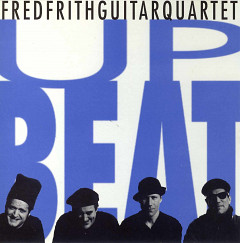
    His quartet is successor to a late 70s venture for Guitar Quintet It took seven years for the first CD to appear, on a Québec-based label that more usually specialises in electroacoustic music and Industrial slanted sound poetry Coming two years affer Ayaya Moses. Up Beat could well represent a quickening in Frith’s step But there is an admirable restraint here Frith is waiting till he has something to say, and Up Beat certainly says a great deal. As on Ayaya Moses, his colleagues are René Lussier, Nick Didkovsky and Mark Stewart and this is a collection of live improvisations from their 1997 European tour.

    Sources are hard to pin down, as you’d expect with this brilliantly unpredictable musician, but a lot of the subversion is directed at Country & Western Mark Stewart’s solo Speedy Feety has a Country feel, which becomes really hokey on Red Rag a corny melody set against a gauzy, blurred backdrop. Faced with increasingly.

    Maison douce maison in New Island Voice

    “Review”, Matthew Martens, New Island Voice, April 1, 1999
    Thursday, April 1, 1999 Press

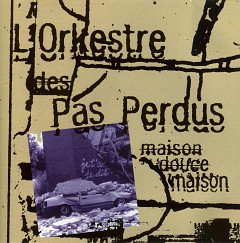
    For some years now Québec has been host to a thriving, all but indefinable music scene called Musique Actuelle, which is a constantly mutating hybrid of various kinds of avant-jazz, traditional folk styles and contemporary classical composition. No two artists under this rubric sound the same, some veering close to the plink-plonk free-improv of Derek Bailey, and others cozying up to the herky-jerky hyper-complexity of progressive rock bands like Henry Cow and Universe Zero. One thing they all share is a sense of fun and an irreverence toward their influences. Both qualities are evident in abundance on this second album by the all-instrumental, many-horned sextet L’Orkestre des Pas Perdus. From trumpet to trombone to sax, from flugelhorn to clarinet to sousaphone, brass and reeds rule. The drummer even plays a snare-piccolo contraption, so everyone’s blowin’ wind here somehow or other. The music is an infectious, rhythmically tricky conflation of Zappa, Ska and Count Basie, and all but begs to be dug. So dig.

    Upbeat in Le Soleil

    “Critique”, Pierre Boulet, Le Soleil, March 27, 1999
    Saturday, March 27, 1999 Press

    Ce n’est pas évident, mais c’est plus fort que moi. Il faut au moins que je vous le signale. Je vous parle de la parution de Up Beat, le petit dernier du Fred Frith Guitar Quartet. Un bilan de la tournée européenne (1997) des quatre guitaristes électriques: Fred Frith, René Lussier, Mark Stewart et Nick Didkovsky. Deux ans après Ayaya Moses, les quatre complices s’en donnent à cœur joie sur leurs cordes amplifiées. Difficile? C’est selon l’oreille qu’on veut bien y mettre. De la musique actuelle composée et improvisée par des artistes à l’imagination débridée, à la virtuosité consommée, dotés d’une culture musicale large comme ça. Et qui, de toute évidence, s’amusent comme des fous à échanger. Du bruit, diront certains? Oui, du bruit… mais modelé par un sens peu commun de l’organisation, marqué par le souci de la surprise. Ça nous en apprend davantage sur la musique et sur… soi. Pour oreilles averties. Il n’en tient qu’à vous d’en être. Bonne écoute!

    Ayaya Moses in Splendid E-Zine

    “Review”, George Zahora, Splendid E-Zine, March 22, 1999
    Monday, March 22, 1999 Press

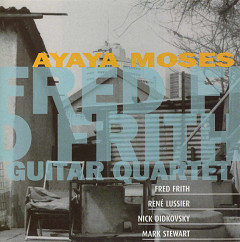
    Just about anyone with some degree of musical awareness has heard of Fred Frith, right? Mention his name to someone who’s bought something less accessible than the Titanic soundtrack, and he or she will probably offer a glimmer of recognition, however slight. Anyway, on Ayaya Moses, Frith and the other three quarters of his quartet (René Lussier, Nick Didkovsky and Mark Stewart) once again remind the listening public that the guitar is an instrument with six discrete strings (sometimes twelve) that can be tapped, plucked and scraped as well as strummed. The results can be beautiful (the first half of the title cut), harrowing (the second half of the title cut), fascinating ( Trummings, Geco Rettile Mialgico), orchestral (Pulau Dewata) and downright confrontational (The Stinky Boy Suite). Since a lot of neophyte listeners expect nothing but dischord from “avant-guitar” compositions, Ayaya Moses is an effective tool for displaying the sheer range of both the instrument and the genre; yes, there are tracks that sound like the guitar is being thrown down a flight of stairs, but there are far more instances where Frith et al coax astonishingly varied and innovative tones from their instruments. Everyone should own at least one FFGQ album — it’s useful deprogramming after too much 3-chord punk rock, and it’s fun to taunt Teen Punk Rockers with it by confronting them with the fact that Frith is an “old guy” whose music is too challenging for them.

  • 9
  • 10
  • 11
  • 12
  • 13
  • 14
  • 15
  • 16
  • 17