actuellecd

Blog

109 results
  • 8
  • 9
  • 10
  • 11
  • 12
  • 13
  • 14
  • 15
  • 16
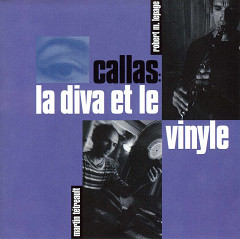
  • Callas: La diva et le vinyle in Exclaim!

    “Review”, Richard Moule, Exclaim!, May 1, 1999
    Saturday, May 1, 1999 Press

    Another set of dispatches from this Montréal collective of musique actuel-ites who continue to dazzle with their transgressive music. It is music that balances improvisation and composition in a singular fusion of jazz, rock, modern classical, musique concrète and turntablism. Callas: La diva et le vinyle is part musical and phonographic history lesson and part plunderphonics. 1997 was the 20th anniversary of opera diva Maria Callas’s death, and the 100th anniversary of Emil Berliner, who started EMI Records in Montréal. On Callas: La diva et le vinyle, clarinettist Lepage and DJ turntablist assassin, Tétreault have created a hilarious, irreverent playful tribute to these historical recorded events. Taking old recordings of Callas, Tétreault scratches, cuts and pitch shifts fragments of her voice, at one point making it sound like a fire alarm, while Lepage compliments Callas’s voice with alternating lyrically melancholic and joyous improvised phrasings. Callas: La diva et le vinyle is an exciting meeting of multiple juxtapositions: between old and new voices, between the stylised rituals of opera and the freedom of contemporary sound art and between live and recorded music.

    … a hilarious, irreverent playful tribute…

    Chevreuil in Cadence

    “Review”, Frank Rubolino, Cadence, no. 25:5, May 1, 1999
    Saturday, May 1, 1999 Press

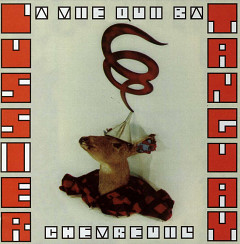
    Two stalwarts ot the Eastern Canadian Jazz scene join forces on La Vie qui bat, chevreuil. Guitarist René Lussier and percussionist Pierre Tanguay perform a duet that combines multiple instrumentation, voice, theater, a background chorus, and an odd twist on originality. When they are having fun, the music takes on a lighthearted demeanor with happy voice insertions and rhythmic lines, but when they get serious the music turns complex, sullen, and intricate. These artists are about turning sounds into a musical experience, even it the music is not easily accessible and the experience is demanding Lussier is a creative improviser, using the saw-like daxophone as well as the guitar to continuously alter the direction ot the music. It can be wild and wooly, or relatively calm, but it is constantly changing and ambitious. The tully improvised portions at hrst seem directionless, but it all seems to tie together as Lussier invades strange and unusual realms ot pure sound Tanguay plays a wide array of percussion instruments and drums that add to the intricacy of the improvisations. Yet, just as quickly they put on their tun-loving iaces to add a carnival atmosphere to the periormance. Ten selections, grouped as Le catalogue, are 20 to 50 second alternating outbursts oi solo sound as each artist switches instruments to create a quilt oi many musical colors. Musicians trom Canada continue to impress the Jazz world, and Lussier and Tanguay are among the most impressive.

    Musicians from Canada continue to impress the Jazz world, and Lussier and Tanguay are among the most impressive.

    Tout le monde, Monsieur Fauteux, m’entendez-vous? in Voir

    “Les joyeus troubadours”, Nicolas Tittley, Voir, April 22, 1999
    Thursday, April 22, 1999 Press

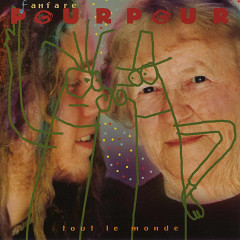
    «On est un groupe d’amis avant tout, et nous aimons faire de la musique.» La formule, émise par Luc Proulx, homme de théâtre bien connu mais également guitariste à ses heures, est aussi simple que définitive, et rien ne pourrait mieux decrire l’essence de la Fanfare Pourpour. Posez la question à n’importe lequel de ses membres, que ce soit le directeur musical Bernard Poirier, l’accordeoniste Lou Babin, le percussionniste Benoît Fauteux, on n’importe lequei des onze musiciens que compte l’ensemble, et vous obtiendrez sans doute la méme réponse. C’est l’amitié qui a réuni cette bande de joyeux troubadours multidisciplinaires il y a plus de vingt-cinq ans, sous le nom de L’Enfant fort. À l’époque, il s’agissait d’une véritable fanfare populaire, qui se produisait à l’improviste dans les rues du Plateau Mont-Royal. Puis, quelques membres ont formé le Pouet Pouet Band, dans le but avoué de faire plus de scène, objectif fortifié par la création de Montréal Transport Limité, collectif quasi légendaire des années 80. Depuis trois ans, le groupe existe sous le nom de Fanfare Pourpour, dont le premier album, Tout le monde, sera lancé cette semaine au Lion d’or.

    «Ce n’est pas un orchestre qui a été pensé en termes d’instrumentistes, par un individu qui aurait soigneusement choisi chacun des musiciens, explique Luc Proulx. C’est arrivé par hasard: chacun d’entre nous savait jouer d’un instrument, alors on a composé pour ce genre d’orchestrations. On avait des clarinettes, une trompette, une caisse claire, une guitare: on a joué avec ça.» Cet esprit collegial, véritable ciment qui unit tous les membres de la Fanfare, est d’autant plus évident lorsqu’on se rend au studio du groupe. L’endroit est aménagé dans l’ancien entrepôt frigorifique (d’où le nom charmant, de studio Free Go) situé dans là cour du logement dont le couple formé par Luc Proulx et Lou Babin habite le rez-dechaussee, et Bernard Poirier, l’étage. «C’était l’endroit idéal pour enregistrer, lance ce dernier. Comme les membres du groupe ne sont pas tous des musiciens professionnels, certains d’entre nous doivent répeter un peu plus que d’autres et dans un studio à plus de 100$ de l’heure, les trente sous disparaissent vite! Ici, on était libres de recommencer autant de fois qu’on le voulait.

    Pour ses membres, la Fanfare est une passion plutôt qu’un gagne-pain lls gagnent tous leur vie ailleurs: qui au théâtre, qui dans une boite de graphisme, qui en informatique, qui dans la danse. Et, bien qu’ils entretiennent des liens étroits avec le milieu de la musique actuelle (leurs amis René Lussier, Normand Guilbeault et Jean Derome contribuent à l’album), leurs compositions demeurent très accessibles. Fortement teintee de musiques tzigane et klezmer, avec des références allant de Nino Rota à Kurt Weill, la Fanfare fait du folklore moderne et ouvert. «Si on se lançait dans des trucs trop compliqués, on serait tous tendus et on perdrait le plaisir de jouer. Tout ce qu’on veut faire, c’est essayer de rendre belles les choses simples», explique Bernard. De plus, cette Fanfare pas comme les autres préfère le mode mineur au majeur traditionnel de ce genre d’ensembles, ce qui explique son côté mélancolique. «Un jour, une vieille dame nous a dit que notre musique était triste et gaie a la fois, se souvient Luc. C’est assez simple comme définition, mais c’est très juste.» Pour l’instant, cette joyeuse bande se concentre sur la musique, mais lorsqu’on connait les multiples talents de ses membres, on peut imaginer la direction que prendra la Fanfare dans les années à venir. «On va toujours garder le côté spontané de nos débuts, mais on caresse aussi des projets de plus grande envergure, en y intégrant la poésie et le théâtre», lance Bernard Poirier. Pas étonnant qu’ils soient devenus des piliers des Cabarets de la Pleine Lune, soirées de délire collectif organisées par l’imprévisible François Gourd, où l’on pourra les apercevoir le 30 avril prochain. En attendant, la Fanfare donnera un spectacle de lancement qui, tradition oblige, sera absolument gratuit.

    Upbeat in Voir

    “Disques”, Nicolas Tittley, Voir, April 8, 1999
    Thursday, April 8, 1999 Press

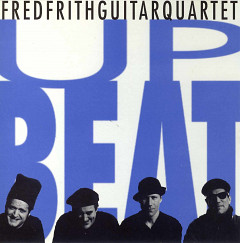
    Captés lors d’une série de concerts européens, ces treize morceaux du Fred Frith Guitar Quartet couvrent une bonne partie des innombrables possibilités sonores qu’offrent les vingt-quatre cordes de guitares à leur disposition. Le groupe est capable de courtes salves punchées et d’explorations bruitistes, et flirte même avec des sonorités presque pop (Motormouth). Bien qu’excellents dans les échanges, c’est dans leurs solos que les quatre musiciens déploient tout leur talent: Frlth explore des territoires plutôt atmosphériques, allant jusqu’à imiter le son d’une comemuse; alors que sur Tout de suite, le Montréalais René Lussier fait preuve d’une dextérité qui brouille la frontière qui sépare composition et improvisation.

    Upbeat in Vital

    “Review”, Dolf Mulder, Vital, no. 168, April 4, 1999
    Sunday, April 4, 1999 Press

    It has been a long time ago since I have heard a new CD from Fred Frith. In the 80s I used to follow his career. But since he started profiling himself as a “composer” my interest declined. With listening to Up beat it is as meeting an old friend, where the meeting has to prove if the relationship can be renewed or not. Frith started this quartet in the early 90s together with Nick Didkovsky, Mark Stewart and René Lussier. Their first release dates from 1997. I haven’t heard it. So I make a comparison with that other guitar quartet: Les Quatre Guitaristes de L’Apocalypso Bar (also with René Lussier). This guitar quartet delivered two albums in the 80s that are much more traditional then Frith’s quartet. Avant rock echoing Conventum and Henry Cow, where Frith’s quartet is much into the exploration of sounds and dynamics. Not rock music, but with rock energy. Only a few tracks remember of a music that they seem to have left behind: Old Bones is a tune from Massacre, Out to Bomb Fresh Kings recalls early Doctor Nerve and Red Rag is in the end just a rag. The other material shows that they are expanding the possibilities of guitar music. This quartet was Frith’s most important performing group in the 90s and they prove that there is more to be expected from them in the next century.

    This quartet was Frith’s most important performing group in the 90s and they prove that there is more to be expected from them in the next century.

    Dur Noyau Dur in Vital

    “Review”, Dolf Mulder, Vital, no. 168, April 4, 1999
    Sunday, April 4, 1999 Press

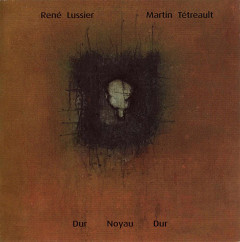
    Michel Ratté may not be very well known outside of Canada, but Lussier and Tétreault sure are. Lussier played with Duck & Cover, Les Quatre Guitaristes de L’Apocalypso Bar, Fred Frith Guitar Quartet, Heiner Goebbels, etc. It strikes me that Lussier plays also in many duo combinations: Fred Frith, Jean Derome, Robert Lepage and some others from the French-Canadian scene. He seems to have a preference for improvisation as a duo: it takes two to improvise? Here Lussier plays with Martin Tétreault. Tétreault is a French Canadian from Montréal who plays and performs with turntables and related objects. He was in fine arts in the past. One day he started working with records instead of cutting up paper, and so it all began. Later — around 1989 — he participated in the Broken Music Exhibition with Christian Marclay and played with many musicians inside and outside of Canada. On the present CD, it is not only quoting from records what we hear, using them as sound source and giving the listener experiences of recognition. The record and the turntable are also used as such, as objects with their own possibilities, apart from the music that is on the record. Here the sound is very abstract (abstracted from what are traditional sound sources to our ears). Lussier can be heard on acoustic and electric guitars. The music is very exciting, radical sound improvisation.

    The music is very exciting, radical sound improvisation.
  • 8
  • 9
  • 10
  • 11
  • 12
  • 13
  • 14
  • 15
  • 16